
How Community Healing Is Powering Rwanda’s Development Vision

Rwanda is sharpening its focus on evidence-backed societal healing and resilience as a driver of lasting peace and development.
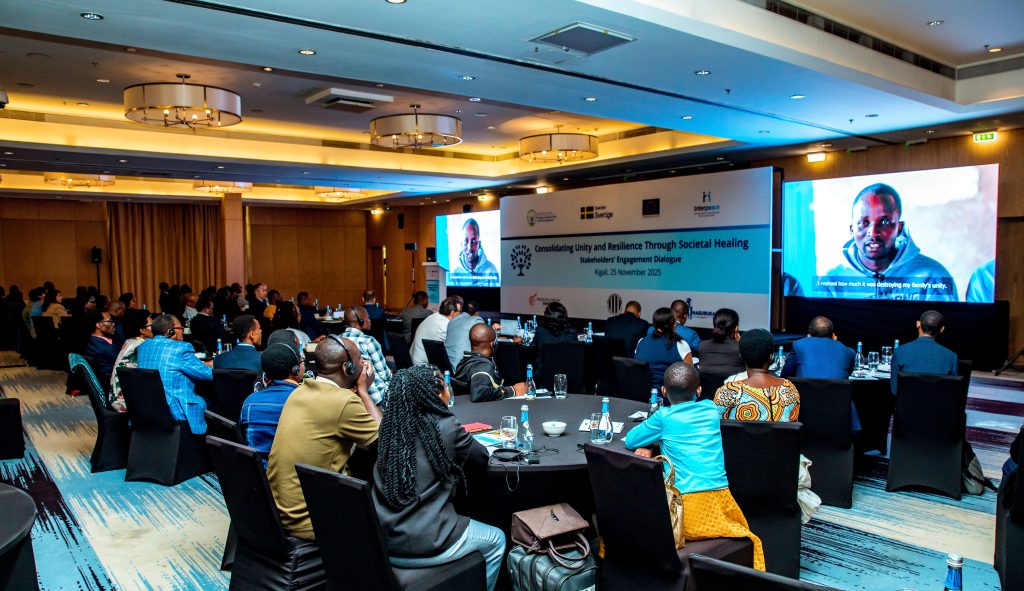
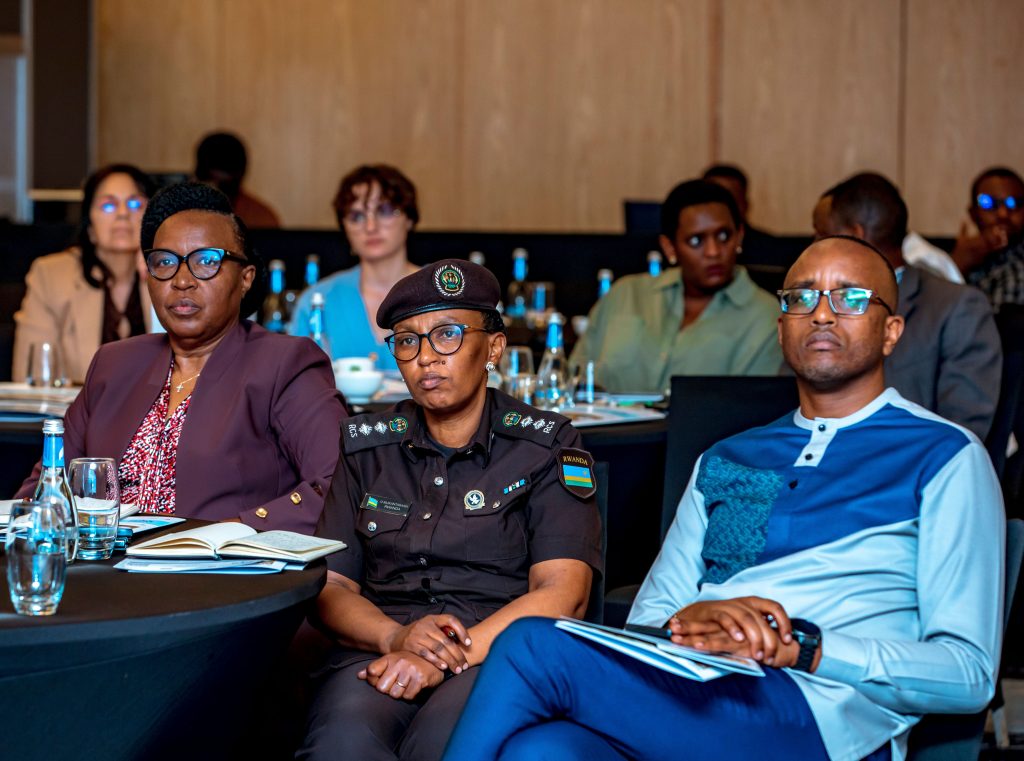
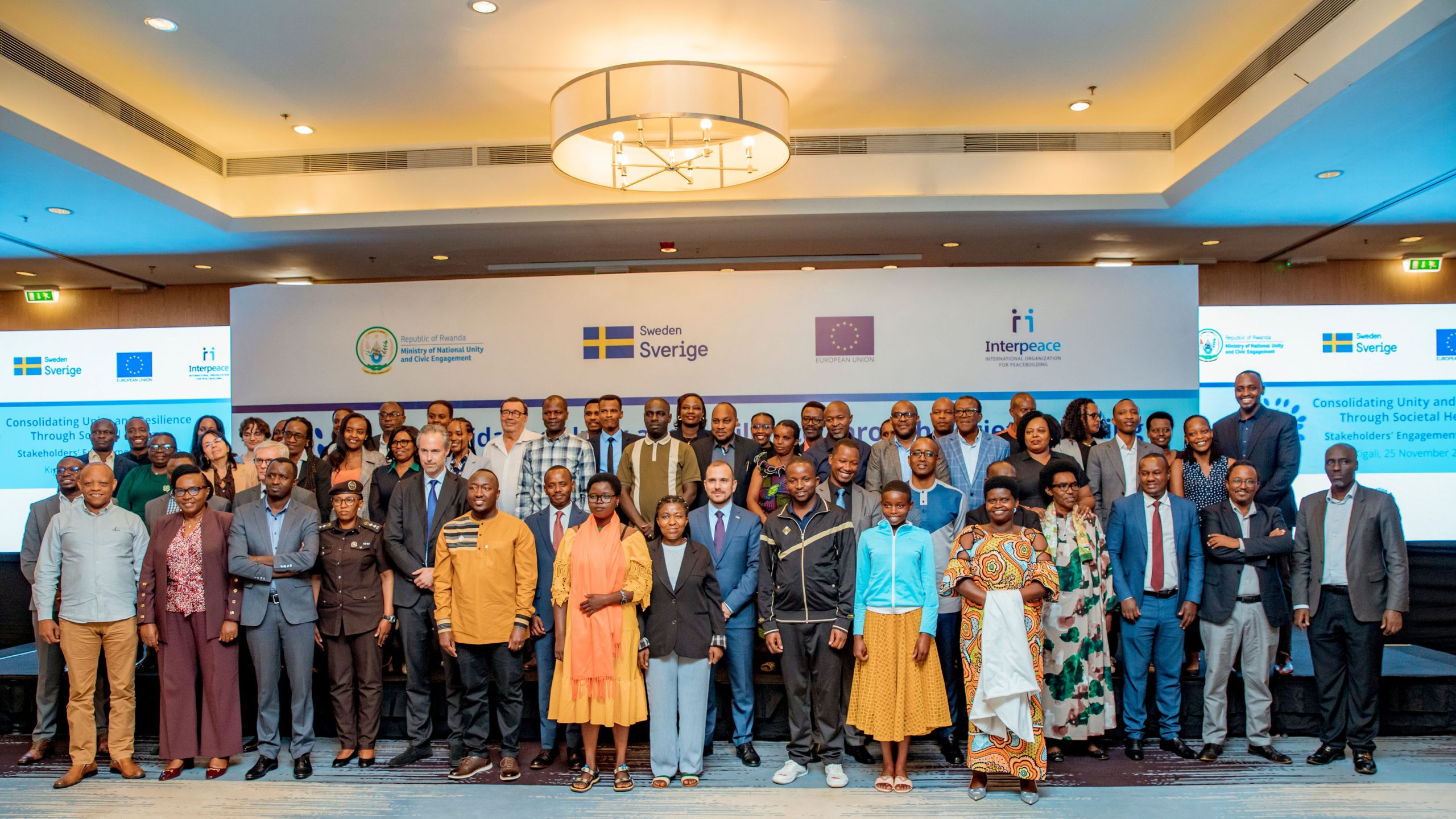
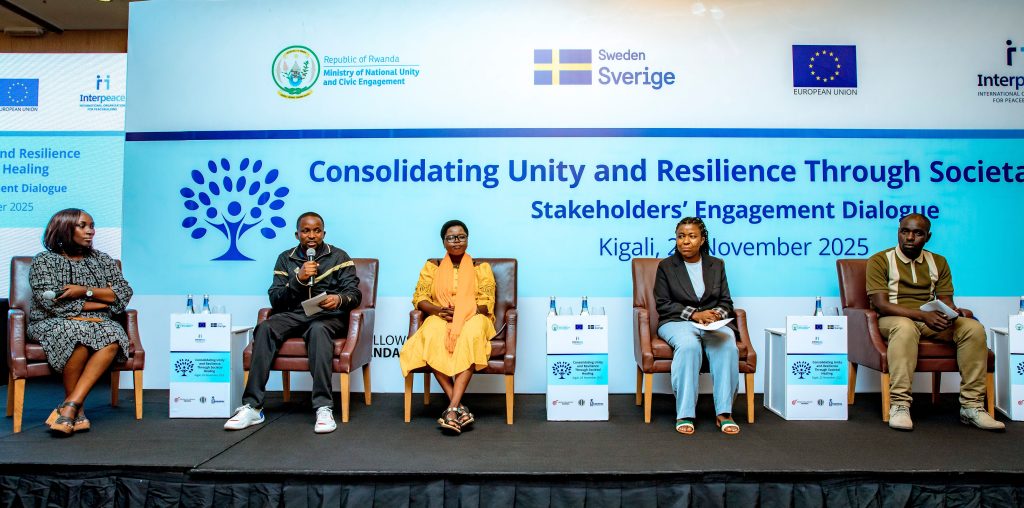
This renewed commitment emerged on Tuesday, 25 November 2025, as the Ministry of National Unity and Civic Engagement (MINUBUMWE) and partners, including Interpeace, convened a stakeholders’ dialogue on strengthening unity and resilience more than three decades after the Genocide against the Tutsi.
The dialogue, which brought together national and international organisations involved in societal healing and development, diplomatic corps, civil society, government institutions, academia, and research entities, underscored a shared message: unity and reconciliation cannot be sustained without multidimensional and evidence-based trauma-recovery interventions.
At the heart of the discussions was a growing body of evidence generated through Interpeace’s Societal Healing Programme, a four-year peacebuilding initiative that has strengthened resilience in five districts—Musanze, Nyabihu, Ngoma, Nyagatare, and Nyamagabe.
The programme delivered measurable gains across mental health, social cohesion, family harmony, psychological rehabilitation and reintegration of prisoners, and economic resilience, using a group-based approach. It demonstrated—critically—that healing is possible, scalable, and central to national transformation.
More than 12,000 Rwandans benefited from the programme, including families, youth, inmates preparing for reintegration, and survivors. They engaged in psychosocial interventions such as Sociotherapy, Multi-family Healing Spaces, Resilience-oriented Therapy, and Collaborative Livelihoods.
A comparison of pre- and post-intervention data shows a 24% increase in emotional wellbeing, a 7.2% rise in trust across groups, a 34.5% improvement in ability to cooperate, a 29.3% increase in food security, and a 54% jump in savings practices.
Findings, insights, and lessons from this initiative are now shaping Rwanda’s national policies, including NST2, Vision 2050, and the newly released National Unity Barometer.
“Healing is measurable — and urgent”
Interpeace Country Representative Frank Kayitare said the evidence is clear: sustainable peace requires interventions that combine mental health, intergenerational dialogue, inmates’ reintegration, and improved collaborative livelihoods.
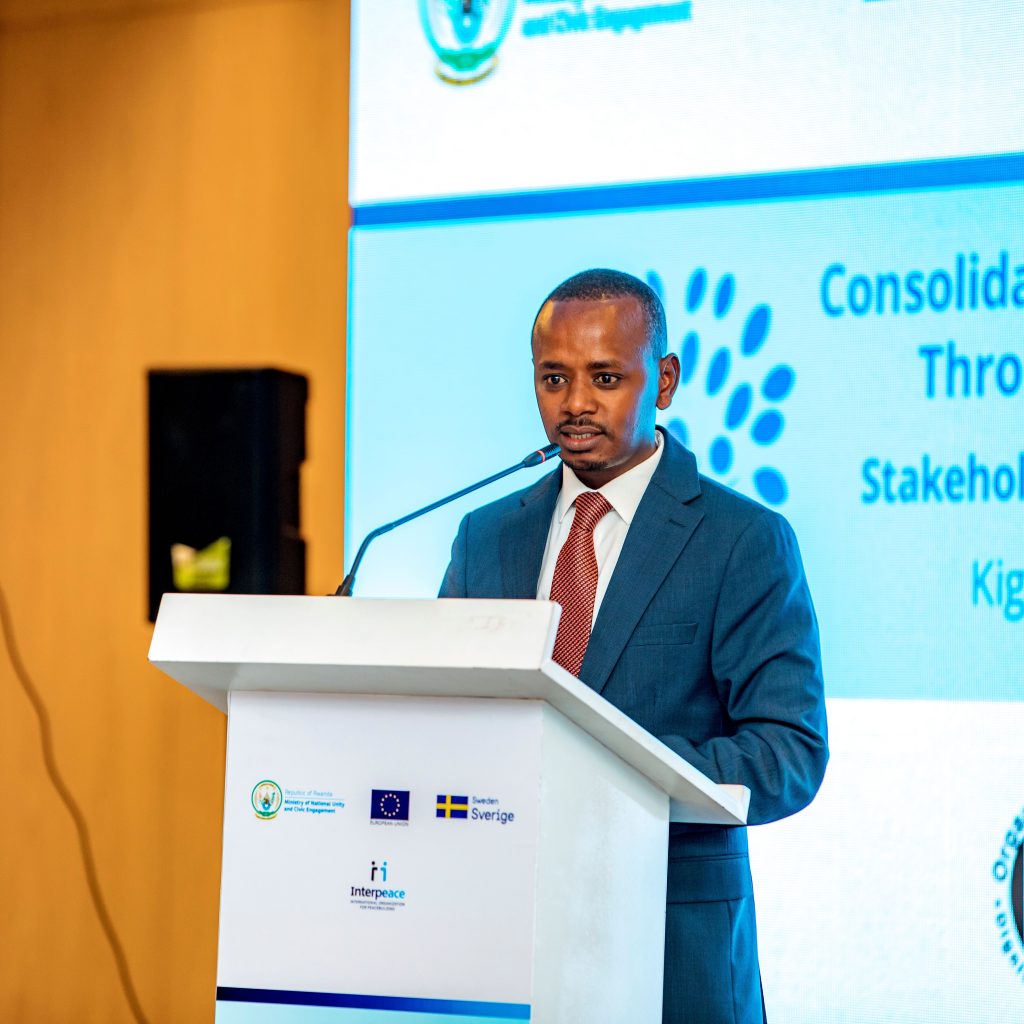
“It is still too early for anyone to expect Rwanda to be fully healed,” he said.
“Our studies show that around 17% of youth from both survivor and perpetrator backgrounds display signs of transmitted trauma—and also ideology. The right time to interrupt that transmission is now.”
Kayitare stressed that isolated activities weaken impact, whereas integrated approaches “drastically increase the chances of building lasting peace.”
The Societal Healing initiative was funded by the Government of Sweden. Dag Sjoogren, the Swedish Ambassador to Rwanda, commended the programme for making mental health accessible, strengthening community ownership, and modelling partnerships that can be replicated globally.
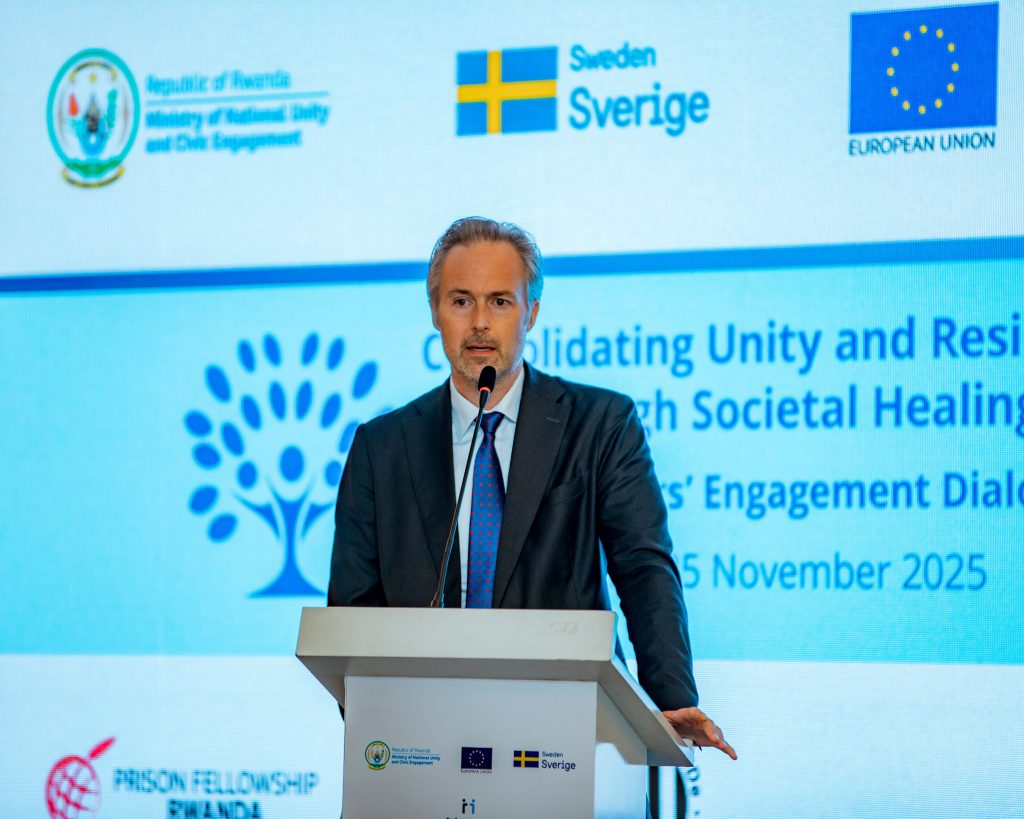
“Healing is not a privilege,” he said. “This programme shows that unity can be renewed and resilience nurtured, even when societies elsewhere are polarising.”
He highlighted visits to Musanze where former prisoners and survivors now run joint livelihood projects, calling their collaboration “a simple but profound truth: we cannot change the past, but together we can build a future we want.”
The European Union confirmed a new phase—Consolidating Unity and Resilience: Promoting Rehabilitation and Reintegration in Rwanda—which will expand the work to additional districts and correctional facilities.
EU representative Vincent Laporte said the next chapter will strengthen rehabilitation of detainees, equip case managers, and create more safe spaces in correctional facilities.
“Reconciliation is a generational process,” he said. “The evidence we have now will guide the way forward.”
Eric Mahoro, Permanent Secretary at MINUBUMWE, noted that the programme’s evidence informed the development of the National Unity Barometer, which now includes resilience indicators for the first time.
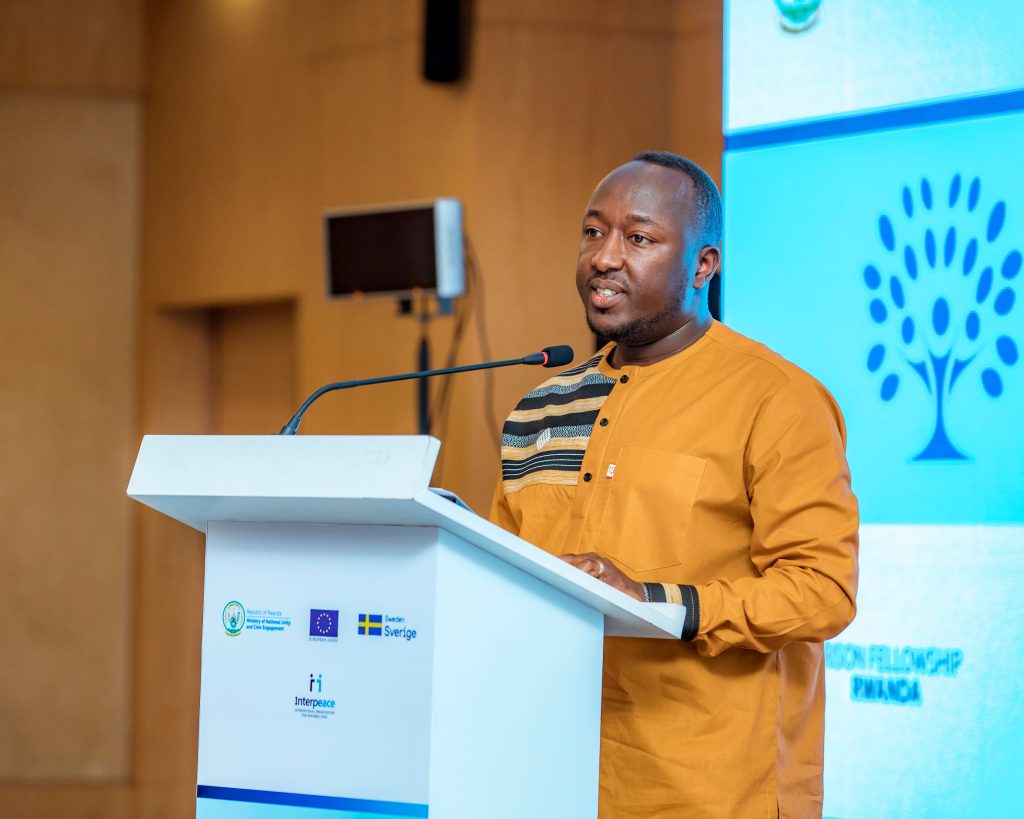
The Barometer shows unity and reconciliation at 95.3%, but community resilience at 90.8%, with persistent challenges: genocide ideology, reintegration of genocide convicts, misinformation and social-media-driven polarisation, limited historical awareness among youth, and widespread unmet healing needs among survivors.
“Stating progress does not mean we are done,” Mahoro said. “Healing remains a critical area—over 45% of survivors still need deeper support.”
He added that the new EU-funded programme aligns directly with NST2’s priority of strengthening unity and resilience.
Across government and partners, a clear message has emerged: healing is not a social add-on—it is a national prerequisite for peace and development.
Rwanda’s next development phase, they emphasised, depends on scaling up approaches that treat trauma as a measurable development challenge, integrate families at the core of healing, prepare inmates for meaningful reintegration, support youth navigating inherited trauma, and transform healing into economic empowerment.
As Interpeace’s findings show, a healed person strengthens a family, a healed family strengthens a community, and a healed community sustains a nation’s progress.