
Leaders Speak Out for Gender Justice in Peacebuilding in Somalia

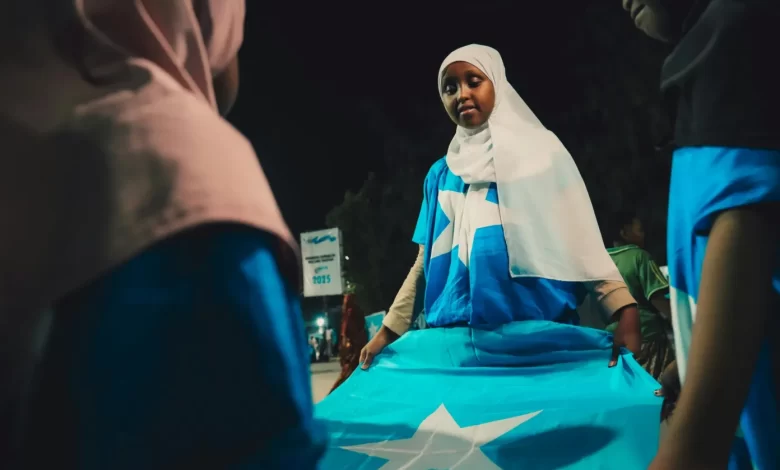
Since the fall of former president Siad Barre in 1991, various armed groups have fought for power in Somalia. Meanwhile, the country is further challenged by weak government authority. Roughly 60% of Somalis live below the poverty line, making Somalia the second poorest country in the world, according to the World Bank in October 2025.
Somali and international leaders have recently spoken out in support of gender justice as a part of building peace in Somalia. On November 23, 2025, UNDP Somalia Resident Representative Lionel Laurens delivered remarks at the opening of Somalia’s first Annual Justice Sector Conference in Mogadishu. Laurens said, “Advancing gender justice and ensuring equal access to legal aid and protection are not only moral imperatives but also essential for sustainable peace and development.”
Laurens stressed the need to expand justice, particularly for women, children, internally displaced people, and marginalized groups, “so that no one is left behind.”
On October 31, 2025, Somali Prime Minister Hamza Abdi Barre met with women leaders from civil society, leadership forums, and the security forces, and affirmed their crucial role in Somalia’s future and survival. PM Barre said, “lasting statehood and sustainable peace cannot be achieved unless women are given a visible, decision-making role,” as quoted by Abdiqani Abdullahi of the Somali National News Agency (SONNA).
Somali women are speaking out in support of freedom in the face of terrorism through the use of community forums, radio, and powerful networks, according to Abdullahi. They are often the main mediators in their communities resolving conflicts such as land disputes. In many areas of the country, Somali women have formed neighborhood watch groups, and have come up with new ways of reporting suspicious activity to police, helping to sharply increase safety.
A key element of the work Somali women do to build peace is rehabilitating youth and defectors from militant groups such as Al-Shabaab. Women provide counseling, therapy, and opportunities to engage in sports, giving young men leaving these groups a “second chance.” They also work with business communities to help these men find jobs.
Somali women have particularly made gains in peacebuilding in the past few years. An August 2025 report for UNDP by Madina Ahmed Nur, the Director General of the Ministry of Women, Family Affairs and Human Rights Development, states that just a few years ago, women had “little access to formal decision-making spaces. They were the first to respond when communities were displaced or when local disputes erupted, yet their voices were absent in the rooms where real power was exercised.”
In 2022, The Somali government, along with UNDP, UN Women, and UNTMIS, launched the Women, Peace and Protection (WPP) Programme. The program aims to localize the Women, Peace, and Security agenda in Somalia’s Southwest State. One of the program’s biggest achievements is the adoption of the Local Action Plan for U.N. Security Council Resolution 1325. The plan was a declaration that women would be at the heart of peace and security.
Polls show that much of Somali society is now supportive of women’s involvement in politics and public life, Abdullahi reports. Surveys show that 80 percent of the public believes women have a right to participate in the administration of their country. Meanwhile, 74% of Somalis support legislating the 30% parliamentary quota for women to make it a constitutional reality.
According to polls, 58% of Somalis believe women politicians represent the interests of the Society, while viewing male politicians as more likely to represent their personal (22%) or clan (20%) interests.
In the past, Peace News Network (PNN) has written about UNDP’s efforts to include women and youth in peacebuilding in Somalia. In September 2025, Peace News Network published an article on the UNDP and a South Korean agency’s work on the program Peacebuilding and Preventing Violent Extremism (PVE) in East Africa. A key leader of the program, Wankyu Park, said that communities, youth and women leaders, and government institutions in Somalia are engaging in peace dialogues, while six local action plans on preventing violent extremism have been developed.
Park said, “Importantly, women will be engaged as active leaders in peacebuilding, reflecting their unique role in reconciliation.”