
Reassessing leadership failures in Africa through Kagame’s lens

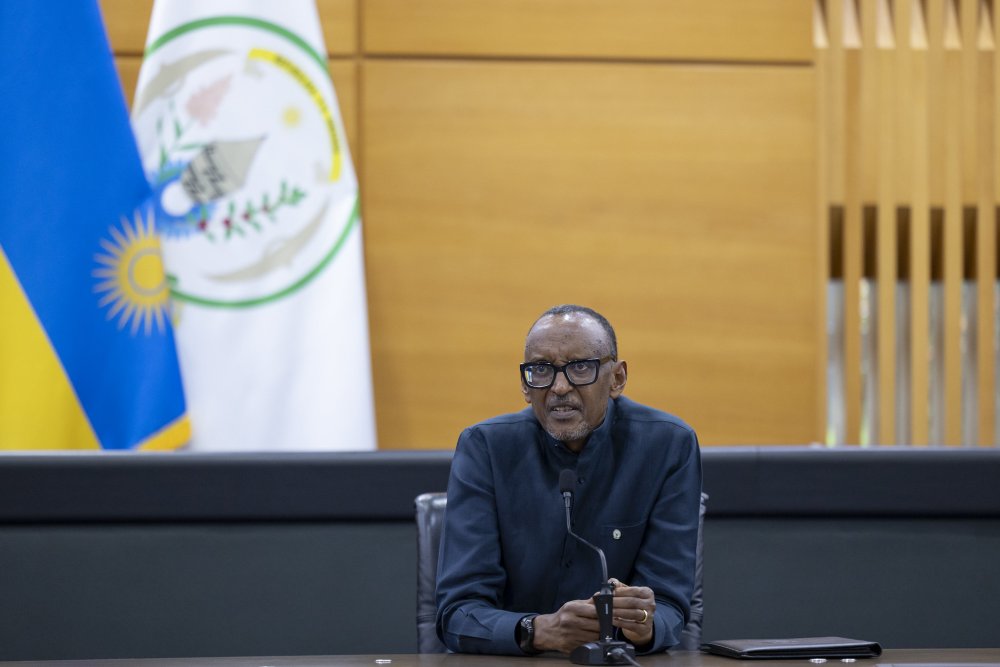
On 27 November 2025, President Kagame held a remarkably engaging press conference at his office, known as Urugwiro Village. Throughout his exchanges with both international and local media, one theme ran through almost every answer: accountability. In his worldview, Africans cannot continue looking outward for salvation, nor perpetually blame external actors for their suffering. At some stage, they must take responsibility for the situations they find themselves in and take the lead in turning things around.
Kagame’s perspective on tackling Africa’s challenges is unsurprising given his personal background. He and the freedom fighters he led in reclaiming their rights, challenging a segregationist and genocidal regime that had killed and exiled their parents while the world watched idly, struggle to understand the passivity and victimhood that often characterise our response to the injustices of the world. “It’s as if we (Africans) are happily exploited,” he remarked.
For action-oriented figures like the RPF leadership that led the liberation struggle, identifying a problem, proposing a theoretical solution and advocating for its implementation may simply not be enough when a system is so thoroughly corrupt that it actively resists positive change because its survival depends on maintaining an inhumane status quo. There comes a point where rebellion becomes the only way forward. As Thomas Sankara once said, a certain degree of madness is necessary for a revolution to succeed.
On the conflict in the DRC, which he addressed first, Kagame set the tone for the entire press conference. For stability, peace and security to be restored, he argued, “the onus is on us, the leaders of the DRC, Rwanda and others in the region.” No country, not even the powerful United States, which he noted has made great efforts to reconcile the warring sides, can end the suffering Africans inflict upon one another when they refuse to honour the agreements they have signed. The DRC’s refusal to deliver on its commitments only prolongs war, displacement and death, conditions that create yet more space for vultures to carry out the very exploitation Africans, and Congolese in particular, consistently decry.
Kagame’s reasoning also applies to Africa’s quiet acceptance of external bureaucracies whose distant decision-making delays urgent partnerships needed to address terrorism and security threats. Africans mostly agree that this cannot continue. The delays only entrench crises, sometimes rendering countries effectively destroyed. Moreover, Africans now have tangible examples of what Pan African solidarity can achieve in Central Africa, in Mozambique and elsewhere. They could even set aside Rwanda’s own record in this domain and recall that the mere threat by the Sahel Alliance to unite their forces stopped a foolish French led intervention in Niger, or that, in December 2021, collective push back from SADC countries forced the United States to rescind an arbitrary travel ban imposed on them during the emergence of a new Covid variant whose origins were unproven.
But as Kagame reminded the room, “you can take horses to a well, but you cannot force them to drink water.” Africans have everything they need, the knowledge and the means, to improve their circumstances. They simply have no excuses left. We either work together to neutralise common threats or perish armed only with our complaints and slogans.
For Kagame, accountability is also central to understanding the coups occurring across the continent. In his view, in ninety per cent of cases, a coup signals an underlying issue that those in power repeatedly failed or refused to resolve. Something, somewhere, had gone wrong, and those with the responsibility to address it simply did not. The problem, over and over, originates in our own lack of action where we have the capacity to intervene.
Listening to the President also made it clear why Rwanda, under his leadership, managed to rise from the ashes. Rwanda could have taken the easier route and blamed external actors for everything that happened. But Kagame is often the first to point out that whatever poisonous teachings originated from colonial rule, they could only devastate a nation with a millennium of history because its own elites adopted and embraced them. To this reality, Kagame once spoke with a defiant clarity: “I will manage my problems, and those they create for me,” referring to the unceasing Western interference in the healing process of a nation they once abandoned to die.
The Rwandan model is a broad term capturing the many lessons this country offers on nation-building and development. These lessons also appear in small gestures that reveal much about the Kagame school of thought and, crucially, its practice.
When a Rwandan journalist raised concerns about construction companies damaging private property through poor practices, Kagame jotted down a note and then answered in line with the day’s main theme. The problem, he said, lay not with the contractors but with the government that had allowed construction activities to proceed without putting in place the necessary safeguards. He promised to raise the issue with his Cabinet the next day.
The promise to act was clear, and the notes were the reminder. But most importantly, there was no deflection and no excuses. There was simply a standard of accountability applied not only to others but also to himself.
A consistent demand for excellence and responsibility is all Africa needs; it has everything else.
The Pan African Review