

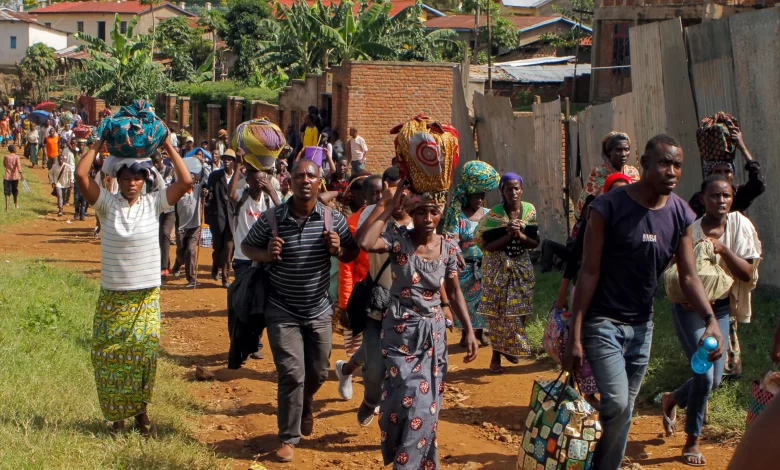
The humanitarian and health situation in eastern Democratic Republic of Congo (DRC) is rapidly deteriorating, reaching a critical point of collapse, as detailed in a recent briefing to the UN Security Council. Médecins Sans Frontières (MSF), the DRC government, Rwanda, and Burundi all presented stark assessments, painting a picture of escalating violence, widespread suffering, and a fragile regional security landscape. This analysis provides a comprehensive overview of the crisis, drawing from the Security Council briefing and contextualizing the challenges with expert insight.
A Health System on the Brink
The core message delivered to the Security Council was alarming: the health infrastructure in North and South Kivu provinces is buckling under immense pressure. Dr. Javid Abdelmoneim, International President of MSF, unequivocally stated that the system is “collapsing” due to the combined impact of relentless violence, mass displacement, and severely restricted humanitarian access. This isn’t simply a matter of overwhelmed facilities; it’s a systemic breakdown threatening the lives of countless civilians.
MSF teams are witnessing “staggering levels of violence and deprivation,” a situation that shows no signs of abating. Hospitals and clinics are struggling with critical shortages of personnel,essential medicines,and even basic medical equipment. This lack of capacity directly translates to preventable deaths and exacerbated suffering. The situation demands immediate and substantial intervention.
The Devastating Human Cost: Sexual Violence and Disease Outbreaks
Beyond the immediate trauma of conflict-related injuries, the crisis is fueling a parallel epidemic of sexual violence. Dr.Abdelmoneim reported that nearly 28,000 survivors sought care at MSF-supported facilities in the first half of 2023 - a harrowing average of over 150 cases per day. Crucially, many arrive too late for effective preventative treatment, and a significant number never access care at all, highlighting the pervasive fear and insecurity hindering access to vital services. This systematic violence represents a grave violation of human rights and a profound humanitarian tragedy.
Compounding the crisis, infectious diseases are spreading rapidly. Cholera cases have surged past 38,000 this year, with fatalities more than doubling compared to the previous year. Measles outbreaks continue to plague the region, and malaria is rampant, all occurring amidst a severely limited capacity for diagnosis and treatment. These outbreaks are not isolated incidents; they are direct consequences of displacement,poor sanitation,and a weakened health system.
Conflicting Accusations and Regional Tensions
The Security Council briefing revealed deep divisions and conflicting narratives regarding the root causes of the conflict and obligation for the escalating violence.
DRC’s Viewpoint: Foreign minister Thérèse Kayikwamba Wagner condemned a recent offensive by the Rwanda Defense Forces (RDF) and the M23 rebel group,alleging it violated commitments made under the Washington Accord and further aggravated the humanitarian crisis.Kinshasa emphasized its commitment to diplomacy but warned that continued attacks, targeting of civilians, and cross-border risks threaten regional stability. The DRC urged the Security Council to enforce Resolution 2773 (2025), strengthen the mandate of the UN Organization Stabilization Mission in the Democratic Republic of the Congo (MONUSCO), and impose consequences for continued violations.
Rwanda’s Ambassador Martin Ngoga rejected the accusations, arguing that a renewed MONUSCO mandate should prioritize the Washington Peace Agreement and the Doha Framework through strict impartiality and support for ceasefire implementation. Rwanda raised concerns about the alleged persecution of the Banyamulenge community in South Kivu,citing reports of displacement,killings,and blockades by Congolese forces and allied militias. Kigali called for a political solution and reaffirmed its commitment to peace through the Washington process.
Ambassador Zéphyrin Maniratanga condemned the reported capture of Uvira by RDF-backed M23 fighters, citing a violation of Resolution 2773 and warning of severe civilian suffering and potential mass displacement into Burundi.He also reported cross-border artillery and drone strikes impacting Burundian territory, raising concerns about national sovereignty and regional stability.Burundi called for full implementation of the Washington commitments and enhanced civilian protection.
Source: World Today Journal