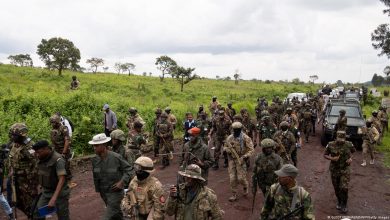


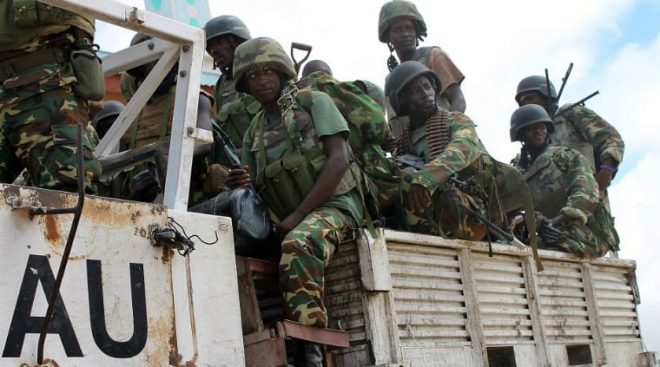
As insecurity threats spreas across the continent, African states are increasingly bypassing the African Union’s flagship security force in favour of faster, ad hoc military coalitions. A new study says.
For two decades, the African Union’s African Standby Force (ASF) was meant to be the continent’s answer to crises, a ready-to-deploy, continent-wide military capability designed to prevent genocide, stop coups and stabilise collapsing states. Declared operationally ready in 2015, it has never been deployed as originally planned.
Instead, African states confronting terrorism, insurgencies and cross-border violence have turned to improvised solutions: temporary, mission-specific military alliances known as ad hoc security coalitions.
A new academic study traces how and why this shift happened and what it means for the future of African peace and security.
A force built for yesterday’s wars
The ASF was conceived in the early 2000s, shaped by the post–Cold War conflicts of the 1990s when civil wars, coups and mass atrocities were recurrent. Its design rested on a collective security model, in which African states would act together under the authority of the AU’s Peace and Security Council.
But the threats facing the continent have evolved. Violent extremist groups such as Boko Haram and Al-Shabaab operate across borders. Armed groups fragment and adapt quickly. Decisions often need to be taken in days, not months.
“The ASF was built for consensus-driven interventions,” the study argues, “but contemporary threats demand speed, flexibility and political will.”
That mismatch has left African governments searching for alternatives.
Learning by doing and improvising
The paper reviews the AU’s major security responses over the past 20 years, including hybrid missions like the UN–AU operation in Darfur, and long-running AU deployments such as the mission in Somalia.
These efforts delivered hard-earned lessons: mandates must match realities on the ground; troops need the right equipment; and military action without a political strategy rarely produces lasting peace.
Yet they also exposed the AU’s limitations, especially its dependence on reluctant member states, unpredictable funding and complex decision-making procedures.
When crises escalated faster than the AU could respond, states acted on their own.
Coalitions of the willing
The study focuses on two prominent examples of ad hoc security coalitions.
The first is the regional military campaign against the Lord’s Resistance Army (LRA), launched in 2008 by Uganda and neighbouring states after the rebel group spread its attacks across borders. Initially improvised, the effort later gained AU backing through the Regional Cooperation Initiative against the LRA.
The second is the Multinational Joint Task Force (MNJTF), formed to combat Boko Haram around Lake Chad. Drawing troops from Nigeria, Chad, Niger and Cameroon, the MNJTF evolved from an existing regional arrangement and was later endorsed by the AU and the United Nations.
In both cases, affected states moved first, motivated by self-defence and immediate threats. Formal AU approval followed later, lending political legitimacy and helping to mobilise international support.
“These coalitions are fast, pragmatic and rooted in shared threat perceptions,” the authors note. “They fill gaps when continental and global institutions cannot act quickly enough.”
This growing reliance on ad hoc coalitions marks a deeper transformation in African security thinking.
While the AU’s founding documents emphasise collective security, centralised decisions made in the name of continental peace, state practice increasingly reflects collective defence. Under this logic, countries respond to threats themselves, often invoking the right to self-defence under international law, and only later seek AU endorsement.
The result is a more decentralised security landscape, where regional and national interests drive action. The AU, rather than leading operations, often plays a supporting role: endorsing missions after deployment, offering technical assistance, and providing diplomatic cover.
Adapting to reality
The study finds that the AU has not ignored these changes. Over the past decade, it has quietly adapted its policies, recognising the role of ad hoc coalitions and developing new doctrines to guide engagement with them.
In 2024, the AU adopted a new Peace Support Operations Doctrine that formally acknowledges “coalitions of member states” as part of its security toolkit. Strategic support cells now link AU headquarters with coalition command structures, improving coordination and oversight.
However, without clear rules on consultation, accountability and reporting, the Peace and Security Council could become little more than a rubber stamp for decisions already taken by powerful states, which the authors warn, could erode the AU’s authority and weaken trust among its members.
The study concludes that ad hoc security coalitions are no longer an exception, they are becoming the norm in Africa’s fight against insecurity. The challenge for the AU is not to resist this trend, but to shape it.
By developing a structured framework for engaging with these coalitions, the AU could preserve its strategic relevance, ensure consistency, and reinforce its role as the continent’s primary peace and security guarantor.
“The future of African security,” the paper suggests, “will depend less on standing forces, and more on standing rules.”