
Advancing SGBV Prevention Through Education in the Great Lakes Region

As cases of sexual and gender-based violence (SGBV) continue to rise, particularly in conflict-affected settings, experts and institutions are emphasizing education, training, and tailored learning materials as critical tools for prevention and response. Stakeholders warn that fragmented approaches are no longer sufficient, calling instead for integrated models that address the complex and interconnected drivers of SGBV.
One such model has been collaboratively developed for the Great Lakes Region by the International Conference on the Great Lakes Region (ICGLR) Regional Training Facility, the Panzi Foundation in the Democratic Republic of Congo, and the Dr. Denis Mukwege Foundation. The initiative represents a coordinated regional effort to strengthen professional responses to SGBV while addressing its root causes.
The model combines clinical, psychosocial, legal, and community-based expertise, drawing on a socio-ecological framework that examines the drivers of SGBV at individual, community, and societal levels. At its core is a survivor-centered, holistic care approach designed to support healing, protection, and long-term empowerment for survivors.
By recognizing the links between social norms, power dynamics, and survivor well-being, the model seeks to ensure that professionals working on SGBV across the region receive consistent and comprehensive training. Its broader objective is not only to improve the quality of survivor-centered care, but also to contribute to changing the social conditions that perpetuate sexual violence and gender inequality.
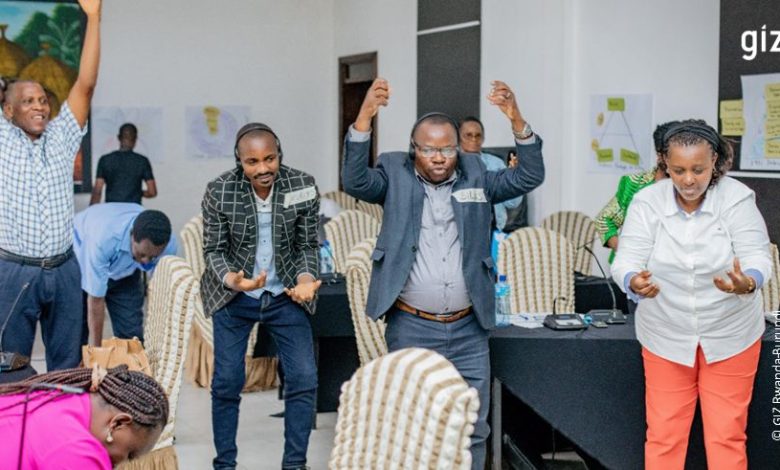
“Current activities build on this foundation by updating training materials, strengthening national training systems, and supporting regional institutions,” noted GIZ office in Rwanda and Burundi. These efforts focus on equipping frontline professionals with skills to integrate mental health and psychosocial support (MHPSS) and peacebuilding approaches into SGBV prevention and response strategies.
Advocates stress that education plays a pivotal role in shaping attitudes, while training enhances practical skills. When combined within an integrated framework, these elements can create lasting impact. “In the Great Lakes Region, such approaches are increasingly seen as essential to advancing dignity, safety, and justice for survivors of sexual and gender-based violence,” GIZ emphasized.