
Healing in the hills: How grassroots mediators are reweaving trust in rural Haiti

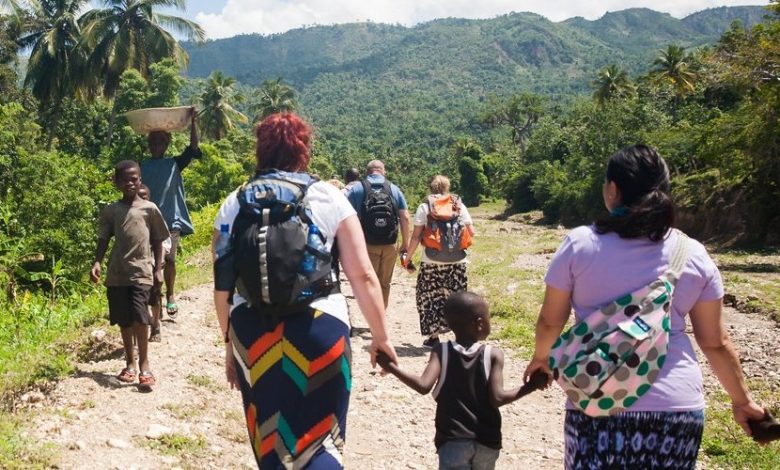
In the misty hills of southern Haiti, the town of Beaumont sits on a fault line of tension. Once a close-knit agricultural community, years of political instability, gang violence, and dwindling state presence have fractured trust among neighbours. What began as disputes over farmland and aid distribution gradually evolved into cycles of resentment and isolation. Yet in this uncertain landscape, a quiet movement has been unfolding, one led not by international nongovernmental organisations (NGOs) or government officials, but by local mediators who believe that peace must begin with conversation. Their work, modest in scale but profound in effect, is helping rebuild what years of unrest have eroded: people’s belief in one another.
At the heart of this effort is Médiation Lakay (“community-based mediation”), a grassroots initiative reflecting the work of local community leaders in Haiti who mediate disputes over land and resources. The group’s approach mirrors practices highlighted in a recent national workshop on land conflict resolution, where elders, local officials, and church figures convene to discuss disputes before they escalate. Rather than waiting for formal judicial intervention, these mediators facilitate dialogue between families, helping them reach agreements and restore communication. Volunteers and community actors often travel between villages to host these discussions, aiming to resolve tensions and prevent violence before conflicts spiral out of control.
Their approach is deceptively simple. Each mediation begins with what they call ‘pale san pè’, “speaking without fear.” Participants gather in a neutral space, often under a tree or church canopy, and agree to listen before they respond. Mediators then guide the conversation using stories and proverbs rooted in local Creole culture. “It’s not about who wins,” says Wilfrid, a local Haitian pastor. “It’s about whether both sides can share a plate of rice after.” The process blends traditional dispute resolution with restorative justice principles, an exchange of listening, acknowledgment, and reparative action. Disputes that might have lasted years are often resolved in weeks. The team keeps no written records, to preserve confidentiality and community trust.
Josette, a school teacher inspired by Susan Fountain and Roland Joseph, leads Médiation Lakay with a focus on community healing. The results have been quietly transformative. In one village near Duchity, a feud over irrigation canals that divided two farming cooperatives ended when mediators helped both groups establish a shared maintenance schedule. In another, a woman who fled after being accused of witchcraft returned home after a reconciliation circle facilitated by Josette’s team. “People came to understand that fear had made them cruel,” Josette says. Beyond conflict resolution, the group’s meetings have become spaces for collective healing, where villagers discuss shared trauma from past hurricanes or lost livelihoods. By focusing on rebuilding relationships rather than assigning blame, Médiation Lakay is gradually reweaving the social fabric that conflict had torn apart.
Yet the work is not without danger. Many of the mediators operate in areas where armed groups are active, and traveling between villages can be risky. The organisation has no formal funding and depends on small contributions from local churches and diaspora donors. Josette notes that, despite their success, they often face skepticism from officials who see peacebuilding as the domain of larger NGOs. “We’re used to being invisible,” she says with a shrug. “But peace doesn’t wait for a budget.” Limited access to training and psychological support also takes a toll on volunteers, some of whom mediate traumatic cases without professional backup. Still, the team persists, sustained by community trust and faith.
Médiation Lakay’s work reflects a broader truth about Haiti: where institutions have failed, communities often build their own systems of care. While international donors tend to fund short-term stabilisation projects, grassroots initiatives like this one embody a long-term, relational approach. Their emphasis on dialogue over punishment mirrors traditional Haitian lakou values, collective living and mutual aid, that predate the modern state. Peacebuilding here is not about conferences or resolutions, but about showing up for one another, again and again, in the aftermath of harm. As Wilfrid puts it, “Every time we share food after a mediation, we prove that peace is possible, even when everything else says it’s not.”
Source: Peace Insight