 English
 Kinyarwanda

Mozambique, Partners Launch $28 Million Initiative to Rebuild Livelihoods and Peace in Cabo Delgado

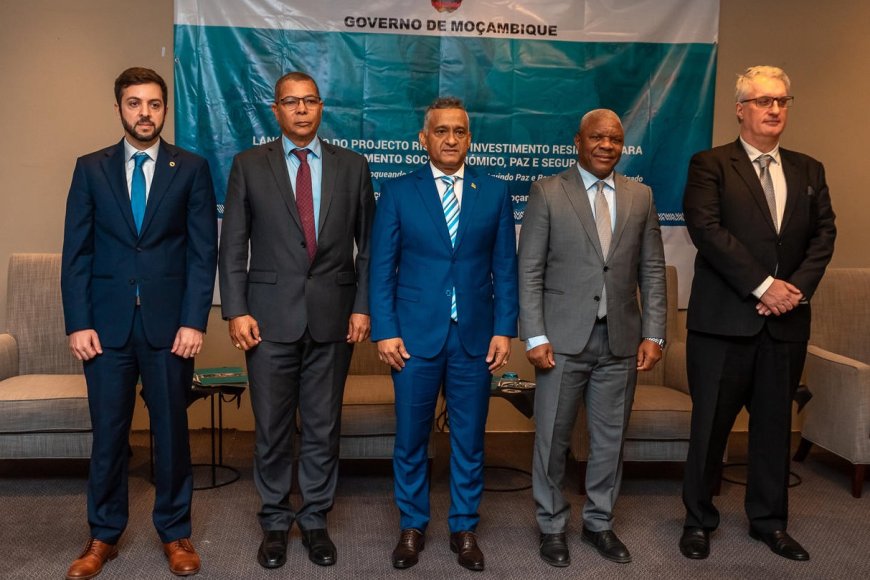
The Government of Mozambique, together with the African Development Bank Group and the United Nations Development Programme, has launched, on Friday 6 March, a major initiative aimed at helping communities in the conflict-affected province of Cabo Delgado rebuild their lives, restore economic opportunities, and strengthen the foundations for lasting peace.
The project titled “Resilient Investment for Socio Economic Empowerment, Peace and Security (RISE-PS)”, brings together national authorities, international development partners, and private sector actors around a shared goal of supporting recovery and resilience in northern Mozambique after years of instability.
Backed by a blended investment package of $28 million, the programme seeks to expand economic opportunities, improve local infrastructure, and empower communities most affected by conflict.
Speaking at the launch ceremony in Maputo, Mozambique’s Minister of Planning and Development, Salim Cripton Valá, described the project as a crucial step toward restoring stability and inclusive development in the country’s northern provinces.
Implemented by UNDP in close partnership with the Agência de Desenvolvimento Integrado do Norte (ADIN), the RISE-PS project aims to support Mozambique’s transition from emergency stabilization to sustainable development.
For many families across Cabo Delgado, the initiative represents more than a development project, it signals hope for renewed stability and opportunity.
RISE-PS will focus on four key areas, including rehabilitating social and economic infrastructure through community-led processes; supporting youth employment and entrepreneurship; expanding market access and private sector growth; and strengthening governance and peace-positive institutions.
The programme is expected to directly benefit about 24,000 young people, half of them women, along with more than 3,000 female-headed households and over 7,300 local enterprises. Indirectly, improved infrastructure and economic opportunities could impact the wider population of Cabo Delgado, estimated at 2.7 million people, as well as millions across northern Mozambique.
Rômolo Cunha Corrêa, Country Manager of the African Development Bank in Mozambique, said the project addresses some of the root causes of fragility in the region.
“The RISE-PS project is a timely and transformative intervention designed to address the complex drivers of fragility in northern Mozambique,” he said. “By focusing on institutional capacity, resilient societies and private investment, we are supporting economic recovery and giving thousands of young people and women a reason to believe in their future.”
A key innovation within the initiative is the creation of a Peace and Security Investment Hub, which will be piloted by ADIN to mobilise investments that strengthen local value chains while contributing to peacebuilding efforts.
Corrêa noted that the initiative is being launched as a pilot and could serve as a model for other countries. “We are confident that its success in Mozambique will provide a compelling business case for expanding the model elsewhere,” he said.
The hub will help connect institutional investors, private companies, international financial institutions, donors, and civil society organizations to ensure that investments respond to local priorities while supporting national development goals.
RISE-PS also places strong emphasis on youth employment and private sector growth. Through a partnership between UNDP and MozParks, the project will create 108 private sector partnerships for youth internships, provide technical and soft-skills training, and establish a climate-smart SME Village in Afungi designed to attract up to 100 micro, small, and medium-sized enterprises.
UNDP Resident Representative Edo Stork said the programme marks a shift toward long-term, locally driven development.
“RISE-PS strengthens resilience, expands economic opportunities, and ensures that peacebuilding underpins development,” he said. “Our partnership with ADIN, AfDB and MozParks reflects a shared commitment to placing youth and women at the centre of Mozambique’s recovery.”
Women’s economic empowerment is a central pillar of the initiative. Targeted vocational training, dedicated grants for women-led enterprises, and support for women’s participation in key value chains aim to help address the disproportionate impacts of conflict on women and girls.
By linking economic opportunity with peacebuilding, the RISE-PS programme aims to support a new generation of Mozambicans with the skills, networks, and resources needed to shape a more resilient and prosperous region.