 English
 Kinyarwanda

Rwanda plans new defence university to boost security and leadership capacity

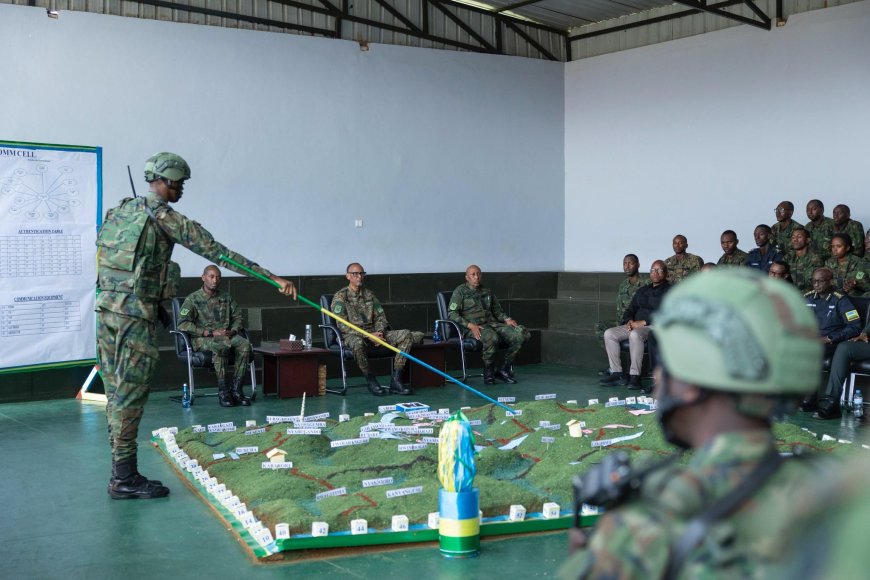
Rwanda is embarking on a significant initiative to enhance its security capabilities with the establishment of a new National Defence University.
This institution aims to redefine how the nation addresses emerging security threats, emphasising comprehensive training, rigorous research, and robust leadership development.
Brig Gen Ronald Rwivanga, Spokesperson for the Rwanda Defence Force (RDF), told The New Times that the university's construction is already in progress in Bumbogo, Gasabo District in Kigali.
Upon its operationalisation, the university is expected to play a crucial role in bolstering Rwanda's capacity to cultivate highly skilled, research-oriented leaders in the fields of defence and security.
The legislative process for the university's establishment saw its bill approved by lawmakers during a plenary session of the Chamber of Deputies on March 11.
The final step involves presidential assent and subsequent publication in the Official Gazette before the law takes effect.
Rwivanga further elaborated that the National Defence University–Rwanda (NDU-R) is designed to cater to personnel from defence forces, various security organs, government institutions, and international students.
Its core mission is to equip them to effectively address both current and future security challenges through advanced research and studies.
Beyond its primary mandate, the institution will also oversee academic programmes across different defence and security training bodies, ensuring quality, relevance, and standardisation in education.
Structure and academic programmes
The university's leadership will consist of a vice chancellor, supported by two deputies, and will encompass several colleges and academies. These include, but are not limited to, the National Defence College, the Institute for Defence and Strategic Studies, the RDF Command and Staff College, the Defence College of Health Sciences, the Rwanda Military Academy, the Defence Institute of Sciences and Technology, the National Police College, and the National Intelligence Academy.
This integrated approach is anticipated to foster enhanced coordination and coherence within the country's defence and security education framework.
The university plans to offer both undergraduate and postgraduate programmes, primarily targeting security personnel and relevant government officials.
Rwivanga highlighted that the academic calendar will be synchronised with professional training schedules, with admission contingent upon the successful completion of prior professional training.
He added, "Hence, both programmes will be complementary rather than overlapping."
Focus on research and technology
Research, particularly in defence technology, will be a central to the university's mandate.
Rwivanga stated that the institution intends to collaborate with regional and international partners to address evolving security challenges.
He emphasised, "The National Defence University–Rwanda will promote research in the field of defence technology," and further noted that this initiative "will expand partnerships with leading defence universities globally for mutual benefit."