
The power of grassroots initiatives to drive inclusive, sustainable development

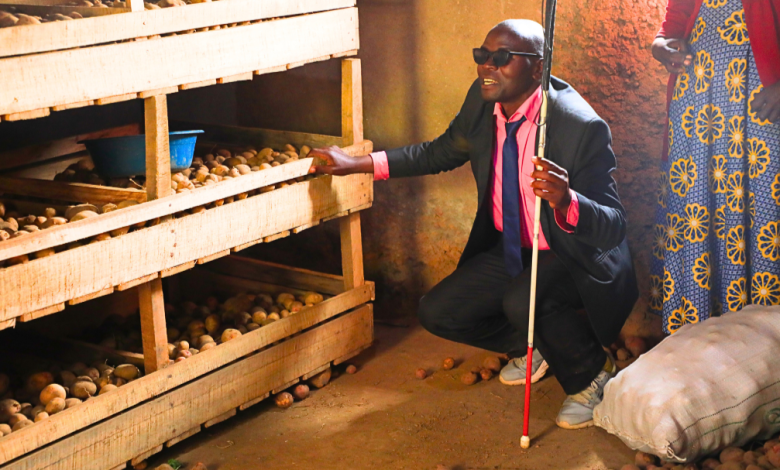
As the world marks the International Day of Persons with Disabilities under the theme “Fostering disability-inclusive societies for advancing social progress,” it is worth sharing the inspiring story of Sinzabaheza Jean Damascene, a 46-year-old who lost his vision at 21 due to the effects of war. He lives in Nyamiyaga Village, Shingiro Sector, Musanze District.
Despite his disability, in 2002, he married Nyirandayambaje Josephine. Together, they have been blessed with five children—the eldest is now 22, and the youngest is Seven years old. After becoming visually impaired, Sinzabaheza faced a life filled with challenges and exclusion. Providing for his family became an uphill battle as he struggled to secure basic necessities such as food, clothing, and shelter. With few options, he resorted to begging on the streets. Even within his church community, where he sought solace, he often felt marginalized and undervalued due to his disability.
A Turning Point with World Relief
Sinzabaheza’s life took a positive turn when his local church partnered with World Relief Rwanda through a church empowerment program. Recognizing his determination, Sinzabaheza was selected to join the Agriculture for Life (AFL) program, which empowers communities by teaching them modern agricultural skills. He embraced the opportunity and later became a volunteer with the ADEPR Rwandarushya Church under the AFL program.
Initially, some doubted whether selecting a visually impaired person for the training was the right choice, questioning his ability to contribute to community development. However, Sinzabaheza viewed the training as a transformative opportunity. “When I was chosen for the training, I immediately saw it as a miracle from God. At the end of the program, our trainer encouraged us to be a light to others and share what we had learned to benefit the community. That’s when I prayed to God to make me His instrument for change,” Sinzabaheza said.
Establishing the Dukomezubuzima Cooperative
After completing his training with World Relief, Sinzabaheza founded the Dukomezubuzima Cooperative and the Duhindurubuzima Ministry to bring together people with and without disabilities. What began as a small savings group grew into a formally registered cooperative involved in farming potatoes, wheat, and beans, later expanding into non-agricultural activities like a sewing workshop and Irembo services.
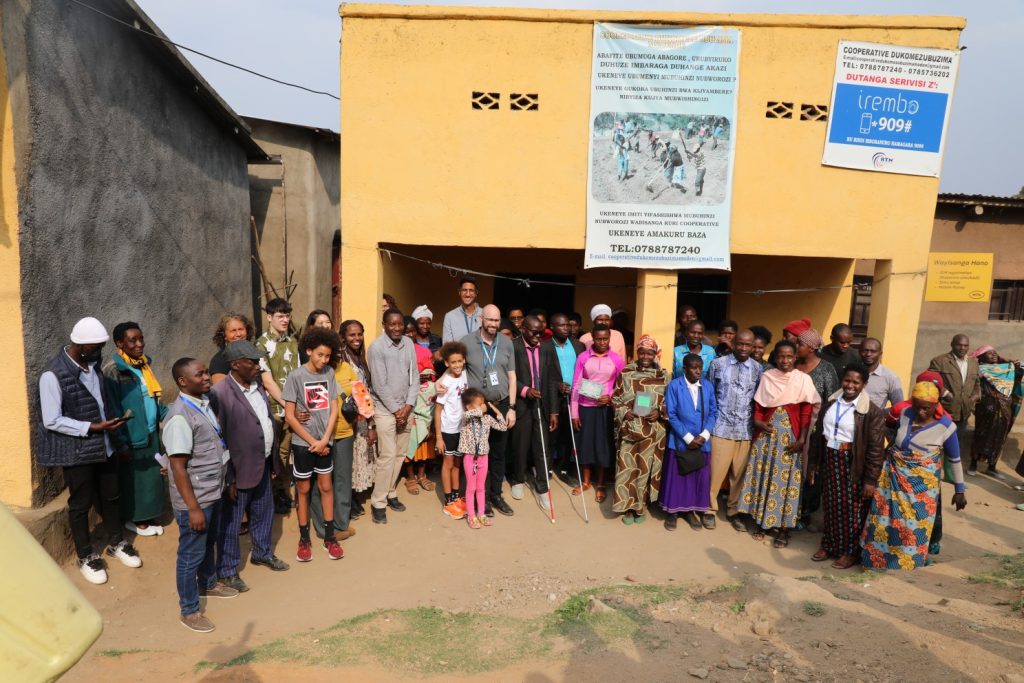
Today, the cooperative has 320 members (200 with disabilities), manages five hectares of land, employs four staff and over 60 casual laborers, and holds assets worth 80 million RWF. It has also invested 78 million RWF in the Seed Potato Fund Limited, a company that multiplies potato seeds in Rwanda. The cooperative has strengthened partnerships, including a BRALIRWA-funded wheat cultivation project and a collaboration with Seed Potato Fund to upgrade and supply improved potato seeds.
A Source of Community Empowerment and Skill Development
Sinzabaheza envisions a bright future for the cooperative: “We aim to produce high-quality seeds, create sustainable jobs, and add value to our products. Our plans include building modern, inclusive storage facilities, promoting savings groups, continuing to use crop insurance, and advocating for the rights of children and people with disabilities.”
The cooperative also empowers its members by offering skill development opportunities, such as literacy training—including braille for visually impaired members. Technical and leadership committees ensure that the cooperative is well-managed and inclusive. As Sinzabaheza explains, “Our five-year plan is to establish a sustainable storage facility, purchase a cooperative-owned vehicle for transporting our produce, expand our agricultural activities, and continue teaching local residents to read and write.”
Fabien Nsangande, a visually impaired member, shares his experience: “I never thought I would learn to read. Now, thanks to the cooperative, I can read and write in braille, and I’ve learned modern farming techniques.”
Youth and Women Employment and Technology Integration
The cooperative has created jobs for youth and women through technology service provision and its sewing business, contributing to the government’s goal of increasing employment, particularly for these groups.
Pascal Nirembere, a young cooperative member without disabilities, shares his appreciation: “The cooperative lifted me out of unemployment. I provide Irembo services and teach computer skills to community members. I generate 300,000 Frw a month for the cooperative, and my monthly salary is 80,000 Frw. This has transformed my life.”
Thanks to training from World Relief’s Agriculture for Life program, cooperative members have significantly boosted their agricultural productivity. Where they once harvested six tons per hectare, they now yield 20 tons. Members have invested in livestock, joined savings groups, and enrolled in programs like Crop Insurance and EJOHEZA, a long-term savings scheme. The future looks bright, with a sustainable income, improved food security, and a strong community support network.
Source: World Relief Rwanda