 English
 Kinyarwanda
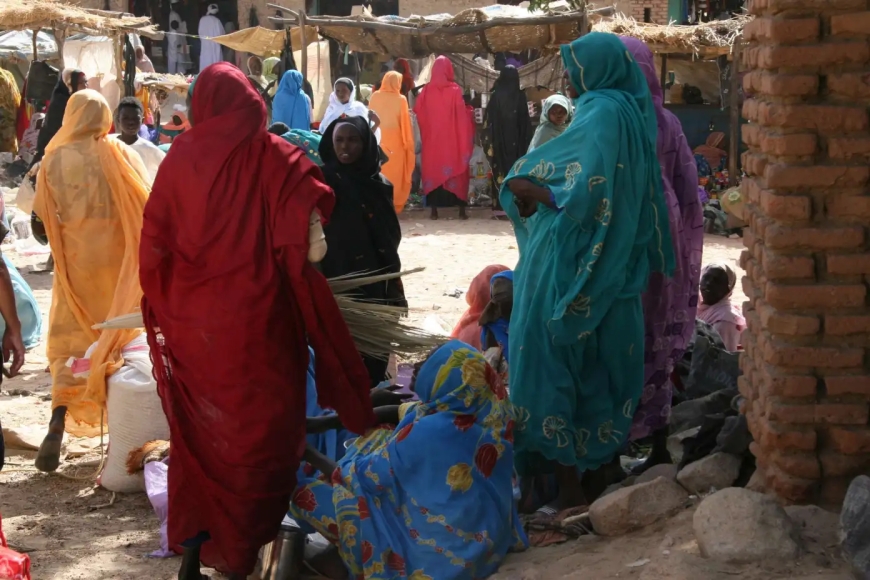
African Women Mediators Still Pushed to the Margins of Peace Processes

In Sudan’s ongoing conflict, women have been central to peacebuilding at the grassroots level, yet their voices have repeatedly been marginalized in formal negotiations. Despite playing a leading role in mobilizing communities during the country’s 2018–19 revolution and sustaining peace efforts through networks like the Peace for Sudan Platform, women were not included at the negotiating table in the Jeddah ceasefire talks in 2023. This stark absence demonstrates how, even where women organise and contribute vital expertise on conflict dynamics and civilian protection, diplomatic peace efforts can exclude them, reinforcing patterns of underrepresentation that undermine the inclusiveness and sustainability of peace processes.
When communities are fractured by conflict, mediation is often portrayed as a neutral, technical process led by experienced authorities tasked with restoring peace. In reality, mediation spaces are rarely neutral. They are shaped by power, history, and deeply gendered expectations. Across Africa, women mediators play critical roles in peacebuilding, yet they continue to face exclusion and marginalization in formal peace processes.
Despite global commitments such as the Women, Peace, and Security agenda, women remain underrepresented in high-level peace negotiations. When they are included, they are often confined to supporting roles or expected to represent “women’s issues,” rather than being recognized as lead mediators and decision-makers. This gap between policy promises and lived realities raises important questions about whose voices shape peace.
These were some of the issues uncovered in our 2024 research study. We interviewed 12 women mediators from Africa to understand their lived experiences of mediation. The results highlighted the diversity of experiences in women’s peacebuilding.
Mediation is not a level playing field
For many African women, entering mediation spaces means navigating environments that are openly patriarchal. Conflict resolution—particularly when it involves land, power, or political authority—is still widely viewed as a male domain. Women mediators we spoke with frequently reported being questioned, undermined, or dismissed because of their gender or age.
Some were told outright that they cannot lead mediation processes. Others described being ignored, spoken over, or required to constantly prove their competence in ways their male counterparts were not. These experiences reflect broader social norms that associate leadership with men and view women as having less authority.
Yet women continue to step into these spaces because peacebuilding in their communities depends on it. Their persistence challenges deeply entrenched assumptions about who is seen as legitimate in negotiations.
The problem with calling women “natural” peacebuilders
Paradoxically, while women are excluded from formal mediation roles, they are often praised as being “naturally” suited for peacebuilding. Women are described as patient, nurturing, and more inclined toward reconciliation. While this framing may seem positive, it creates a new set of constraints.
When mediation skills are seen as an extension of women’s caregiving roles, their work is undervalued. The emotional labor involved in building trust, facilitating dialogue, and sustaining peace is treated as instinctive rather than as skilled, professional practice. As a result, women’s contributions frequently go unrecognized, unpaid, and undocumented.
The majority of the women mediators interviewed rejected this stereotype. They argued that effective mediation is not about gender, but about training, experience, cultural knowledge, and strategic skill. Peacebuilding is learned and practiced—it is not something one is simply born to do.
Balancing culture, credibility, and safety
African women mediators often face conflicting expectations. They are expected to respect cultural norms while simultaneously challenging the structures that exclude them. This balancing act can be exhausting and, at times, risky.
The women mediators we interviewed explained how trust-building in mediation often happens in informal spaces, such as late-night meetings or social gatherings, that may be inaccessible or unsafe for women. In some contexts, they said that even a woman’s clothing became an issue, as mediators adapt how they dress to be taken seriously or to avoid backlash.
Despite these barriers, the women mediators in this study demonstrated remarkable adaptability. Some strategically work alongside male co-mediators, allowing men to speak first to gain acceptance. Others draw on respected social identities, such as motherhood or seniority, to establish authority. These strategies are not signs of weakness; they are evidence of agency and resilience within restrictive systems.
Why local experiences matter for peace
A major weakness in global peacebuilding policy is the failure to center the lived experiences of women mediators themselves. Too often, peace frameworks are designed by external actors from international organisations and multilateral institutions, which are based on assumptions that do not reflect realities on the ground.
African women mediators are not merely participants in peace processes—they are innovators. Through their work at community, national, and regional levels, they show that sustainable peace depends on inclusive approaches rooted in local knowledge and lived experience. When their voices are ignored, peace efforts risk reinforcing the inequalities that contribute to conflict in the first place.
From inclusion to transformation
Increasing the number of women in mediation is not enough if the structures themselves remain unchanged. True inclusion requires challenging the gendered norms that determine who leads, who is heard, and whose expertise is valued.
Listening to African women mediators is a crucial starting point. Their experiences challenge dominant narratives and remind us that peace is not only negotiated in formal rooms—it is built daily, often by those working at the margins. For peace processes to be truly effective and sustainable, these voices must be recognized not as exceptions, but as central to building lasting peace.
By Bianca Rochelle Parry through Peace News Network (PNN). Dr. Bianca Rochelle Parry is a Social Psychology Lecturer at the Social Research Institute at the University College London (UCL) and a Research Associate at the Centre for Mediation in Africa (CMA) at the University of Pretoria in South Africa.