 English
 Kinyarwanda

Hundreds Killed in Rubaya Mine Collapse Amidst DRC’s Mineral War, Highlighting Urgent Need for Peace and Accountability

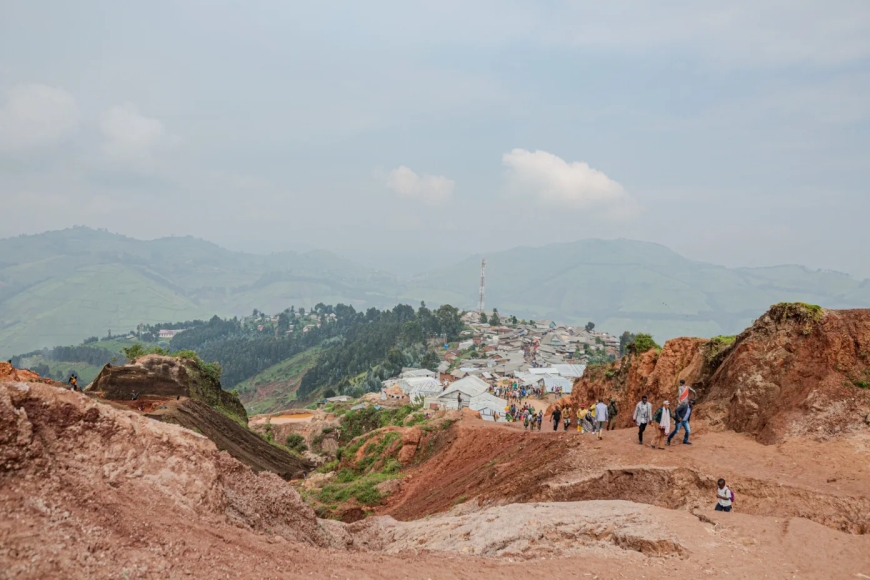
One week after the landslide in the artisanal coltan mining area of Rubaya, eastern Democratic Republic of the Congo (DRC), families are mourning, and others remain without news of their relatives. The disaster occurred on Wednesday, January 28, 2026, at the Luwowo mining site, in the Matanda grouping, Luundje locality, in the Gasasa agglomeration. The death toll from this tragedy remains a matter of debate between civil society and official authorities, including the M23 rebels and the DRC government.
According to Kambere Muyisa, the spokesperson for the provincial governor installed by the M23 rebels, allegedly allied with Rwanda, who have occupied the mine since May 2024, the provisional death toll is over 200 civilians.
“More than 200 people were victims of this landslide, including miners, children, and traders…Some were rescued just in time, suffering from serious injuries, and are being treated in local health facilities, while others were transferred here to Goma,” said Muyisa. Muyisa attributed the landslide to the rainy season in the region.
Rescuers say the death toll is much higher. A rescuer who participated in the rescue operation, speaking on condition of anonymity, told a Peace News Network (PNN) correspondent that more than 430 bodies had been recovered by the morning of Saturday, January, adding that the death toll could still rise as eight pits were affected by the landslide.
The Rubaya Mine produces around 15% of the world’s Coltan. Coltan is a strategic mineral widely used in the electronics industry. Occupied since April 2024 by the M23 rebels, supported by Rwanda, the Kinshasa authorities have placed the area under red status. In its statement, the government stressed that it classified the Rubaya mining area as ‘red.’ It added, “This classification prohibits all mining and marketing activities involving mineral substances, including artisanal mining. The mining activities carried out on this site are therefore in flagrant violation of the law and without any respect for safety standards.”
PNN spoke with Pascale Bazimaiki, who is still grieving because she has not yet found the body of her brother.
“The initial rescue operations recovered several bodies from the most accessible areas. Several artisanal miners were found lifeless,” she said. Bazimaziki added, “The search continued the next day. The rebels took men and young people from the town to search, but so far my brother has not been found. We fear he is still buried in the mud, or perhaps he was swept away by the waters.”
The landslide has also been a tragedy for the Baraturwango family. Thirteen artisanal miners, members of this family, perished in the disaster, and only one survived. Grace Baraturwango, 32, is one of the few survivors. He says he spent an entire night buried in the mud before being rescued the next day by local people.
“As there are large cracks on the surface, a heavy rain fell in the area around 3 pm. These cracks absorbed a large amount of water which, with its weight, caused a landslide.”
He added, “Everyone who was in the pits, those on the surface washing and cleaning the minerals, and even the people who ran small businesses around the mining site were all buried in the mud, while others were swept down into a river at the foot of the hill.” Baraturwango says the landslide caught him in the deep pit where he spent the night buried in the mud before being pulled out the next day along with two other young boys from among 80 artisanal miners in a single pit.
In its statement, the Congolese government offered its condolences to the bereaved families. “The government expresses its deepest condolences to the affected families and pays tribute to the memory of the victims,” the Ministry of Media and Communication stated.
War Economy
The Congolese government says in its statement that “between 112 and 125 tons of coltan are extracted each month” in the Rubaya area “and transported exclusively to Rwanda.” Kinshasa describes this as “the manifest failure of international and regional traceability mechanisms.”
The UN has accused the M23 rebels of looting Rubaya’s mineral wealth to finance their insurgency which is supported by the Rwandan government, an allegation that Rwanda continues to deny.
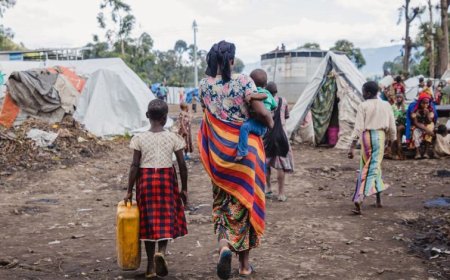
Eastern DRC, ravaged by conflict for thirty years, has seen a resurgence of violence since 2021 with the resurgence of the M23 armed group, which, with the support of the Rwandan army, seized the major cities of Goma and Bukavu in January and February 2025. These conflicts have killed thousands displaced more than 7 million people, according to various reports. The conflicts in the eastern region are primarily fueled by artisanal mining and timber smuggling.
Three days after a landslide at the Luwowo mining site, artisanal miners resumed operations at other mining sites in the area due to widespread poverty.
In June 2025, more than 300 people had already reportedly lost their lives in another landslide at a nearby mining site, also in Rubaya.