
EAC Health Ministers Launch Urgent Border Controls to Contain Ebola Outbreak

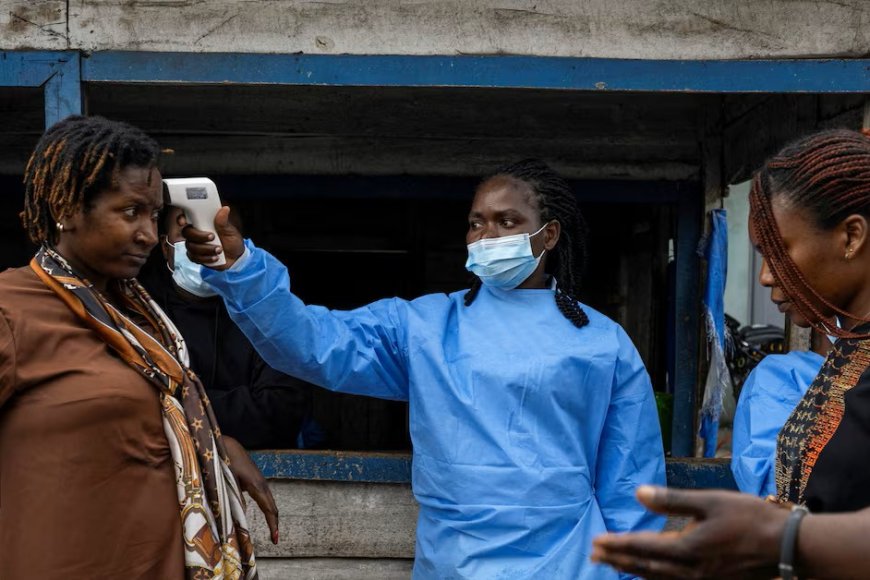
A frontline healthcare worker conducts temperature screenings on a traveler at an East African border crossing. Photo: EAC

EAC Health Ministers Launch Urgent Border Controls to Contain Ebola Outbreak

Jun 4, 2026 - 15:24
 0

East African Community (EAC) Health Ministers have implemented emergency cross-border measures, including harmonized border screenings and a new specialist taskforce, to halt the spread of an ongoing Ebola outbreak in the region.


The emergency directives were finalized during the 8th Extraordinary Meeting of the EAC Sectoral Council of Ministers of Health, held virtually from June 1–2. The high-level meeting focused on preventing further cross-border transmissions between partner states.

The regional intervention comes amid rising infections.

As of June 1, the Democratic Republic of Congo (DRC) reported 121 confirmed cases and 1,077 suspected cases of Bundibugyo Ebola Virus Disease. The outbreak has caused 17 deaths among confirmed cases and 246 deaths among suspected cases in the DRC.

Meanwhile, Uganda has recorded 11 confirmed cases and one death. Health officials have identified 642 contacts, with 638 currently under active follow-up, signaling severe ongoing transmission risks, according to EAC statement.

The community noted that to curb the spread, ministers ordered immediate, uniform Ebola surveillance and protective controls at all regional airports, seaports, and land border crossings.

The EAC Secretariat will work alongside the Civil Aviation Safety and Security Oversight Agency (CASSOA) and other relevant agencies, to urgently convene a regional meeting to harmonize screening procedures, traveler health declaration requirements and other public health measures at points of entry.

Ministers also ordered the immediate start of exit screenings at designated border points.

In a major structural move, the ministers established the EAC Regional Technical Taskforce on Ebola Response and other high-consequence diseases. This team will monitor epidemiological trends and share real-time data to Ministers and other EAC policy organs.

Each EAC partner state must immediately nominate three experts to the taskforce: two technical experts from their Ministry of Health and one from their Ministry responsible for EAC Affairs.

To boost testing speeds, ten EAC mobile laboratories have already been deployed across the DRC, Uganda, Kenya, Rwanda, Burundi, South Sudan, and Tanzania. The ministers directed partner states to keep these units at strategic border entry points and hot spots.

The mobile lab network is funded by the Government of Germany through the German Development Bank (KFW), with technical support from Germany’s Bernhard Nocht Institute for Tropical Medicine (BNITM).

The EAC states that Germany's KFW bank committed to reallocating EUR 1 million to fund diagnostic supplies, lab deployments, and personnel training.

‘”They also noted ongoing efforts by the EAC Secretariat and German development cooperation agency, GIZ, to mobilize additional funding in support of the Ebola response and to further strengthen pandemic preparedness in the region,’” Reads statement.

The EAC Pandemic Preparedness Project (PanPrep), backed by Germany and the European Union, will immediately deploy 500 additional Personal Protective Equipment (PPE) sets to the DRC and Uganda.

Ministers also directed the Secretariat to fund emergency training for frontline healthcare workers.

They called for refresher courses for the East African Community Pool of Rapidly Deployable Experts (RDE), a 180-member multidisciplinary group. The EAC is finalizing a framework with the Africa Centres for Disease Control and Prevention (Africa CDC) to operationalize this expert pool.

Heads of National Medicines Regulatory Authorities met on same dates to build a joint regional vaccine approval framework alongside the African Medicines Agency (AMA) and the World Health Organization (WHO) to fast-track Ebola vaccines and therapeutics.

The statement shows that the Ministers also instructed the Secretariat, in collaboration with Partner States, to develop a comprehensive regional Ebola Virus Disease Contingency, Response and Recovery Plan

Ministers acknowledged that ongoing security challenges in affected areas are severely hindering contact tracing, safe burials, and risk communication.

To prevent these disruptions from damaging regional trade, the ministers agreed to convene a multisectoral meeting to address security risks while protecting the free movement of persons under the EAC Common Market Protocol.


EAC Health Ministers Launch Urgent Border Controls to Contain Ebola Outbreak

Jun 4, 2026 - 15:24
 0
EAC Health Ministers Launch Urgent Border Controls to Contain Ebola Outbreak
A frontline healthcare worker conducts temperature screenings on a traveler at an East African border crossing. Photo: EAC

East African Community (EAC) Health Ministers have implemented emergency cross-border measures, including harmonized border screenings and a new specialist taskforce, to halt the spread of an ongoing Ebola outbreak in the region.


The emergency directives were finalized during the 8th Extraordinary Meeting of the EAC Sectoral Council of Ministers of Health, held virtually from June 1–2. The high-level meeting focused on preventing further cross-border transmissions between partner states.

The regional intervention comes amid rising infections.

As of June 1, the Democratic Republic of Congo (DRC) reported 121 confirmed cases and 1,077 suspected cases of Bundibugyo Ebola Virus Disease. The outbreak has caused 17 deaths among confirmed cases and 246 deaths among suspected cases in the DRC.

Meanwhile, Uganda has recorded 11 confirmed cases and one death. Health officials have identified 642 contacts, with 638 currently under active follow-up, signaling severe ongoing transmission risks, according to EAC statement.

The community noted that to curb the spread, ministers ordered immediate, uniform Ebola surveillance and protective controls at all regional airports, seaports, and land border crossings.

The EAC Secretariat will work alongside the Civil Aviation Safety and Security Oversight Agency (CASSOA) and other relevant agencies, to urgently convene a regional meeting to harmonize screening procedures, traveler health declaration requirements and other public health measures at points of entry.

Ministers also ordered the immediate start of exit screenings at designated border points.

In a major structural move, the ministers established the EAC Regional Technical Taskforce on Ebola Response and other high-consequence diseases. This team will monitor epidemiological trends and share real-time data to Ministers and other EAC policy organs.

Each EAC partner state must immediately nominate three experts to the taskforce: two technical experts from their Ministry of Health and one from their Ministry responsible for EAC Affairs.

To boost testing speeds, ten EAC mobile laboratories have already been deployed across the DRC, Uganda, Kenya, Rwanda, Burundi, South Sudan, and Tanzania. The ministers directed partner states to keep these units at strategic border entry points and hot spots.

The mobile lab network is funded by the Government of Germany through the German Development Bank (KFW), with technical support from Germany’s Bernhard Nocht Institute for Tropical Medicine (BNITM).

The EAC states that Germany's KFW bank committed to reallocating EUR 1 million to fund diagnostic supplies, lab deployments, and personnel training.

‘”They also noted ongoing efforts by the EAC Secretariat and German development cooperation agency, GIZ, to mobilize additional funding in support of the Ebola response and to further strengthen pandemic preparedness in the region,’” Reads statement.

The EAC Pandemic Preparedness Project (PanPrep), backed by Germany and the European Union, will immediately deploy 500 additional Personal Protective Equipment (PPE) sets to the DRC and Uganda.

Ministers also directed the Secretariat to fund emergency training for frontline healthcare workers.

They called for refresher courses for the East African Community Pool of Rapidly Deployable Experts (RDE), a 180-member multidisciplinary group. The EAC is finalizing a framework with the Africa Centres for Disease Control and Prevention (Africa CDC) to operationalize this expert pool.

Heads of National Medicines Regulatory Authorities met on same dates to build a joint regional vaccine approval framework alongside the African Medicines Agency (AMA) and the World Health Organization (WHO) to fast-track Ebola vaccines and therapeutics.

The statement shows that the Ministers also instructed the Secretariat, in collaboration with Partner States, to develop a comprehensive regional Ebola Virus Disease Contingency, Response and Recovery Plan

Ministers acknowledged that ongoing security challenges in affected areas are severely hindering contact tracing, safe burials, and risk communication.

To prevent these disruptions from damaging regional trade, the ministers agreed to convene a multisectoral meeting to address security risks while protecting the free movement of persons under the EAC Common Market Protocol.