How Women Broke Silence,  Reshaped Peace from Havana to Juba
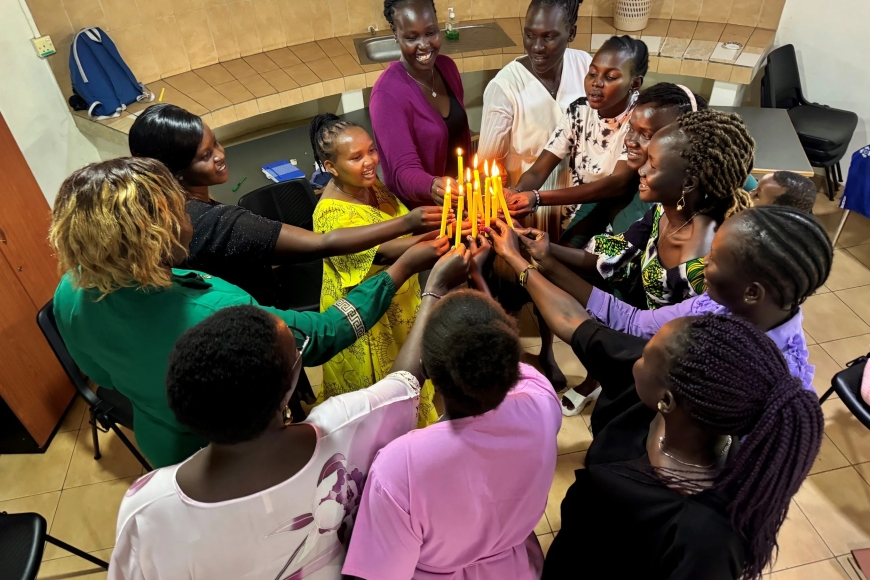
Photo: Peace Opportunity Fund -South Sudan

How Women Broke Silence, Reshaped Peace from Havana to Juba

Mar 21, 2026 - 18:39
 0

For decades, peace negotiations were often rooms full of men, dividing power while the rest of society waited outside. But a global shift is occurring, where women are no longer just asking for a seat at the table, they are rewriting the agreements themselves.


From the historic 2016 Havana Agreement in Colombia to the 2018 revitalised peace process in South Sudan, women leaders and grassroots organisations have spent the last decade moving from symbolic presence to “meaningful influence”.

This evolution, analysed in March 2026 report by the Norwegian Institute of International Affairs (NUPI), demonstrates how female negotiators are forcing issues like sexual violence, education, and community recovery into the heart of international diplomacy.

The report highlights that, by utilising gender sub-commissions, mandatory quotas, and massive street mobilisations, these women have turned “pieces of paper” into progressive frameworks for social change.

They have proved that when women influence the process, the focus shifts from military elite power-sharing to the actual survival of the population.

In Colombia, the breakthrough came through the creation of a dedicated Gender Sub-commission in 2014.

“The gender sub-commission was created because of the pressure of women’s organisations. There was a huge mobilization of women in Bogota,” one interviewee noted in the NUPI report.

Later, the women participated as part of negotiation teams on both sides and a sub-commission on gender was created to give input on all aspects of the negotiations, resulting in one of the most progressive peace agreements to date in terms of language.

The report shows that the negotiating parties were flooded with 7,172 proposals from 301 different women’s organizations, ensuring the agreement reflected the diverse needs of the country.

The report states that the presence of women changed the very nature of the conversation.

Now, the government and FARC-EP (Fuerzas Armadas Revolucionarias de Colombia – Ejército del Pueblo) negotiators began discussing topics that were previously ignored, such as accountability for sexual violence and the forced recruitment of children.

A government negotiator reflected on how her role transformed during the talks.

“It was not expected that I represent women. I was a woman in the negotiations representing the Colombian government. But then the women’s organisations understood that they could approach me. And then I became a bridge,” reads the NUPI report.

During the High-Level Revitalization Forum (HLRF) of 2017 and 2018 in South Sudan, women fought for the “1+4 rule”—a requirement that for every five members a leader selected for a delegation, one had to be a woman.

Having built the momentum and the capacity, the HLRF (and the resulting agreement) therefore reflected a shift in the inclusion of women.

According to this report, women’s participation increased from 11 out of 90 delegates in December 2017 to 39 out of 120 by the end of the negotiations in May 2018.

The influence of these women was most visible when they challenged the status quo of “men talking about power”.

The resulting 2018 agreement (R-ARCSS) stipulated that women must constitute at least 35% of all executive levels of government and transitional justice institutions, noted in the report.

Adding that while the 35% quota has sometimes been viewed as symbolic, it provided a platform for women to lead inter-ethnic dialogues and support displaced populations at the grassroots level.

On a global scale, these efforts align with UN Security Council Resolution 1325, which since 2000 has called for women’s participation in conflict resolution.

However, according to the report, presence alone is not enough. Researchers argue that influence depends on “strategic positioning” and the ability to break through patriarchal biases.

External support has acted as an essential “amplifier” in these processes.

Norway, as a leading supporter, has provided the financial backing and political pressure needed to keep women in the room. This support included everything from funding transport for grassroots leaders to providing gender expertise that shaped the technical language of the deals.

However, the road remains steep. The report reveals that in both Colombia and South Sudan, the post-agreement phase has seen a “rollback” of gains. Lack of political will and insufficient funding for implementation often leave women’s provisions as mere promises on a page.

In South Sudan, the 35% quota has often been viewed as symbolic rather than substantive, with women relegated to less influential positions.

In Colombia, while the agreement is hailed as a global model, the implementation of gender provisions has been described as slow and insufficient.
How Women Broke Silence, Reshaped Peace from Havana to Juba

Mar 21, 2026 - 18:39
Mar 22, 2026 - 09:00
 0
How Women Broke Silence,  Reshaped Peace from Havana to Juba
Photo: Peace Opportunity Fund -South Sudan

For decades, peace negotiations were often rooms full of men, dividing power while the rest of society waited outside. But a global shift is occurring, where women are no longer just asking for a seat at the table, they are rewriting the agreements themselves.


From the historic 2016 Havana Agreement in Colombia to the 2018 revitalised peace process in South Sudan, women leaders and grassroots organisations have spent the last decade moving from symbolic presence to “meaningful influence”.

This evolution, analysed in March 2026 report by the Norwegian Institute of International Affairs (NUPI), demonstrates how female negotiators are forcing issues like sexual violence, education, and community recovery into the heart of international diplomacy.

The report highlights that, by utilising gender sub-commissions, mandatory quotas, and massive street mobilisations, these women have turned “pieces of paper” into progressive frameworks for social change.

They have proved that when women influence the process, the focus shifts from military elite power-sharing to the actual survival of the population.

In Colombia, the breakthrough came through the creation of a dedicated Gender Sub-commission in 2014.

“The gender sub-commission was created because of the pressure of women’s organisations. There was a huge mobilization of women in Bogota,” one interviewee noted in the NUPI report.

Later, the women participated as part of negotiation teams on both sides and a sub-commission on gender was created to give input on all aspects of the negotiations, resulting in one of the most progressive peace agreements to date in terms of language.

The report shows that the negotiating parties were flooded with 7,172 proposals from 301 different women’s organizations, ensuring the agreement reflected the diverse needs of the country.

The report states that the presence of women changed the very nature of the conversation.

Now, the government and FARC-EP (Fuerzas Armadas Revolucionarias de Colombia – Ejército del Pueblo) negotiators began discussing topics that were previously ignored, such as accountability for sexual violence and the forced recruitment of children.

A government negotiator reflected on how her role transformed during the talks.

“It was not expected that I represent women. I was a woman in the negotiations representing the Colombian government. But then the women’s organisations understood that they could approach me. And then I became a bridge,” reads the NUPI report.

During the High-Level Revitalization Forum (HLRF) of 2017 and 2018 in South Sudan, women fought for the “1+4 rule”—a requirement that for every five members a leader selected for a delegation, one had to be a woman.

Having built the momentum and the capacity, the HLRF (and the resulting agreement) therefore reflected a shift in the inclusion of women.

According to this report, women’s participation increased from 11 out of 90 delegates in December 2017 to 39 out of 120 by the end of the negotiations in May 2018.

The influence of these women was most visible when they challenged the status quo of “men talking about power”.

The resulting 2018 agreement (R-ARCSS) stipulated that women must constitute at least 35% of all executive levels of government and transitional justice institutions, noted in the report.

Adding that while the 35% quota has sometimes been viewed as symbolic, it provided a platform for women to lead inter-ethnic dialogues and support displaced populations at the grassroots level.

On a global scale, these efforts align with UN Security Council Resolution 1325, which since 2000 has called for women’s participation in conflict resolution.

However, according to the report, presence alone is not enough. Researchers argue that influence depends on “strategic positioning” and the ability to break through patriarchal biases.

External support has acted as an essential “amplifier” in these processes.

Norway, as a leading supporter, has provided the financial backing and political pressure needed to keep women in the room. This support included everything from funding transport for grassroots leaders to providing gender expertise that shaped the technical language of the deals.

However, the road remains steep. The report reveals that in both Colombia and South Sudan, the post-agreement phase has seen a “rollback” of gains. Lack of political will and insufficient funding for implementation often leave women’s provisions as mere promises on a page.

In South Sudan, the 35% quota has often been viewed as symbolic rather than substantive, with women relegated to less influential positions.

In Colombia, while the agreement is hailed as a global model, the implementation of gender provisions has been described as slow and insufficient.