 English
 Kinyarwanda
DRC, Rwanda Clash in War of Words Over U.S. Sanctions
A diplomatic war of words has erupted between the Democratic Republic of the Congo and Rwanda, with senior officials from both countries publicly accusing each other of fueling the conflict in eastern Congo.
The exchange followed U.S. sanctions imposed on the Rwanda Defence Force (RDF) over alleged support to the M23 rebel movement, which has been blamed for renewed violence and mass displacement in the region.
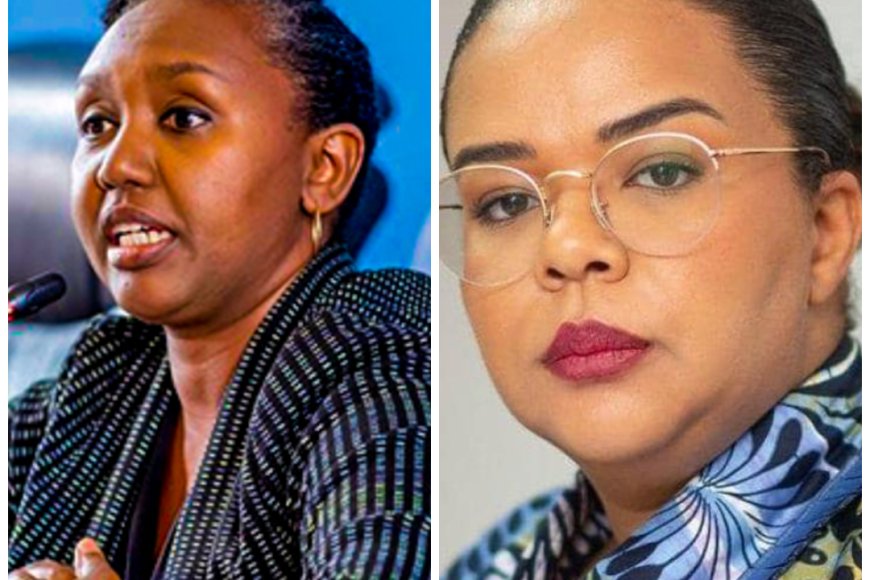
Congolese Foreign Minister Thérèse Kayikwamba Wagner welcomed the sanctions in a post on X, calling the move a “turning point.”
“This decision taken by President Donald J. Trump and his administration marks a turning point: a word given cannot be perpetually broken, and the brazen contempt for human lives cannot endure,” she wrote.
Her message framed the sanctions as a moral stand as much as a political one. At the start of Women’s Rights Month, she said her thoughts were “first and foremost” with Congolese women who “have for too long been at the heart of this cycle of violence.”
But Rwanda’s government quickly pushed back.
Yolande Makolo, Rwanda’s government spokesperson, responded directly to the foreign minister’s remarks, echoing her words before turning them into a rebuke.
“‘A word given cannot be perpetually broken, and the brazen contempt for human lives cannot endure.’ No one can argue with this,” Makolo wrote. “But above the noise, this is the reality: The Government of the DRC remains the number one backer of FDLR (Forces Democratiques de Liberation du Rwanda), which is an existential threat to Rwanda.”
The FDLR, an armed group founded by elements linked to the perpetrators of the 1994 Genocide against the Tutsi, has long been cited by Kigali as a primary security concern. Rwanda accuses Kinshasa of state sponsorship of the militia, a charge the Congolese government denies.
Makolo dismissed what she described as “lies and propaganda” aimed at distracting from what Rwanda sees as the core issue, the presence and alleged backing of the FDLR by Congolese authorities.
She argued that the U.S. sanctions, rather than advancing peace, risk emboldening Kinshasa to pursue a military path.
“One-sided sanctions unfortunately only serve to embolden the Government of the DRC in its insistence on a military solution,” she said. “The result is what we see now: prolongation of the conflict, escalation of violence, lost opportunities and importantly, lost lives.”
Makolo also broadened the criticism, linking the conflict to what she described as internal Congolese policies that marginalise certain communities. She said the AFC/M23 rebellion is rooted in “persecution based on the policies of the Government of DRC that support proponents of genocide ideology,” pointing to inflammatory rhetoric by Congolese military officials as evidence.
“These facts cannot be distorted or overlooked in the search for a solution to the crisis,” she added.
At the heart of the dispute is the implementation of the Washington Accords, a U.S.-brokered agreement signed by Presidents Tshisekedi and Paul Kagame aimed at de-escalating tensions and laying groundwork for regional stability.
While Kinshasa views the sanctions as accountability for alleged interference on its territory, Kigali insists it remains committed to the peace framework and accuses the DRC of failing to meet its own obligations under past agreements.
The sharp exchange underscores how fragile the diplomatic process remains. Behind the public statements are communities in eastern Congo still living with the daily reality of persecution, displacement, fear and uncertainty.