

WFP Warns of Record Global Hunger Risk Amid Middle East War Escalation

Photo: WFP

WFP Warns of Record Global Hunger Risk Amid Middle East War Escalation

Mar 18, 2026 - 23:38
 0

The World Food Programme (WFP) has warned that global food insecurity could reach record levels in 2026 if ongoing conflict in the Middle East continues to disrupt the global economy.


According to new analysis, up to 45 million additional people could fall into acute hunger this year, adding to the 318 million already facing severe food insecurity worldwide.

This projected surge would bring global hunger close to levels seen during the Ukraine war, when 349 million people were affected. That crisis triggered a sharp rise in food prices, which climbed rapidly but declined slowly, leaving vulnerable populations unable to afford basic staples for extended periods.

Although the current conflict is centered in a global energy hub rather than a major agricultural region, WFP emphasizes that the consequences could be equally severe. Energy and food markets are closely linked, meaning rising fuel costs directly increase food production, transportation, and distribution expenses. As a result, even households that are currently managing may soon struggle to afford sufficient food.

WFP estimates that the crisis will worsen significantly if oil prices remain above $100 per barrel and conflict persists beyond mid-2026. Under such conditions, millions of families already living on the edge could be pushed into acute hunger, classified as IPC Phase 3 or worse.

Carl Skau, WFP’s Deputy Executive Director, warned that continued instability will have far-reaching consequences. He stressed that without adequate humanitarian funding, the situation could become catastrophic for the world’s most vulnerable populations.

The effects of the conflict are already being felt globally. Disruptions to shipping routes, particularly in the Strait of Hormuz and the Red Sea, have driven up the cost of fuel, fertilizers, and food. These increases are placing additional pressure on countries heavily dependent on imports, especially in Africa and Asia.

WFP analysis identifies sub-Saharan Africa and parts of Asia regions as the most at risk. In West and Central Africa, the number of food-insecure people could rise by 21 percent, while East and Southern Africa may see a 17 percent increase. Asia faces the highest projected jump, with a 24 percent rise in acute food insecurity.

Countries that rely heavily on imported staples are particularly vulnerable. In Sudan, where around 80 percent of wheat is imported, rising prices could significantly reduce access to food. Meanwhile, Somalia—already grappling with severe drought—has reported increases of at least 20 percent in the cost of essential goods since the conflict began. Both countries have experienced famine conditions in recent years, making them especially susceptible to further shocks.

The crisis is unfolding at a time when WFP faces significant funding shortages. Limited resources have forced the organization to scale back or prioritize assistance programs across multiple regions, leaving many in need without support. If food insecurity rises further without a corresponding increase in funding, the risk of famine in several countries could intensify dramatically.

To estimate the potential impact, WFP analysts modeled a scenario in which sustained high oil prices drive up global food costs. They assessed how many people would no longer be able to afford a minimum daily diet of 2,100 calories, factoring in each country’s reliance on imported energy and food. The results highlight the strong link between energy shocks and hunger, particularly in import-dependent economies.

Overall, the analysis underscores the global nature of the crisis. While the conflict is geographically concentrated, its economic ripple effects are widespread. Rising costs, disrupted supply chains, and reduced humanitarian capacity are converging to create a situation that could push global hunger to unprecedented levels.

Without swift resolution of the conflict and increased international support, WFP warns that millions more could be driven into acute food insecurity in the months ahead.

 

WFP Warns of Record Global Hunger Risk Amid Middle East War Escalation

Mar 18, 2026 - 23:38
 0
WFP Warns of Record Global Hunger Risk Amid Middle East War Escalation
Photo: WFP

The World Food Programme (WFP) has warned that global food insecurity could reach record levels in 2026 if ongoing conflict in the Middle East continues to disrupt the global economy.


According to new analysis, up to 45 million additional people could fall into acute hunger this year, adding to the 318 million already facing severe food insecurity worldwide.

This projected surge would bring global hunger close to levels seen during the Ukraine war, when 349 million people were affected. That crisis triggered a sharp rise in food prices, which climbed rapidly but declined slowly, leaving vulnerable populations unable to afford basic staples for extended periods.

Although the current conflict is centered in a global energy hub rather than a major agricultural region, WFP emphasizes that the consequences could be equally severe. Energy and food markets are closely linked, meaning rising fuel costs directly increase food production, transportation, and distribution expenses. As a result, even households that are currently managing may soon struggle to afford sufficient food.

WFP estimates that the crisis will worsen significantly if oil prices remain above $100 per barrel and conflict persists beyond mid-2026. Under such conditions, millions of families already living on the edge could be pushed into acute hunger, classified as IPC Phase 3 or worse.

Carl Skau, WFP’s Deputy Executive Director, warned that continued instability will have far-reaching consequences. He stressed that without adequate humanitarian funding, the situation could become catastrophic for the world’s most vulnerable populations.

The effects of the conflict are already being felt globally. Disruptions to shipping routes, particularly in the Strait of Hormuz and the Red Sea, have driven up the cost of fuel, fertilizers, and food. These increases are placing additional pressure on countries heavily dependent on imports, especially in Africa and Asia.

WFP analysis identifies sub-Saharan Africa and parts of Asia regions as the most at risk. In West and Central Africa, the number of food-insecure people could rise by 21 percent, while East and Southern Africa may see a 17 percent increase. Asia faces the highest projected jump, with a 24 percent rise in acute food insecurity.

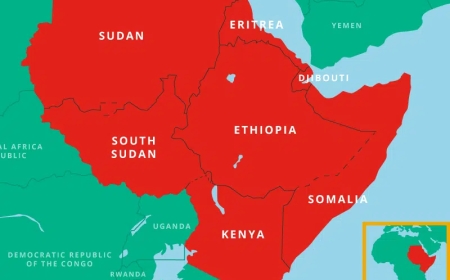
Countries that rely heavily on imported staples are particularly vulnerable. In Sudan, where around 80 percent of wheat is imported, rising prices could significantly reduce access to food. Meanwhile, Somalia—already grappling with severe drought—has reported increases of at least 20 percent in the cost of essential goods since the conflict began. Both countries have experienced famine conditions in recent years, making them especially susceptible to further shocks.

The crisis is unfolding at a time when WFP faces significant funding shortages. Limited resources have forced the organization to scale back or prioritize assistance programs across multiple regions, leaving many in need without support. If food insecurity rises further without a corresponding increase in funding, the risk of famine in several countries could intensify dramatically.

To estimate the potential impact, WFP analysts modeled a scenario in which sustained high oil prices drive up global food costs. They assessed how many people would no longer be able to afford a minimum daily diet of 2,100 calories, factoring in each country’s reliance on imported energy and food. The results highlight the strong link between energy shocks and hunger, particularly in import-dependent economies.

Overall, the analysis underscores the global nature of the crisis. While the conflict is geographically concentrated, its economic ripple effects are widespread. Rising costs, disrupted supply chains, and reduced humanitarian capacity are converging to create a situation that could push global hunger to unprecedented levels.

Without swift resolution of the conflict and increased international support, WFP warns that millions more could be driven into acute food insecurity in the months ahead.