 English
 Kinyarwanda

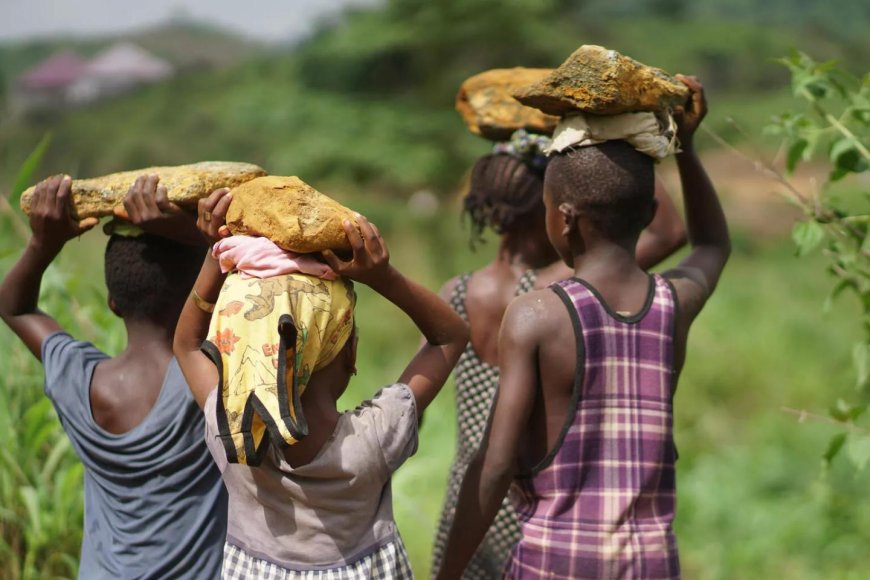
Why is over 40 million children still Africa’s unfinished ‘crisis’ in labour?

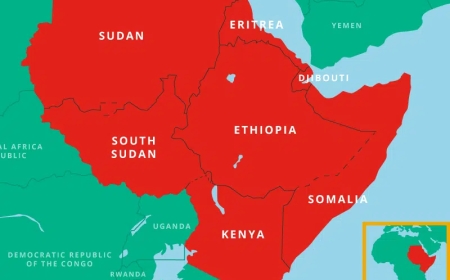
About 41 million children in East and Southern Africa are still working instead of going to school. While this number has dropped from 49 million in 2020, this year report from UNICEF shows that the region is missing global targets to end child labour.
Currently, nearly one in five children in the region is working in jobs that can be dangerous to their health, such as mining and farming. This rate is more than double the global average, proving that despite some progress, millions of children remain trapped in difficult works.
The decline of eight million children entering the workforce over the last four years offers a hope, but experts warn against getting comfortable when there is still work to be done.
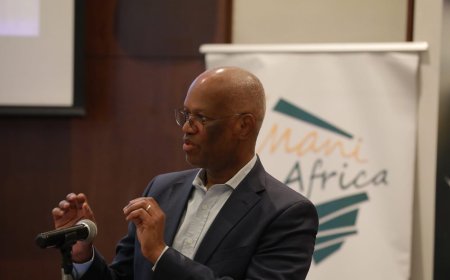
“A decline from 49 million to 41 million is significant progress, but it still reflects a very large-scale structural problem,” said Evariste Murwanashyaka, Head of Programmes at CLADHO, an umbrella human rights organization in Rwanda.
Murwanashyaka noted that while the drop suggests some interventions like social protection and education access are working, the pace is simply too slow.
“41 million children in labour means millions are still being denied basic rights like education, safety, and healthy development,” he said. “Encouraging trend, but still a crisis.”
According to UNICEF, of the 41 million children working, 13.4 million are trapped in hazardous conditions. This includes handling dangerous machinery, carrying heavy loads, or working long hours that the body of a child was never meant to undergo.
The data shows that the transition from the classroom to the field happens early.
Two-thirds of those in child labour in the region are under the age of 12. While agriculture remains the primary sector, as children grow older, they are often pushed into industry and services where the risks multiply.
“Child labour remains one of the most urgent child rights challenges in Eastern and Southern Africa,” stated Etleva Kadilli, UNICEF Regional Director for the region, in the report.
Why the fields keep calling
The drivers behind these numbers are deep-rooted and structural.
Murwanashayaka sees the poverty to remain the primary engine, as families facing economic shocks, inflation, and unemployment often find themselves dependent on a child’s income for survival.
He points to a “cycle of poverty” that is difficult to break. He explained that child labour today leads to poor adults’ tomorrow, as education loss results in lifelong reduced earning potential.
“In rural areas, schools may be few or under-resourced,” Murwanashyaka said, adding that school fees and long distances often push children out of the system.
“Cultural and social norms also play a role; in some communities, child work is seen as part of upbringing,” he explained, noting that Gender norms often push girls into domestic labour. While child labour has declined for both sexes since 2020, “progress has been slower for girls”.
When hazardous household tasks are included, such as caring for the sick or cleaning for more than 21 hours a week, UNICEF shows that the prevalence of child labour in the region rises significantly from 21 to 27 per cent.
UNICEF’s data shows that 6 in 10 adolescents in child labour are not attending school, compared to just 2 in 10 of their peers who are not working.
The cost of inaction
Beyond the individual child, the region pays a heavy price.
Murwanashyaka argued that child labour is a “development crisis” that creates a low-skilled workforce and slows national economic growth.
“It’s an entrenched inequality,” he warned. “Countries lose human capital, and injured or uneducated populations eventually strain public health systems.”
What is the solution?
UNICEF and human rights experts like Murwanashyaka agree that policy changes alone aren't enough, but multi-layered approach that targets the root cause of the problem.
To combat the rising numbers, Murwanashyaka is advocating for a strategy that targets the economic roots of the crisis. He emphasizes that direct financial aid is a critical first step for struggling families.
“We must prioritize cash transfer programs to support the poorest households,” Murwanashyaka stated, noting that providing a safety net reduces the pressure on parents to send their children to work.
Education remains a cornerstone of the proposed reforms. Murwanashyaka argued that for real change to occur, schooling must be both accessible and mandatory.
“Free and compulsory education is essential to remove the financial barriers that keep children out of the classroom,” he explained.
Turning to legal oversight, he called for the restrictions on industries that often operate illegally.
He highlighted the need for “stricter enforcement of labor laws,” specifically within hard-to-regulate informal sectors like mining and street vending.