 English
 Kinyarwanda

From Conflict to Collaboration: How Local Conventions Are Transforming Natural Resource Management and Supporting Peace in Central Mali

Preventing and resolving conflicts over land and natural resources has become one of the major global challenges for peace, stability, and security in the Sahel, where pressure on resources has been intensifying for several decades under the combined effects of demographic growth, climate variability, and insecurity.
Although natural resources are rarely the direct cause of violent conflict, competition over use often is an aggravating factor, exacerbating preexisting tensions linked to socio-economic inequalities, political marginalisation, and ecosystem degradation (Djohy and Crane, 2024).
Since the early 2000s, tensions have been particularly pronounced in areas where people’s livelihoods depend heavily on natural resources and where local institutions lack the capacity to manage equitably competing claims pertaining to land, grazing areas, water points, and fishing zones (Bouju, 2020).
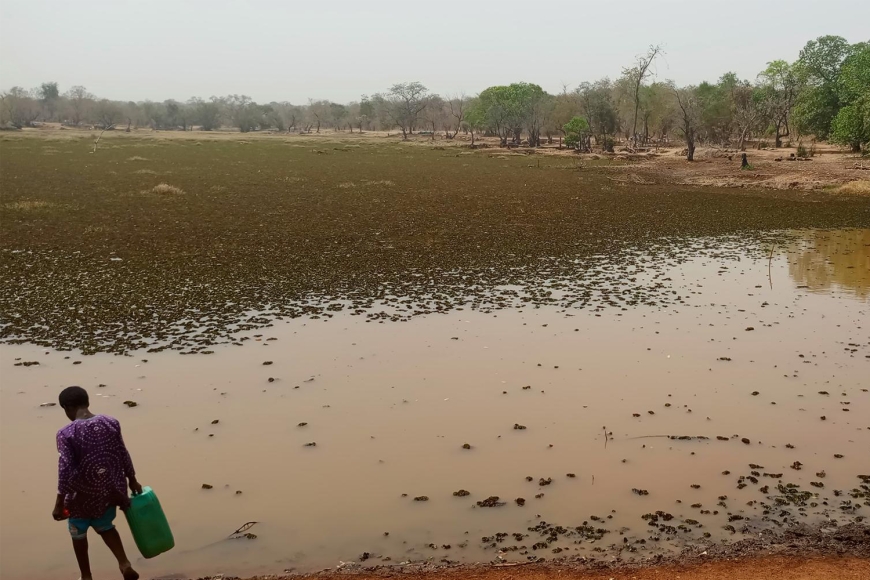
In the Inner Niger Delta of central Mali, relationships between farmers, herders, and fishers are shaped by a complex and evolving environment. This vast wetland covering nearly 35,000 square kilometers, essential to the livelihoods of millions of people, is now under significant pressure due to climate variability, natural resource degradation, population growth, persistent insecurity, and the weakening of local institutions. These dynamics have profoundly altered socio-ecological balances and intensified tensions over access to land, water, and pastures.
In this context, conflicts between farmers and herders are not driven solely by resource scarcity. They are also the result of social inequalities, asymmetric power relations, and governance systems that are insufficiently adapted to local realities. In response, endogenous regulatory mechanisms such as local natural resource management conventions have gradually emerged to organize access to resources and promote more peaceful relations among users.
When Local Governance Becomes a Lever for Peace
This study published in February 2026, conducted in three communes of the Mopti Region (Sio, Fakala, and Femaye), is based on a qualitative approach combining focus group discussions and interviews with key stakeholders: herders, farmers, fishers, women, youth, local authorities, and technical service providers.
The findings show that these conventions, developed through participatory and inclusive processes, provide a platform for dialogue among user groups that are often in conflict. Anchored in Mali’s decentralization legal framework, they enable the collective negotiation of rules governing access to and use of natural resources: clarifying agricultural field boundaries, demarcating transhumance corridors, organizing livestock passage periods, defining rights over flooded pastures (bourgoutières), and coordinating the management of fishing zones.
This co-production of rules strengthens their social legitimacy. As several participants emphasized, where mistrust and recurring tensions over natural resources once prevailed, local conventions have created spaces for mediation and dialogue that now prioritize discussion before conflict escalation.
Hybrid Institutions for Fragile Territories
Local conventions function as “hybrid” governance instruments, combining customary norms with formal mechanisms led by municipalities. They rely in particular on communal monitoring committees composed of community representatives, elected officials, and technical agents. These bodies play a central role in conflict prevention, user awareness, and adapting rules to changing conditions.
One key finding of the research is the growing integration of women and youth into these structures. Long marginalized from decision-making processes, they are increasingly becoming actors of mediation and social cohesion, contributing to more inclusive governance.
Beyond regulating resource use, local conventions also promote ecosystem restoration particularly through the regeneration of bourgou, a forage grass essential for livestock feeding. Its restoration improves fodder availability, reduces livestock encroachment into crop fields, and supports food security. In doing so, local conventions help strengthen both ecological resilience and human security.
Lessons for Peacebuilding in the Sahel
The experience of the Inner Niger Delta demonstrates that peace cannot be built through security responses alone. It also depends on recognizing interdependencies among communities, valuing local knowledge, and establishing negotiated, co-designed rules adapted to ecological cycles and social realities.
Local conventions illustrate the potential of endogenous governance mechanisms to transform structural tensions into opportunities for cooperation. They show how sustainable natural resource management can become a powerful driver of dialogue, trust, and stability in contexts marked by institutional fragility and ongoing insecurity.
However, for these dynamics to endure, sustained political commitment is essential, along with better coordination between local and national levels. Strengthening community ownership, building local government capacities, and integrating these approaches into public policies are key conditions for making local conventions genuine pillars of social peace.
In central Mali, the story unfolding is one of a gradual transition from conflict to collaboration a fragile yet hopeful trajectory for other Sahelian territories facing similar challenges.