 English
 Kinyarwanda
Keeping the Peace at the Polls: How Civil Society Works to Prevent Election Violence in Bangladesh

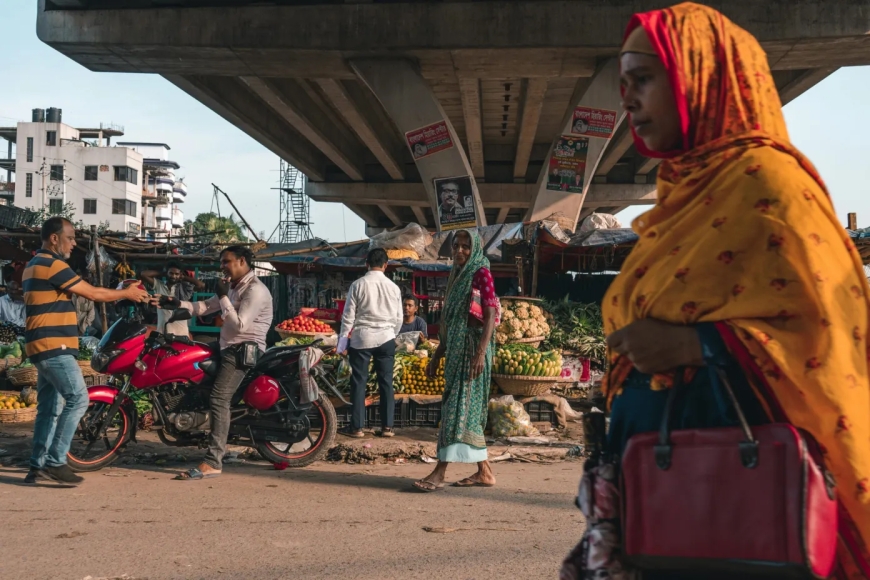
In Bangladesh, election season often brings both anticipation and anxiety. Campaign posters fill the streets, loudspeakers echo party slogans, and political rallies dominate public spaces. Yet beneath the visible energy lies a quieter tension. For many citizens, elections are not only civic events but also periods of uncertainty, shaped by a history of political clashes, intimidation, and at times, deadly violence.
Bangladesh most recently held its national election on February 12, a vote that once again placed questions of political competition, participation, and public safety at the forefront of national attention. While political parties and candidates dominated headlines, another group worked largely out of sight: civil society organizations committed to preventing violence before it erupts.
Their efforts rarely generate dramatic coverage. They do not seek power or public spectacle. Instead, they focus on safeguarding the conditions that allow democracy to function peacefully.
Since gaining independence in 1971, Bangladesh has held regular elections. But electoral politics have often been intensely polarized. Party loyalties can run deep, and competition is frequently framed in existential terms. In such an atmosphere, rumors spread quickly, rival rallies can turn confrontational, and small incidents may escalate.
“Elections here are not just administrative exercises,” said a Dhaka-based election observer from Transparency International Bangladesh, who spoke to Peace News Network (PNN) on condition of anonymity. “They symbolize legitimacy and identity. That emotional weight can make them volatile.”
Civil society organizations approach elections differently. Their concern is not which party wins, but whether citizens can vote safely and whether political competition remains non-violent. They treat democracy as a process that must be protected from escalation.
One of the most visible roles civil society plays is election observation. Organizations such as Transparency International Bangladesh and Brotee train and deploy observers across districts. These observers monitor polling stations, document irregularities, and report incidents of intimidation or violence.
Their presence can act as a deterrent. “When actors know someone neutral is watching and documenting events, it changes behavior,” the Transparency International Bangladesh observer explained. “It may not prevent every incident, but it reduces impulsive actions.”
Monitoring often begins well before Election Day. Civil society groups conduct pre-election assessments, identifying districts with a history of clashes or intense rivalry. By mapping potential hotspots, they can encourage preventive dialogue and raise awareness among communities.
Beyond observation, many organizations rely on informal early warning systems. Networks of volunteers, journalists, and local activists report rising tensions, whether inflammatory speeches, threats, or clashes at rallies. This information allows civil society groups to respond before situations spiral.
A researcher affiliated with the legal aid and human rights organization Ain o Salish Kendra described the strategy, also speaking to PNN on condition of anonymity. “We look for patterns. If certain areas repeatedly show signs of escalation, we intervene through dialogue or public statements urging restraint,” the researcher said.
Documentation is another core function. Groups like Odhikar systematically record incidents of political violence and alleged abuses. Even when immediate accountability is uncertain, maintaining public records can discourage impunity.
“Documentation itself can be preventive,” the researcher from Ain o Salish Kendra said. “If people know their actions are being recorded, they may think twice.”
In politically tense environments, the act of recording and publishing verified information can serve as a counterweight to rumor and exaggeration.
Much of the most effective peace-building work happens quietly at the community level. Civil society organizations facilitate dialogue between rival local leaders, youth groups, and religious figures. In many areas, respected community members, teachers, elders, imams carry significant influence.
Civil society groups often act as conveners, creating neutral spaces where tensions can be addressed before they erupt. “After the election, people still have to live as neighbors,” said a human rights activist from Brotee working in northern Bangladesh, who also requested anonymity when speaking to PNN. “We remind them of that shared reality.”
These efforts rarely appear in formal reports, yet they are often crucial in preventing localized disputes from spreading.
Journalists also shape election environments. Sensational headlines can inflame tensions, while careful reporting can prevent panic. Dhaka-based journalist Shafiqul Shuvo emphasized the importance of precision in election coverage. “If there’s a clash in one district, we avoid portraying it as nationwide chaos,” he said. “Language matters. It can calm or it can provoke.”
Civil society organizations sometimes conduct workshops on conflict-sensitive journalism, encouraging verification and responsible framing. In the digital era, misinformation spreads rapidly through social media. Rumors about ballot tampering or violence can trigger fear within minutes.
Monitoring and correcting false information has become part of violence prevention. The challenge lies in speed and coordination, as online narratives can outpace fact-checking efforts.
Despite their work, civil society organizations face significant obstacles. Bangladesh’s political polarization can undermine trust. Even neutral groups may be accused of bias, weakening their credibility.
Regulatory requirements and administrative scrutiny can limit mobility, especially in tense districts. Human rights defenders also face security risks. Observers and journalists sometimes encounter intimidation, discouraging participation in monitoring efforts.
Funding remains another challenge. Training observers nationwide, sustaining early warning networks, and supporting mediation initiatives require long-term resources. Yet funding cycles are often short-term and project-based. “Peace-building doesn’t start and stop with Election Day,” the Ain o Salish Kendra researcher noted. “It requires continuity.”
One difficulty in evaluating violence prevention is that success is often invisible. When no clashes occur, there is little public recognition. The absence of violence can be attributed to many factors, security deployments, political calculations, or chance. “How do you prove something didn’t happen because of your work?” the Transparency International Bangladesh election observer asked.
Yet, patterns suggest impact. Districts with strong observer networks and active mediation efforts have sometimes experienced quicker de-escalation of tensions. Polling stations with visible monitors often report calmer atmospheres.
Civil society cannot eliminate political conflict. But it can influence how conflict unfolds, whether through confrontation or restraint.
As Bangladesh looks ahead to future elections, civil society actors argue that violence prevention must be institutionalized rather than episodic. Long-term civic education, protection for journalists, and support for independent monitoring mechanisms are essential to sustaining peaceful competition.
Peace at the polls is not secured solely through security forces or legal frameworks. It is built through relationships, between neighbors, between observers and communities, between journalists and readers.
Election violence attracts attention because it is dramatic and immediate. Prevention, by contrast, unfolds quietly in training workshops, community dialogues, data collection, and carefully chosen words. Yet it is this steady, often unseen work that helps ensure elections remain civic exercises rather than flashpoints.
As campaign slogans grow louder and political rivalries intensify, civil society organizations across Bangladesh continue their efforts behind the scenes monitoring, mediating, documenting, and educating. Their work reframes democracy as a shared civic responsibility and seeks to ensure that the path to the ballot box remains a road to participation, not violence.
By Sheikh Mehzabin through Peace News Network. Mehzabin is an anthropologist, human rights advocate, and researcher focused on marginalized communities, displacement, and grassroots peacebuilding.