
Sudan’s Women Are Paying the Price of War, Warns Rights Defender at UN Security Council

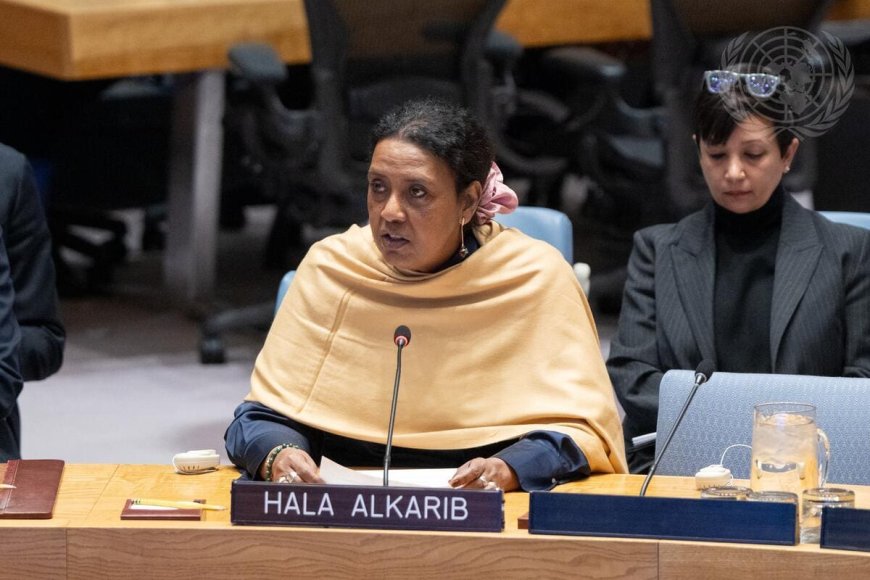
Photo: UN

Sudan’s Women Are Paying the Price of War, Warns Rights Defender at UN Security Council

Feb 24, 2026 - 14:50
 0

Hala Alkarib, a Sudanese human rights defender and Regional Director of the Strategic Initiative for Women in the Horn of Africa (SIHA), delivered a searing appeal to the United Nations Security Council on 19 February.


Speaking with the authority of someone who has lost family and home to the ongoing conflict, Alkarib painted a harrowing picture of a war that has devastated Sudanese communities, particularly women and girls.

“Every day this war continues, it destroys lives and brutalizes the bodies of Sudanese women and girls,” she told the Council, warning that atrocities already witnessed, including mass rape, sexual slavery, and ethnic-targeted violence, risk repeating across the country unless urgent action is taken.

Over 1,000 days into the war, Alkarib said, every “red line” has been crossed: siege, forced displacement, famine, mass rape, and genocide. Speaking for the third time before the Council, she said the worsening situation was “an indictment not just of the warring parties, but of this Council’s inability to stop the bloodshed.”

According to SIHA’s documentation, at least 1,294 cases of conflict-related sexual violence have been reported since the conflict began, mostly attributed to the Rapid Support Forces (RSF) and their allies. In Darfur, women from communities including the Fur, Masalit, Berti, Zaghawa, and Tunjur have been deliberately targeted because of their ethnicity, a pattern the UN’s Fact-Finding Mission has identified as part of a genocidal strategy.

The violence is not limited to Darfur. In Greater Kordofan and Blue Nile, drone attacks by all warring parties are killing civilians and destroying hospitals, schools, and markets. Survivors face collapsed healthcare systems, lack of reproductive health services, and a near-total absence of post-assault care. Women are forced to carry unwanted pregnancies, and thousands remain detained under the Sudanese Armed Forces and RSF, often accused of collaboration based solely on ethnicity or circumstances beyond their control.

Even women volunteers and frontline workers providing life-saving support are being targeted, raped, killed, or forcibly disappeared. “This horrific sexual violence has not only destroyed lives; it has ripped apart our communities,” Alkarib said.

Alkarib also called out international actors for fueling the conflict, pointing to documented violations of the UN arms embargo and external interference that have enabled the continuation of atrocities. She urged the Security Council to act immediately: demanding a cessation of hostilities, safe humanitarian access, release of detainees, expanded arms embargoes, accountability for war crimes and genocide, and meaningful inclusion of Sudanese women in peace efforts.

“The future of Sudan must be written by its own people,” Alkarib told the Council. “For decades, Sudanese women and men have resisted dictatorship and fought for democracy. We have repeatedly proven that we can lead Sudan’s struggle for peace and justice. You must not forget us.”

Her testimony, raw and unflinching, underscored the human cost of a war that has displaced millions, devastated communities, and left Sudanese women facing systemic violence on multiple fronts. In a chamber often defined by diplomatic language, Alkarib’s plea was a stark reminder: the world cannot afford to ignore Sudan any longer.
 

Sudan’s Women Are Paying the Price of War, Warns Rights Defender at UN Security Council

Feb 24, 2026 - 14:50
 0
Sudan’s Women Are Paying the Price of War, Warns Rights Defender at UN Security Council
Photo: UN

Hala Alkarib, a Sudanese human rights defender and Regional Director of the Strategic Initiative for Women in the Horn of Africa (SIHA), delivered a searing appeal to the United Nations Security Council on 19 February.


Speaking with the authority of someone who has lost family and home to the ongoing conflict, Alkarib painted a harrowing picture of a war that has devastated Sudanese communities, particularly women and girls.

“Every day this war continues, it destroys lives and brutalizes the bodies of Sudanese women and girls,” she told the Council, warning that atrocities already witnessed, including mass rape, sexual slavery, and ethnic-targeted violence, risk repeating across the country unless urgent action is taken.

Over 1,000 days into the war, Alkarib said, every “red line” has been crossed: siege, forced displacement, famine, mass rape, and genocide. Speaking for the third time before the Council, she said the worsening situation was “an indictment not just of the warring parties, but of this Council’s inability to stop the bloodshed.”

According to SIHA’s documentation, at least 1,294 cases of conflict-related sexual violence have been reported since the conflict began, mostly attributed to the Rapid Support Forces (RSF) and their allies. In Darfur, women from communities including the Fur, Masalit, Berti, Zaghawa, and Tunjur have been deliberately targeted because of their ethnicity, a pattern the UN’s Fact-Finding Mission has identified as part of a genocidal strategy.

The violence is not limited to Darfur. In Greater Kordofan and Blue Nile, drone attacks by all warring parties are killing civilians and destroying hospitals, schools, and markets. Survivors face collapsed healthcare systems, lack of reproductive health services, and a near-total absence of post-assault care. Women are forced to carry unwanted pregnancies, and thousands remain detained under the Sudanese Armed Forces and RSF, often accused of collaboration based solely on ethnicity or circumstances beyond their control.

Even women volunteers and frontline workers providing life-saving support are being targeted, raped, killed, or forcibly disappeared. “This horrific sexual violence has not only destroyed lives; it has ripped apart our communities,” Alkarib said.

Alkarib also called out international actors for fueling the conflict, pointing to documented violations of the UN arms embargo and external interference that have enabled the continuation of atrocities. She urged the Security Council to act immediately: demanding a cessation of hostilities, safe humanitarian access, release of detainees, expanded arms embargoes, accountability for war crimes and genocide, and meaningful inclusion of Sudanese women in peace efforts.

“The future of Sudan must be written by its own people,” Alkarib told the Council. “For decades, Sudanese women and men have resisted dictatorship and fought for democracy. We have repeatedly proven that we can lead Sudan’s struggle for peace and justice. You must not forget us.”

Her testimony, raw and unflinching, underscored the human cost of a war that has displaced millions, devastated communities, and left Sudanese women facing systemic violence on multiple fronts. In a chamber often defined by diplomatic language, Alkarib’s plea was a stark reminder: the world cannot afford to ignore Sudan any longer.