 English
 Kinyarwanda
Interpeace, UN Special Envoy Push for Greater Coordination in Great Lakes Peace Efforts
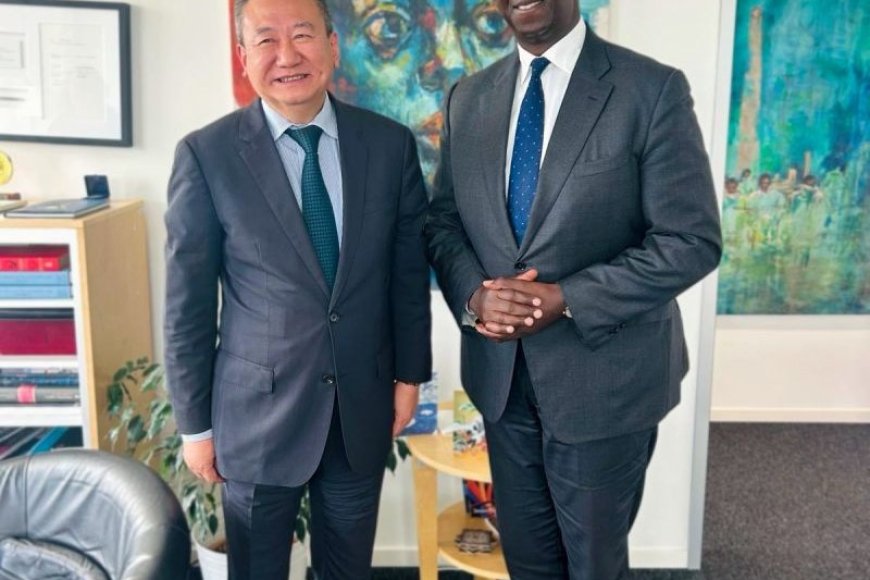
High-level discussions in Geneva have renewed attention on the need for stronger coordination among peace initiatives in the Great Lakes region, as the Interpeace hosted an exchange with the United Nations Special Envoy of the Secretary-General for the Great Lakes Region, Huang Xia.
The meeting brought together Interpeace President Itonde Kakoma and the Special Envoy for a candid reflection on why, despite decades of repeated mediation efforts, the region continues to face cycles of conflict and instability.
Both sides acknowledged that while numerous peace initiatives exist at global, regional, national, and community levels, progress has often been limited by fragmentation and insufficient coordination.
A shared concern emerging from the dialogue was the need to improve coherence and operational complementarity among the many actors engaged in peacebuilding. According to participants, better alignment could help ensure that efforts reinforce rather than duplicate one another, ultimately increasing their impact on the ground.
The discussions also underscored the importance of addressing the deeper structural drivers of instability, including political, economic, and social inequalities that continue to fuel tensions across the region.
“We need to create conditions where peace is more beneficial and more sustainable than continued instability,” the exchange emphasized, highlighting Interpeace’s ongoing role in shaping long-term approaches to peacebuilding.
Both Interpeace and the Office of the Special Envoy of the Secretary-General for the Great Lakes Region reaffirmed their commitment to strengthening collaboration and ensuring that peace processes are more inclusive.
A particular focus was placed on the meaningful participation of local communities, women, and youth, groups often underrepresented in formal negotiations but central to sustaining peace at the grassroots level.
The two leaders agreed that inclusive engagement is not only a matter of representation, but a practical necessity for building trust and resilience in societies affected by fragility.
Looking ahead, Interpeace said it will continue working with regional and international partners to advance dialogue and support efforts aimed at addressing the root causes of conflict, with the goal of building more durable peace across the Great Lakes region.