
Africa Urged to Rethink Peace Architecture as Conflicts Intensify Across the Continent

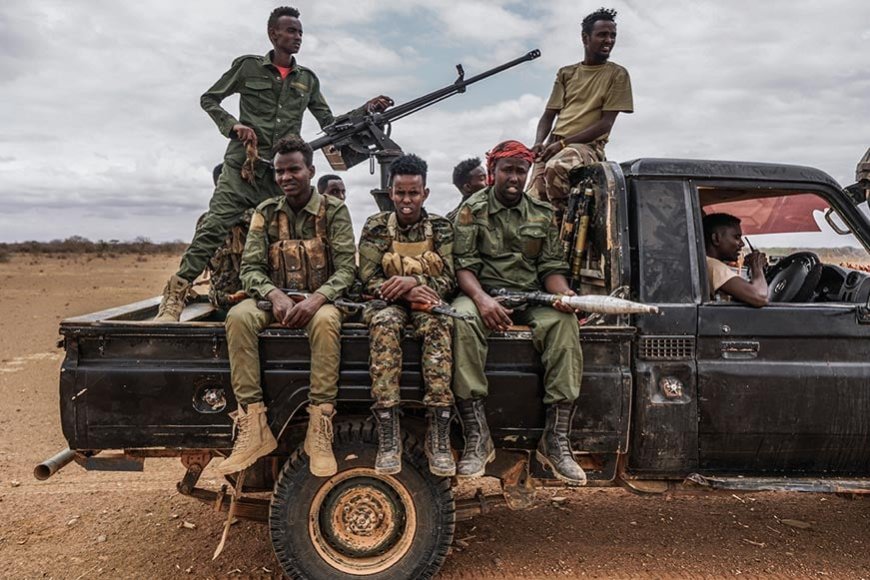
Photo: Getty

Africa Urged to Rethink Peace Architecture as Conflicts Intensify Across the Continent

Mar 10, 2026 - 00:28
 0

Africa is facing a widening belt of instability stretching from the Sahel to the Horn of Africa, with analysts warning that the continent’s existing peace and security framework must urgently adapt to a rapidly changing conflict landscape.


In a recent analysis published by Amani Africa on its opinion and analysis platform IDEAS INDABA, policy expert Désiré Assogbavi argues that Africa’s current security architecture—designed more than two decades ago—may no longer be sufficient to respond to today’s complex and interconnected crises.

Across the continent, conflicts that once appeared isolated are increasingly merging into what observers describe as a growing conflict belt. Violence in the Sahel now intersects with crises in Sudan, eastern Democratic Republic of the Congo, and parts of coastal West Africa, while instability continues to simmer in the Horn of Africa.

According to Assogbavi, today’s conflicts are driven by a combination of violent extremism, unconstitutional changes of government, transnational crime, and communal tensions, all unfolding amid intensifying global geopolitical competition. These overlapping pressures are reshaping Africa’s security landscape and creating what he describes as a “new era of insecurity.”

A peace system under pressure

Over the past 20 years, the African Union has developed one of the world’s most ambitious regional security frameworks: the African Peace and Security Architecture (APSA). Anchored by the African Union Peace and Security Council, the system also includes mechanisms such as the Panel of the Wise, the Continental Early Warning System, the African Standby Force, and the Peace Fund.

The architecture was designed to advance the long-standing vision of “Pax Africana,” the idea that African countries should lead efforts to resolve conflicts on the continent.

But Assogbavi argues that many of the conflicts facing Africa today differ significantly from those of the early 2000s. Modern crises are increasingly transnational and intertwined with economic, environmental, and governance pressures. As a result, purely military responses are unlikely to resolve conflicts rooted in weak institutions, economic fragility, demographic pressures, and climate stress.

Governance and economic pressures fueling instability

Beyond security concerns, structural challenges are deepening instability across the continent.

Governance deficits remain a major driver of conflict, the analysis notes. Weak state institutions, contested political transitions, and declining public trust in governments create conditions where instability can thrive.

Demographics also play a major role. Africa is the youngest region in the world, with around 60 percent of its population under the age of 25. Without economic opportunities and political inclusion, youth marginalization risks fueling social tensions and unrest.

Economic challenges further complicate the picture. Rising debt burdens and fragile economies limit governments’ ability to invest in social services and development programs that could help stabilize vulnerable communities.

Climate pressures are also intensifying competition over land, water, and other natural resources, particularly in fragile regions where livelihoods already face significant strain.

Critical minerals and global competition

Another emerging factor reshaping Africa’s security landscape is the growing global demand for critical minerals.

Resources such as cobalt, lithium, manganese, graphite, and rare earth elements—many of which are found in African countries—are essential for the global energy transition. But the rush to secure these materials is increasing geopolitical competition across the continent.

Countries including the Democratic Republic of the Congo, Mozambique, and Zimbabwe are already experiencing rising security risks in mineral-rich regions, where armed groups, illicit trade networks, and foreign interests compete for control of valuable resources.

In eastern Congo, for example, the control of mining sites and smuggling routes continues to finance armed movements and criminal networks.

Assogbavi warns that without strong governance and transparency systems, Africa’s mineral wealth could reinforce the so-called “resource curse,” where natural resources fuel conflict rather than development.

Democracy and constitutional challenges

The analysis also highlights growing concerns over unconstitutional changes of government across Africa, particularly following a series of military coups in the Sahel since 2020.

While the African Union typically responds by suspending coup-led governments from its activities, Assogbavi argues that this measure alone has not been enough to deter future coups.

He also warns that threats to democracy are not limited to military takeovers. In some cases, leaders remain in power by altering constitutions, weakening term limits, or undermining electoral processes—practices sometimes described as “constitutional coups.”

A crucial summit ahead

Against this backdrop, African leaders are expected to convene an Extraordinary Summit on peace and security later this year in Luanda.

Assogbavi says the gathering represents a critical opportunity for the continent to rethink how it approaches collective security and conflict prevention.

Preventive diplomacy—one of the African Union’s most powerful but underused tools—could play a much stronger role in addressing crises before they escalate, he argues.

But the success of the summit will depend on whether it moves beyond routine discussions and embraces broader participation. Civil society groups, youth networks, women peacebuilders, and traditional mediators all have important roles to play in shaping sustainable peace strategies.

For Assogbavi, the stakes are high.

“Africa does not need incremental adjustments,” he writes. “It needs bold thinking, institutional renewal, and political leadership capable of confronting the new realities of instability on the continent
 

Africa Urged to Rethink Peace Architecture as Conflicts Intensify Across the Continent

Mar 10, 2026 - 00:28
 0
Africa Urged to Rethink Peace Architecture as Conflicts Intensify Across the Continent
Photo: Getty

Africa is facing a widening belt of instability stretching from the Sahel to the Horn of Africa, with analysts warning that the continent’s existing peace and security framework must urgently adapt to a rapidly changing conflict landscape.


In a recent analysis published by Amani Africa on its opinion and analysis platform IDEAS INDABA, policy expert Désiré Assogbavi argues that Africa’s current security architecture—designed more than two decades ago—may no longer be sufficient to respond to today’s complex and interconnected crises.

Across the continent, conflicts that once appeared isolated are increasingly merging into what observers describe as a growing conflict belt. Violence in the Sahel now intersects with crises in Sudan, eastern Democratic Republic of the Congo, and parts of coastal West Africa, while instability continues to simmer in the Horn of Africa.

According to Assogbavi, today’s conflicts are driven by a combination of violent extremism, unconstitutional changes of government, transnational crime, and communal tensions, all unfolding amid intensifying global geopolitical competition. These overlapping pressures are reshaping Africa’s security landscape and creating what he describes as a “new era of insecurity.”

A peace system under pressure

Over the past 20 years, the African Union has developed one of the world’s most ambitious regional security frameworks: the African Peace and Security Architecture (APSA). Anchored by the African Union Peace and Security Council, the system also includes mechanisms such as the Panel of the Wise, the Continental Early Warning System, the African Standby Force, and the Peace Fund.

The architecture was designed to advance the long-standing vision of “Pax Africana,” the idea that African countries should lead efforts to resolve conflicts on the continent.

But Assogbavi argues that many of the conflicts facing Africa today differ significantly from those of the early 2000s. Modern crises are increasingly transnational and intertwined with economic, environmental, and governance pressures. As a result, purely military responses are unlikely to resolve conflicts rooted in weak institutions, economic fragility, demographic pressures, and climate stress.

Governance and economic pressures fueling instability

Beyond security concerns, structural challenges are deepening instability across the continent.

Governance deficits remain a major driver of conflict, the analysis notes. Weak state institutions, contested political transitions, and declining public trust in governments create conditions where instability can thrive.

Demographics also play a major role. Africa is the youngest region in the world, with around 60 percent of its population under the age of 25. Without economic opportunities and political inclusion, youth marginalization risks fueling social tensions and unrest.

Economic challenges further complicate the picture. Rising debt burdens and fragile economies limit governments’ ability to invest in social services and development programs that could help stabilize vulnerable communities.

Climate pressures are also intensifying competition over land, water, and other natural resources, particularly in fragile regions where livelihoods already face significant strain.

Critical minerals and global competition

Another emerging factor reshaping Africa’s security landscape is the growing global demand for critical minerals.

Resources such as cobalt, lithium, manganese, graphite, and rare earth elements—many of which are found in African countries—are essential for the global energy transition. But the rush to secure these materials is increasing geopolitical competition across the continent.

Countries including the Democratic Republic of the Congo, Mozambique, and Zimbabwe are already experiencing rising security risks in mineral-rich regions, where armed groups, illicit trade networks, and foreign interests compete for control of valuable resources.

In eastern Congo, for example, the control of mining sites and smuggling routes continues to finance armed movements and criminal networks.

Assogbavi warns that without strong governance and transparency systems, Africa’s mineral wealth could reinforce the so-called “resource curse,” where natural resources fuel conflict rather than development.

Democracy and constitutional challenges

The analysis also highlights growing concerns over unconstitutional changes of government across Africa, particularly following a series of military coups in the Sahel since 2020.

While the African Union typically responds by suspending coup-led governments from its activities, Assogbavi argues that this measure alone has not been enough to deter future coups.

He also warns that threats to democracy are not limited to military takeovers. In some cases, leaders remain in power by altering constitutions, weakening term limits, or undermining electoral processes—practices sometimes described as “constitutional coups.”

A crucial summit ahead

Against this backdrop, African leaders are expected to convene an Extraordinary Summit on peace and security later this year in Luanda.

Assogbavi says the gathering represents a critical opportunity for the continent to rethink how it approaches collective security and conflict prevention.

Preventive diplomacy—one of the African Union’s most powerful but underused tools—could play a much stronger role in addressing crises before they escalate, he argues.

But the success of the summit will depend on whether it moves beyond routine discussions and embraces broader participation. Civil society groups, youth networks, women peacebuilders, and traditional mediators all have important roles to play in shaping sustainable peace strategies.

For Assogbavi, the stakes are high.

“Africa does not need incremental adjustments,” he writes. “It needs bold thinking, institutional renewal, and political leadership capable of confronting the new realities of instability on the continent