 English
 Kinyarwanda

The Invisible Migration: How Urban Refugees are Powering Uganda’s Economy and Building Harmony

Uganda has long been celebrated globally for its progressive refugee policy, one that avoids the restrictive encampment seen in other nations for a model of integration and freedom of movement.
According to statistics from the office of the prime minister, Uganda currently is a host to 1,961,518 refugees and asylum seekers as of October 31, 2025, comprising of refugees and asylum seekers. Of these, 91 percent live in refugee settlements. While rural settlements are the traditional destination, a massive, invisible migration is reshaping the nation’s capital, with 9 percent residing in urban areas. Thousands are trading the dwindling rations of settlements for the grit and opportunity of the Kampala metropolitan area.
In the bustling suburbs of Makindye and Zana, refugees from the Democratic Republic of Congo (DRC), Somalia, South Sudan, Eritrea, Sudan, Ethiopia, Rwanda, and Burundi are no longer just asylum seekers. They are taxpayers, employers, and entrepreneurs.
Refugees from these countries have fled harrowing violence and instability involving civil wars, political unrest, and other major upheavals. Yet, they are now using entrepreneurship, including food, clothing, and cosmetic services, to power Uganda’s economy and build harmony amongst the diverse groups within refugee and host communities.
The Stitch of Resilience: John Babish Makando
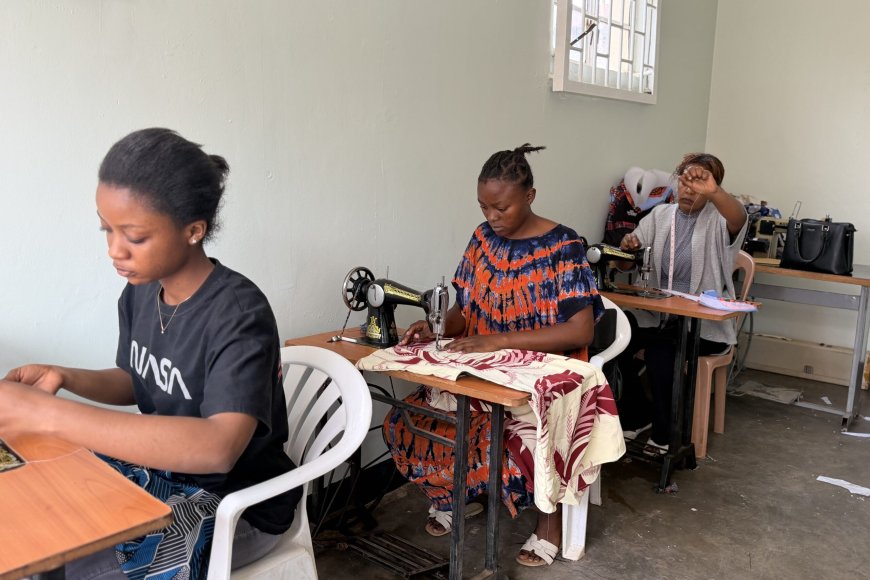
In Makindye Division, a suburb characterized by its diverse refugee population, John Babish Makando operates a tailoring business that defies the common stereotypes of the trade. Having fled the conflict in Eastern DRC in 2019, Makando bypassed the settlement system entirely, betting on his skills to survive in the competitive urban landscape of Kampala.
For Makando, being a refugee is not a barrier to professional excellence. He has built a reputation for punctuality and precision, qualities he says are often lacking in the local market. “I am removing the common client misperception about local tailors,” Makando explains to Peace News Network (PNN). “Many are known for letting down clients by not meeting deadlines or spoiling designs. Here, it is different. I focus on quality and being a good timekeeper.”
Makando’s contribution to the Ugandan economy is tangible. Unlike refugees in settlements who receive humanitarian aid, urban refugees like Makando receive nearly zero financial support. Instead, In Kampala, small-scale entrepreneurs are the backbone of the local economy, contributing through structured taxes. Most pay an annual Kampala City Council Authority (KCCA) Trading License, ranging from 31,500 UGX for basic stalls to 90,000 UGX for salons and workshops. Additionally, artisans pay a Local Service Tax based on income, while market vendors contribute through daily dues. Despite limited capital, these micro-businesses ensure steady revenue for urban development and city infrastructure Makando pays rent for his tailoring shop and fulfils his tax obligations, fuelling local development.
His journey to self-reliance began with a three-month vocational training course sponsored by the International Rescue Committee (IRC) and GRS. Today, he is paying that gift forward.
“I went for a three-month skill training and after I did a short course in tailoring. After some years of getting experience, we decided to start transferring these skills to fellow refugees and host communities by training them how to make clothes using different fabrics,” Makando said
He added, “We decided to teach people to show them how we are connected to our Ugandan neighbours, because there is a saying that my neighbour is my first family.”
Blending Fashion and Food: Amina’s Fresh Market
The economic ecosystem created by refugees extends from the wardrobe to the dinner table.
Amina, another Congolese refugee in Makindye, ensures both refugees and Ugandans, eat well. Amina has tapped into the high demand for fresh produce in the densely populated corridors of Makindye.
Her stall is a vibrant intersection of cultures. She specializes in vegetables like tomatoes and greens, but her real success lies in sombe (cassava leaves), susha, dodo, and eggplants, staples that appeal to Rwandan, Burundian, and Sudanese clients.
“Ugandans love Congolese food and Congolese love Ugandan food,” Amina notes, highlighting a form of cultural adaptation that goes beyond mere survival. By maintaining her stall, Amina is not just providing for her family; She is an active participant in the city’s informal economy, contributing to the tax base and promoting urban food security.
Turning Migrants into Economic Engines: The Bondeko Center
At the heart of this transformation is the Bondeko Refugee Livelihoods Centre in Najjanankumbi’s Stella Village. Founded in 1997 by Reverend Father Micheal Lingisi, Bondeko has evolved from a simple safety net into a sophisticated engine of self-reliance.
Executive Director Paul Kithima is a vocal advocate for localization, the idea that the best solutions for refugees are those born from the refugees themselves.
“We have livelihood activities where we train refugees in different areas like hairdressing, tailoring, ICT, and makeup,” Kithima said. He added that the center also has savings groups, which provide essential training in entrepreneurship and financial literacy. “We have a total of 37 saving groups, attending to 1,110 individuals, with each group comprising 30 people,” said Kithima.
He added, “We help them to register as Community Based Organizations (CBOs) so they can access financial institutions to explore options like loans and other products.”
Last year alone, Bondeko assisted over 3,500 people, including both refugees and Ugandan nationals. This inclusive approach, training nationals alongside refugees, is key to maintaining social cohesion and preventing resentment.
The center’s programs are diverse, ranging from a modernized bakery and mushroom farms to a law clinic that helps refugee families navigate asylum status and a young centre for children.
A New Chapter of Self-Reliance
The shift toward urban entrepreneurship has become a necessity. With 2026 funding cuts slashing settlement rations to near-zero, the invisible migration is no longer a choice but a survival strategy. These individuals are moving away from aid dependency and toward active economic participation.
As Paul Kithima and the entrepreneurs in Makindye demonstrate, when refugees are given the tools to succeed, they don’t just survive, they build the future of the country that welcomed them.
Source: Peace News Network