 English
 Kinyarwanda
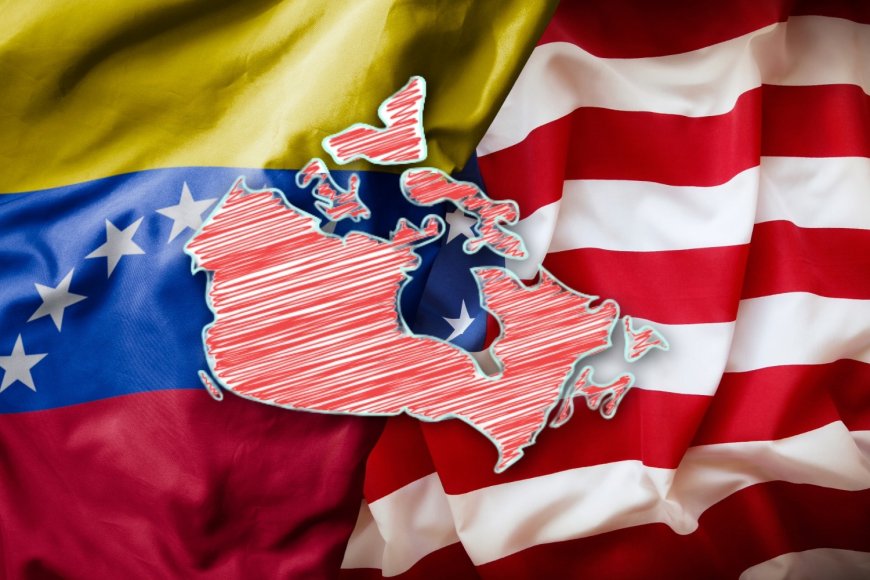
After Venezuela and Greenland, is Canada on the U.S. target list?
Just weeks into 2026, the United States has sent shockwaves around the world by attacking and threatening a wide variety of countries. The U.S. government has repeated threats towards Canada, threatened military action against Europe in order to seize Greenland, and threatened the governments of Colombia, Mexico, and Cuba. It may be moving towards military confrontation with Iran.
It began all of this, on January 3, by invading Venezuela’s capital and abducting the country’s president, under the false pretense that its purpose was to stop Venezuela narco-traffickers from the “Cartel de los Soles,” an organization which which it promptly admitted does not actually exist.
Before proceeding, let me state my personal connection to Venezuela. My graduate thesis at Carleton University was about the impact of the 1973-74 OPEC price hike on Venezuela. In 1975, I spent six months in Venezuela conducting research for my thesis.
Shortly before the Venezuelan invasion, the Trump administration released its National Security Strategy. The document updated the centuries-old Monroe Doctrine, which asserts U.S. dominance over the western hemisphere, justifying itself with the need to aggressively push supposed Chinese and Russian influence out of the Americas. The invasion was an indisputable violation of international law and the UN charter.
Corporate oligarchs in the United States are supportive of Trump’s National Security Strategy, as are their Canadian counterparts generally. The CEO of Scotiabank stated that it will profit from Trump’s dominance over the western hemisphere.
Maduro was abducted and transported to the U.S. for trial. Venezuela’s Vice President Delcy Rodríguez was appointed interim president. Trump has made no mention of returning Venezuela to democratic governance. Trump has indicated that the existing regime may stay under U.S. control for years.
Many Latin American countries have called out the invasion. Prime Minister Carney avoided directly condemning the U.S., stating that Canada calls on all parties to “respect international law.”
Venezuela has the largest proven oil reserves of any country in the world, although most is heavy oil, similar to Alberta bitumen. It is principally located in the remote Orinoco belt, and the infrastructure to process and transport this oil has greatly deteriorated due to a combination of domestic mismanagement and U.S. economic blockade which prevented Venezuela from accessing technology.
Trump is urging U.S. oil companies, most of which had left after the 2007 nationalization of the Orinoco oil field, to return and invest to revitalise Venezuela’s oil industry. Exxon Mobil has expressed scepticism regarding the viability of such investments. Nevertheless, some companies are exploring opportunities.
Despite howling from the business press and some oil industry affiliated politicians, the impact of the U.S. takeover of Venezuela’s oil resources on Alberta oil are far from catastrophic, Alberta Premier Danielle Smith, for her part, is using it as an opportunity to put additional pressure to get the pipeline built to the B.C. northwest coast.
As Venezuelan production increases, the oil it exports to the U.S. will be processed at refineries along the Gulf of Mexico. The bulk of Alberta bitumen exported by pipeline and processed at refineries in the U.S. Midwest, to which Venezuela oil has no access.
A brief history of Venezuelan oil
In 1973, Arab oil producing countries (organized under the Organization of Arab Petroleum Exporting Countries, or OAPEC) announced a total embargo of oil exports against countries that supported Israel during its 1967 war, in which it seized territory from Egypt and Syria and began its decades-long military occupation of Palestinian land which continues to this day. This set off a chain of events that caused a fourfold hike in the price of oil—which increased the Venezuelan government’s revenue exponentially. Venezuela was a founding member of the Organization of Petroleum Exporting Countries (OPEC).
The Venezuelan government did not use this windfall to diversify the domestic economy and reduce dependence on the developed world. Nor did it reduce income inequality and poverty within the country. Instead, elites overwhelmingly appropriated this wealth and inequality continued to rise.
Hugo Chavez came into power long after my time in Venezuela, elected in 1999, and again in 2006 and 2012, with broad public support. He brought in social programs including universal healthcare and education, and millions of new housing units. Poverty rates fell from 50 per cent to 24 per cent in 2012 shortly before Chavez’s death.
Chávez further nationalised the petroleum industry between 2004 and 2007, giving the state-owned oil company PVDSA majority stakes in all production. Chevron (as well as some international oil companies like Total and BP) negotiated deals to partner with PDVSA, while other U.S. companies like ConocoPhillips and Exxon left the country and filed investor-state arbitration cases.
Venezuelan oil declined slightly under the Chavez government, falling from a peak of three million barrels per day in the 1990s to 2.7 million in 2013, around the time of his death.Thereafter, due to the 2014 oil price crash and the U.S. sanctions regime which began under Barack Obama but escalated dramatically during Trump’s first term and continued under Biden, production fell to 1.1 million barrels per day in 2025. U.S. sanctions plunged the vast majority of Venezuelan citizens into poverty, creating a humanitarian crisis that led to mass exile and the Venezuelan state taking an authoritarian turn to hold on to power.
Threats to Greenland
Next on the Trump agenda were threats to acquire Greenland, by military force if necessary. Greenland is a semi-autonomous Arctic territory and a part of the kingdom of Denmark.
The Trump administration claims it needs to acquire Greenland for national security purposes, and has threatened military action to do so. This would be a violation of NATO of which Denmark is a member. Trump falsely claims there are many Chinese and Russian ships in and around Greenland. More accurately on his agenda are its critical minerals and petroleum reserves.
Denmark and Greenland, the European nations as well as Canada have made it clear: US control of Greenland is a “red line” that must not be crossed. Trump has backed down from his threat, at least for now.
Is Canada next?
The new U.S. National Security Strategy makes clear the U.S. will be “preserving freedom of navigation in all crucial sea lanes.” This includes the Northwest Passage, which Canada maintains are internal waters—a claim the U.S. disputes.
In April 2025, Trump signed an executive order labelled in part “Ensure the Security and Leadership of Arctic Waterways,” Trump alleges that Canada is unable to defend its borders against Russian or Chinese encroachment. Additionally, the U.S. is eyeing Canada’s critical minerals and vast supplies of water.
For those who ignore that discussions within the U.S. administration about annexation of Canada, would be ignoring the U.S. history of takeovers and annexations dating back centuries. One example: The War Plan Red of 1930 was prepared by the U.S. Department of War on how to invade Canada if ever needed.
Former UN ambassador, Bob Rae said Canada faces an existential challenge from the Trump regime. “The American government doesn’t take Canada’s sovereignty seriously,” adding that it would be a mistake for Canadians to think that they are not “on the menu, too.”
Prime Minister Carney delivered a consequential speech at the World Economic Forum in Davos, in which he defined the current state of international relations as a “rupture, not a transition.” He said that “middle powers” such as Canada and Europe, “in the face of abusive hegemonic power using tariff or military threats, need to build coalitions to defend their territorial integrity and the rule of law.”
Trump brushed off Carney’s speech saying Canada should be more grateful to the U.S., saying “Canada lives because of the United States.’ U.S. administration officials have also been interfering in Alberta’s separation discussions openly advocating it should join the U.S.
Carney has been developing strategic economic and security partnerships with Europe, China, the Indo-Pacific, and the Middle East. Trump and his associates view such actions as contrary to their dominance in the western hemispheric.
Canada’s military has recently been running exercises on how it would resist a U.S. invasion. The Canadian response model centres on insurgency-style tactics, like those used in Afghanistan by fighters who resisted Soviet and later U.S. forces.
University of Toronto Professor Aisha Ahmad, who has studied insurgencies around the world, writes “a military invasion of Canada would trigger a decades-long violent resistance… This scenario would guarantee the destruction of both Canada and the United States.”
We may still be some distance from a full-scale U.S. military invasion, but the given the history we can never be complacent.
Source: CCPA