 English
 Kinyarwanda
ISS warns Trump’s Board of Peace would marginalise sub-Saharan Africa
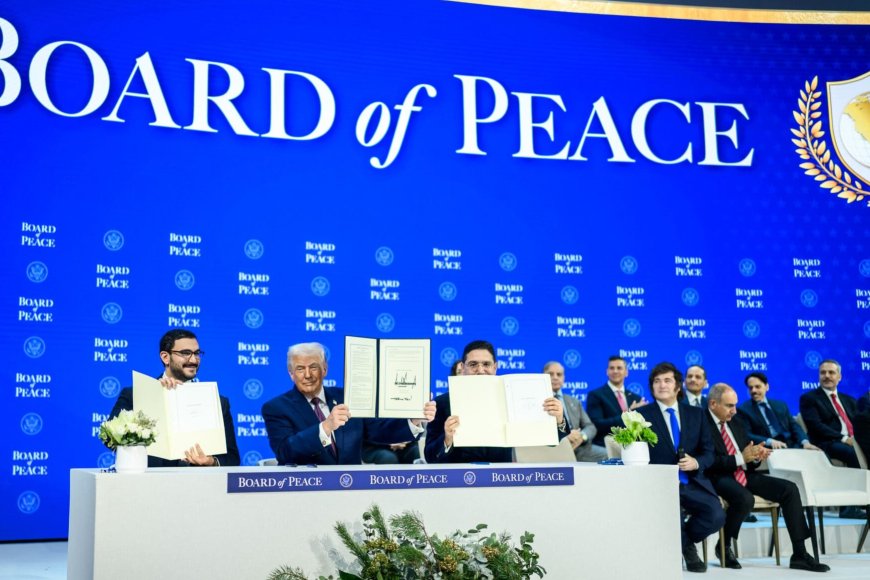
Institute for Security Studies (ISS) has warned that the newly created President Trump’s Security Board could fragment global conflict response systems that include the African Union as countries from the sub-Saharan region are not represented.
In its recent analysis published on 06 February 2026 in ISS Today, the institute argues that the Board of Peace launched by United States (US) President Donald Trump last month has been widely criticised as an attempt by America’s leader to usurp the United Nations (UN) Security Council. For sub-Saharan Africa there is an additional grievance: none of its states was invited to join, aggravating the region’s marginalisation.
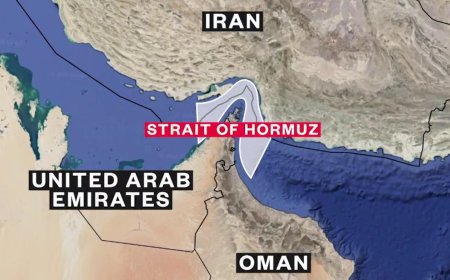
Trump invited about 60 countries to join, of which around 26 accepted. The board comprises several Middle Eastern countries including Saudi Arabia, the United Arab Emirates, Türkiye, Egypt, Jordan, Kuwait, Bahrain and Qatar – and Israel. Others include Argentina, Belarus, Bulgaria, Indonesia, Pakistan, Vietnam and Cambodia. Except for Hungary, European and other Western countries have either not been invited or have declined. France, the United Kingdom, Germany, Norway, Sweden, Spain and Slovenia are reportedly among the seven that declined. Canada accepted, but Trump withdrew the invitation after Prime Minister Mark Carney criticised him at Davos. China and Russia were invited but are non-committal.
In Africa, only Egypt and Morocco have joined. These are North African countries, and Morocco participates in Trump’s Abraham Accords.
The board began as an initiative to implement the US Gaza peace plan – a role endorsed by the UN Security Council in November 2025. But it has quickly transformed into a body tasked with resolving worldwide conflicts, with Trump holding sole executive veto power.
ISS’s Senior Researcher Priyal Singh sees in the membership a focus on Middle Eastern countries involved in rivalries in the Red Sea, Horn of Africa, and Gulf of Aden. ‘But I think sub-Saharan Africa is completely marginalised. I don’t think there’s been any invitation extended to any country in that region.’
He believes the board’s purpose is ‘to create some semblance of legitimacy and credibility for unilateral US action.’ Its rules give Trump a complete veto in his own right and apparently independent of his US presidency.
Singh believes Gaza will test the board. But even if it achieves some success there, it might ‘have a net hollowing-out effect on the broader global conflict response system through the UN and so on.’ That includes the African Union (AU). ‘Ultimately, it’s just creating a parallel structure to bypass the UN.’
By competing with the UN, AU and multilateralism, the board would not be good for Africa in particular
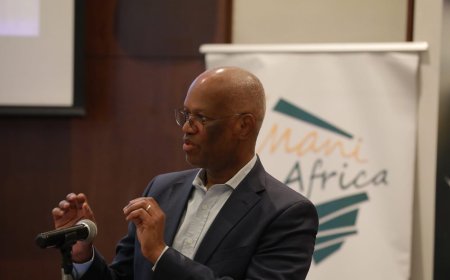
Jakkie Cilliers, Chairperson of the ISS Board of Trustees and African Futures and Innovation Head, agrees that the board would compete with the UN and AU. It would rival multilateralism more generally, fragmenting the existing peacebuilding architecture, which would not be good for Africa in particular.
If it does take off, one notable peril in this displacement of the UN-led multilateral peace system is that if resolving any particular conflict is not in the interests of rich board members, and the UN and AU have been sidelined, who will come to the rescue? If Russia decides to join, for example, what hope for Ukraine?
Visit ISS to read the full article