 English
 Kinyarwanda
10 African Security Trends from 2025
Africa’s security environment in 2025 was shaped less by isolated crises than by the convergence of structural pressures: the regionalization of armed conflicts, the resurgence of military rule, expanding militant Islamist violence, and intensifying competition among external powers. According to the Africa Center for Strategic Studies, these trends are not only deepening insecurity in the short term but also reshaping the continent’s political and strategic trajectory.
A review of the Africa Center’s Ten African Security Trends from 2025 in Graphicsreveals a continent pulled simultaneously toward fragmentation and integration, where widening conflict zones coexist with ambitious infrastructure and economic initiatives under the African Union’s Agenda 2063.
1. Sudan: State Fragmentation and a Regionalized War
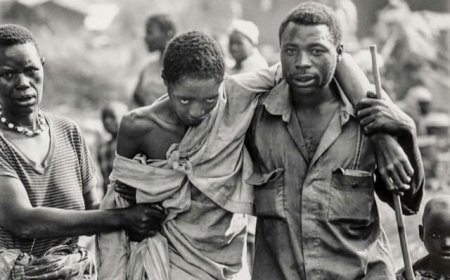
Nowhere are Africa’s security challenges starker than in Sudan. The war between the Sudanese Armed Forces (SAF) and the Rapid Support Forces (RSF) has effectively fractured Africa’s third-largest country while generating the world’s largest humanitarian crisis.
The Africa Center estimates that as many as 400,000 people may have died, while12.8 million Sudanese have been forcibly displaced since fighting began in April 2023. By late 2025, the RSF’s capture of El Fasher, North Darfur’s capital, marked a turning point. Thousands were massacred, tens of thousands fled, and “more than 150,000 residents…remain unaccounted for.”
Crucially, Sudan’s conflict has become a proxy battleground. The report notes that “regional actors have amplified the lethality, devastation, and persistence of this conflict,” with the UAE and Russia backing the RSF, while Saudi Arabia, Egypt, Türkiye, Qatar, Iran, and Russia have supported the SAF. This externalization has prolonged the war and undermined prospects for a negotiated settlement.
2. Militant Islamist Violence at Historic Highs
Militant Islamist groups sustained record levels of lethality in 2025, with 22,307 fatalities, a 60 percent increase compared to 2020–2022. Yet the threat is far from uniform. As the Africa Center emphasizes, it comprises “some dozen distinct groups,” each with its own leadership, tactics, and objectives.
The Sahel as the Epicenter
For the fourth consecutive year, the Sahel region remained the deadliest theater, accounting for 55 percent of all militant Islamist fatalities. Security deteriorated sharply following military coups in Mali, Burkina Faso, and Niger. In Burkina Faso alone, deaths linked to militant Islamist violence nearly tripled in three years, reaching 17,775 fatalities, while insurgents now encircle roughly 130 towns.
Somalia and the Horn
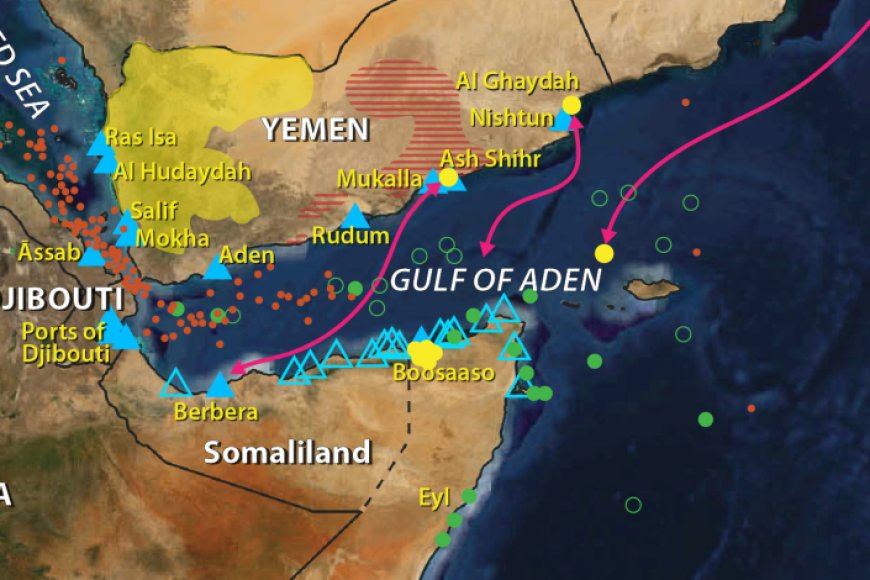
Somalia recorded 6,224 fatalities linked to al Shabaab—double the 2022 figure. A mid-2025 offensive brought militants within 50 kilometers of Mogadishu, underscoring vulnerabilities in federal-state coordination. The report highlights growing cooperation between al Shabaab and Yemen’s Houthis, translating into improved access to drones, missiles, and training.
Meanwhile, the Islamic State in Somalia (ISS) has gained global significance, reportedly emerging as a financial and administrative hub for ISIS, with its ranks expanding to an estimated 1,000 fighters.
3. Growing Impunity and Abuse of Power
Impunity and democratic backsliding deepened across Africa in 2025, with elections, military interference, and repression increasingly normalized. Of ten elections held during the year, only three were considered free and fair, while violence surrounding Tanzania’s vote underscored the erosion of electoral accountability. Military juntas in Gabon and Guinea sought to legitimize earlier coups through controlled electoral processes, while new coups occurred in Guinea-Bissau and Madagascar. Since 2020, nine African countries have experienced military takeovers, leaving 20 of 54 leaders in power through coups or military action.
Rather than reformist, these regimes have expanded repression, curtailed civil liberties, and evaded term limits. The Africa Center links this trend directly to insecurity: 13 of the 15 countries facing major armed conflict and 14 of the 15 with the largest displaced populations are authoritarian-leaning, underscoring how unaccountable governance fuels instability.
4. China and Russia: Security, Infrastructure, and Influence
External actors continued to deepen their footprint in Africa’s security sector, most notably China and Russia. China expanded military cooperation under its Global Security Initiative, conducting its largest-ever air force deployment in Africa during joint drills with Egypt in May 2025. The Beijing Action Plan under the Forum on China–Africa Cooperation now includes more security commitments than any prior iteration. Roughly 70 percent of African countries operate Chinese armored vehicles, and China trains approximately 2,000 African officers annually.
Beyond security, Chinese state-owned firms are active in 78 ports across 32 African countries, raising concerns about the dual-use potential of commercial infrastructure.
Russia, meanwhile, repositioned military assets from Syria to Libya and remains the leading external supporter of Africa’s military juntas. Its newly established Africa Corps, successor to the Wagner Group, has been accused of continuing patterns of civilian abuse in Mali, Burkina Faso, and the Central African Republic.
5. Democratic Backsliding and the Return of Military Rule
Africa’s governance landscape continued to deteriorate in 2025. Of ten scheduled elections, only three were considered free and fair, while violence surrounding Tanzania’s election marked a troubling departure for one of the continent’s more stable states.
Military coups—or attempted coups—occurred in Guinea-Bissau, Madagascar, and nearly Benin, bringing the total to nine African countries experiencing military seizures of power since 2020. Today, 20 of Africa’s 54 leaders came to power via coups or military action, a figure reminiscent of the post-independence era.
The Africa Center links this trend directly to insecurity: 13 of the 15 countries facing major armed conflict are authoritarian-leaning, and 14 of the 15 countries with the largest displaced populations fall into the same category.
6. Gulf Rivalries Reshape East Africa
Competition among Gulf States and Türkiye has become a defining feature of East Africa’s political economy. The region has absorbed an estimated $75 billion in Gulf investments, with the UAE alone accounting for $47 billion.
These rivalries have security implications. Somalia, in particular, is increasingly enmeshed in a regional contest involving Egypt, Eritrea, Türkiye, Qatar, and the UAE. At the same time, instability in the Red Sea, exacerbated by Houthi attacks on shipping, has reduced Suez Canal traffic by 50–60 percent, underscoring Africa’s centrality to global trade routes.
7. The DRC: Risk of a Regional Conflagration
The fall of Goma to M23 rebels in early 2025 revived fears of a broader regional war reminiscent of the Congo Wars. With evidence of Rwandan and Ugandan support for M23, and clashes involving Burundian and SADC forces, eastern Congo once again became a flashpoint.
More than 2.5 million people were displaced during the year, and mediation efforts by the United States and Qatar struggled against deep-seated issues: contested citizenship, resource control, weak state legitimacy, and predatory security forces.
8. Regional Instability Exacerbating Strains in Nigeria
Nigeria’s already complex security environment deteriorated further in 2025 as regional instability intensified pressures along its borders and within its fragile internal security landscape. In the country’s northwest, organized criminal groups—commonly referred to as “bandits”—expanded mass kidnappings, extortion, and attacks on transportation corridors. These groups have increasingly seized farms and mining sites, turning insecurity into a profitable criminal enterprise. Their operations have thrived in porous border areas with southwestern Niger, where insecurity surged following the 2023 military coup.
At the same time, Nigeria faced a growing cross-border militant Islamist threat. Fighters believed to be linked to Katiba Hanifa of the JNIM coalition conducted attacks from neighboring Benin, reflecting the southward spread of militant Islamist violence from Mali through Burkina Faso and into coastal West Africa. This development raises long-standing fears of a convergence between ideologically driven extremist groups and financially motivated criminal networks in northwest Nigeria—an evolution that would significantly elevate the threat level.
Nigeria’s response has reflected the regional dimensions of the challenge. Concern over spillover instability helped drive Abuja’s swift intervention, alongside ECOWAS partners, to stabilize Benin following a coup attempt in December. Simultaneously, Nigeria continues to contain Boko Haram and the Islamic State in West Africa in the northeast, even as it confronts farmer-herder violence in the Middle Belt, separatist unrest in the south, maritime piracy, and cybercrime.
Despite these pressures, Nigeria remains a regional anchor, continuing to attract net positive migration—underscoring both its strategic importance and the high stakes of its security trajectory.
9. Technology, Urbanization, and Youth Pressure
The proliferation of drones emerged as a transformative force. At least 31 African countries have acquired unmanned systems, while armed non-state actors in nine countries now deploy military drones. The Africa Center warns that this trend is making urban centers increasingly vulnerable, as seen in Sudan, Somalia, and eastern DRC.
Simultaneously, Africa’s rapid urbanization, adding 45 million city residents annually, has fueled youth-led protests demanding jobs, accountability, and democratic reform. Yet, as Madagascar’s experience illustrates, protests do not automatically translate into democratic gains and can be co-opted by militaries.
10. A Countercurrent: Agenda 2063 Progress
Despite mounting insecurity, 2025 also saw tangible progress toward the African Union’s Agenda 2063. Forty-eight countries have ratified the African Continental Free Trade Area; 16,000 kilometers of roads have been built, 2 million kilometers of fiber-optic cable connected, and 2,000 kilometers of high-speed rail completed.
The inauguration of the African Space Agency in April 2025 further symbolized long-term ambitions, with over 21 African countries now operating space programs.
Conclusion: A Continent at an Inflection Point
Africa in 2025 stood at a crossroads. As the Africa Center for Strategic Studies makes clear, rising militarization, external rivalries, and democratic erosion are reinforcing cycles of violence. Yet parallel investments in infrastructure, integration, and technology suggest alternative futures remain possible.
Whether the coming decade is defined by fragmentation or consolidation will depend less on any single conflict than on the continent’s ability to align governance, security, and development in a rapidly changing global order.