 English
 Kinyarwanda
When War Targets Schools: Why Protecting Education Is About Protecting Children’s Dignity
Attacks on schools in conflict zones are not only violations of law, they are assaults on the human dignity of children, advances Lisang Nyathi, legal scholar in a recent article published in the International Review of the Red Cross.
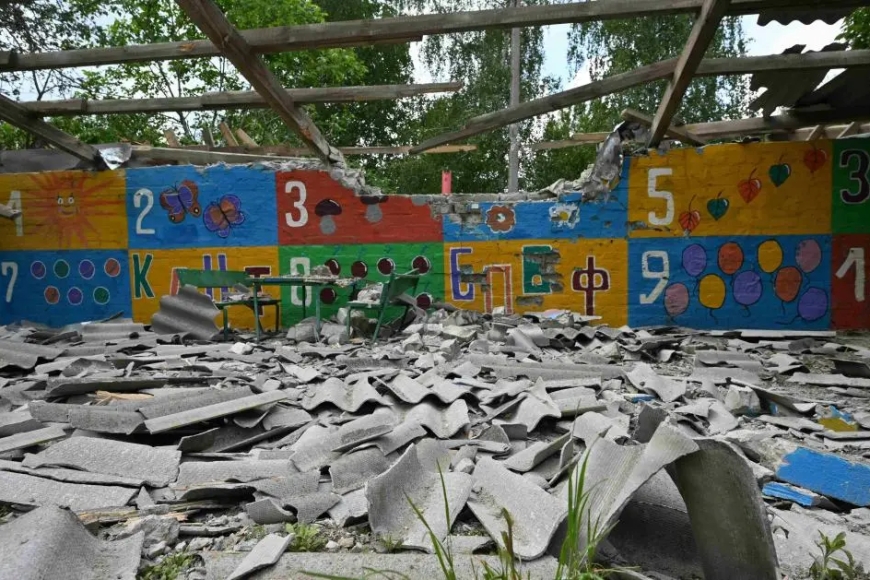
When a school is bombed, occupied by soldiers, or turned into a battlefield, the damage goes far beyond broken walls and scattered desks. What is destroyed is not only infrastructure, but the conditions that allow children to grow, learn, and become full human beings, he argues.
This is the central argument advanced by lNyathi contends that the denial of education during armed conflict should be understood not simply as a breach of international law, but as a direct assault on the human dignity of the child.
A global crisis hidden in plain sight
The numbers are staggering. Between 2022 and 2023, nearly 6,000 attacks on students, teachers and schools were recorded in conflict settings. An estimated 234 million children are affected by armed conflict globally, and 85 million receive no education at all.
In Sudan, 19 million children are out of school. In Gaza, over 660,000 children have lost access to education after most schools were destroyed. In the Democratic Republic of the Congo, hundreds of thousands of children in North Kivu have been forced out of classrooms by escalating violence. In Ukraine, millions of children face disrupted learning.
These are not isolated incidents. They reflect a pattern where education is repeatedly sacrificed in war, he deplores.
Yet, as Nyathi emphasizes, the problem is not that international law is silent. On paper, children’s right to education is well protected under both international human rights law (IHRL) and international humanitarian law (IHL) — the body of law that governs armed conflict.
The problem is deeper: education is not treated as central to what these laws are trying to protect.
At the heart of both human rights law and humanitarian law lies a shared concept: human dignity — the idea that every person has inherent worth simply by being human.
International human rights treaties explicitly connect this dignity to education. The International Covenant on Economic, Social and Cultural Rights states that education must aim at the “full development of the human personality and the sense of its dignity.” The Convention on the Rights of the Child echoes this.
In other words, education is not just a service. It is a means through which human dignity is realized.
But in humanitarian law — the law of war — this connection is not made explicit. Schools are protected mainly because they are civilian objects. Children are protected because they are civilians. Education itself is not recognized as something essential to dignity. This is the gap Nyathi identifies.
He argues that when schools are attacked, the harm is usually assessed in terms of civilian damage or loss of infrastructure. What is often missing is recognition that such attacks undermine the very conditions that allow children to develop autonomy, self-worth and a future. Therefore, a bombed school should not just be considered collateral damage. It is an attack on children’s dignity.
Why this distinction matters in war
This reframing has practical consequences. Under humanitarian law, an attack may be considered lawful if the expected civilian harm is not “excessive” compared to the anticipated military advantage. This is known as the principle of proportionality.
But if the harm to education is viewed only as damage to a building, the assessment may be very different than if it is seen as a long-term disruption of children’s development, psychosocial harm, loss of safe spaces and erosion of future opportunities.
A dignity-centred view raises the threshold for what is considered acceptable damage. It also strengthens the case for banning the military use of schools. While not explicitly prohibited under current law, using schools for military purposes exposes children to danger and strips learning spaces of their protective character. Viewing education as central to dignity reinforces global efforts like the Safe Schools Declaration, which calls on states to avoid such practices.
One of the most striking observations in the article is that education often receives only about 3% of humanitarian funding. In emergencies, priority goes to food, shelter and medical care.
While these are essential, Nyathi argues that treating education as optional reduces children to mere bodies to be kept alive, rather than human beings with futures.
Education provides structure, psychological stability, social connection and hope. It is protective in itself. For children affected by trauma, displacement and violence, returning to learning can be a pathway to recovery.
From a dignity perspective, education is not a luxury after survival — it is part of survival.
Modern conflicts often involve non-state armed groups, many of which are responsible for attacks on schools or the recruitment of children. While humanitarian law binds these groups, human rights law traditionally binds states.
Nyathi points to growing international recognition that armed groups exercising control over territory also carry responsibilities to respect children’s right to education. Initiatives like Geneva Call’s “Deeds of Commitment” show that engagement is possible.
At the same time, states are reminded that even during conflict, they remain bound by their obligation to ensure that education is available, accessible, acceptable and adaptable — the so-called “4As” framework.
Temporary school closures for security reasons may be justified, but alternatives must be provided within a reasonable time.
Beyond war: education as reparation
The article also highlights the role of education after conflict. In countries like Chile, Peru, Sierra Leone and Colombia, access to education has been used as a form of reparation for children affected by violence.
Education helps children not only rebuild their lives but also understand the past and participate in shaping a more peaceful future. In this sense, it becomes part of transitional justice and long-term peacebuilding.
Nyathi’s core message is simple but profound: protecting schools is not just about protecting buildings. It is about protecting the dignity, future and humanity of children.
By bringing the human rights understanding of education into the interpretation of humanitarian law, he calls for a more integrated legal approach where education is treated as central, not peripheral, in armed conflict.
This does not require creating new rights. It requires taking existing ones more seriously — and interpreting them through the lens of human dignity that already underpins international law.
In a world where classrooms increasingly find themselves on the frontlines, this perspective offers a necessary moral and legal reminder: when bullets silence learning, it is not only knowledge that is under attack, but the very essence of what it means to be human.