
Welcome to the Age of Chaos: Top 10 Global Risks of 2026
Welcome to the Age of Chaos: Top 10 Global Risks of 2026

Jan 6, 2026 - 19:19
 0

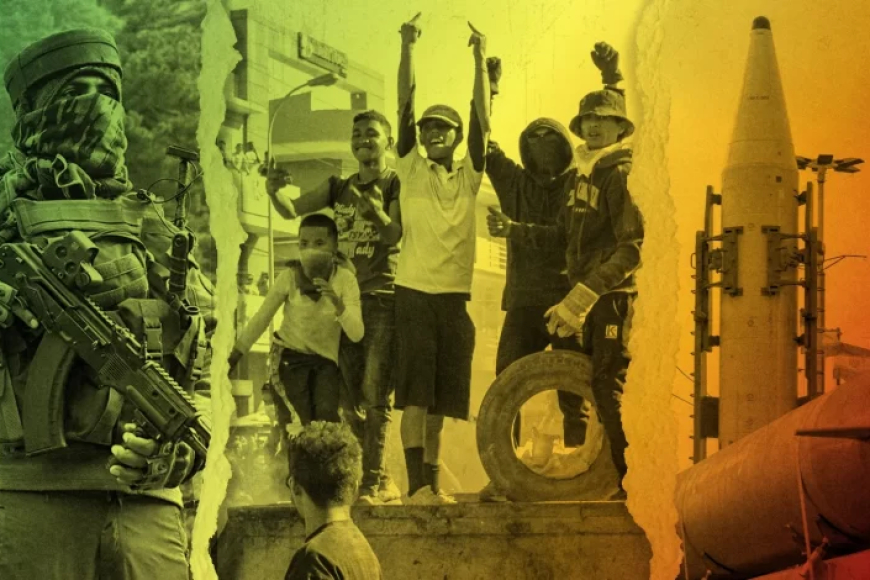
The world in 2026 faces unprecedented instability. Old global orders are fracturing, new powers are rising, and generational, technological, and environmental pressures are converging. This analysis, drawn from the National Intelligence Council’s ninth annual foresight exercise, identifies the ten highest risks shaping the global landscape. Each risk carries medium-to-high confidence but remains subject to uncertainty, reflecting the chaotic nature of the current era.


1. Trump’s Economic Morass

The U.S. economy is increasingly fragile, with financial assets massively overvalued and AI fueling 40 percent of GDP growth, despite limited gains in real productivity. Shadow banking, cryptocurrency speculation, and high leverage in both corporate and state finance compound systemic risk. Recent bankruptcies, such as First Brands, echo the 2008 crisis, demonstrating vulnerabilities in consumer credit and the fragility of the middle class.

Tariffs and trade tensions aggravate inflation, while low employment levels create affordability crises. The wealthy continue to drive consumption in a K-shaped economy, leaving much of the population financially vulnerable. Trump’s proposed measures—including tariff rollbacks on certain goods, pharmaceutical negotiations, and direct stimulus checks—are unlikely to address structural imbalances.

Globally, a U.S. financial collapse could undermine confidence in the dollar and destabilize international markets. China and G-20 countries are unlikely to repeat 2008-style intervention, while the U.S. debt at 125 percent of GDP creates limited policy flexibility. The risk is not merely economic but geopolitical: economic collapse could reduce U.S. influence worldwide and embolden revisionist powers.

2. The Dissolution of Order

The liberal post-Cold War order is disintegrating. Russia, China, and emerging Global South powers increasingly challenge U.S.-led multilateralism, while Europe struggles to assert influence. Russia’s invasion of Ukraine, China’s assertive foreign policy, and rising multipolarity reflect a world where cooperation is limited and conflicts are increasingly ungoverned.

Multilateral institutions are weakening. The U.S. has withdrawn from organizations like the WHO and reduced foreign assistance, while Russia and China expand alternative frameworks such as BRICS to de-dollarize and challenge Western-led systems. Economic and political inequality fuels domestic unrest, with younger populations feeling excluded from the benefits of globalization.

The combination of weakened institutions, rising nationalism, and competing great powers threatens global stability. Discontinuities—ranging from financial crises to environmental disasters—could trigger rapid systemic change. The interregnum between old and new orders is characterized by uncertainty, making strategic foresight and cooperative mechanisms critical.

3. U.S. Pivot to the Western Hemisphere

Trump’s National Security Strategy signals a pivot to Latin America, echoing the Monroe Doctrine. Policies include tariffs, sanctions, and threats of intervention in countries such as Venezuela, Colombia, and Cuba. While aimed at establishing U.S. influence, these measures risk alienating regional partners and ceding influence to China, whose trade with Latin America has surged from $12 billion in 2000 to $315 billion in 2020.

The “America First” approach often backfires. Food aid reductions have worsened crises in Venezuela and Colombia, with ripple effects on U.S. farmers, trade, and counter-narcotics efforts. Military interventions, such as potential action in Venezuela, could trap the U.S. in long, unpopular conflicts, destabilizing the region and straining domestic politics. Economic competition with China further complicates U.S. influence, as countries increasingly favor Beijing for investment and development.

4. Third Nuclear Era

Nuclear competition is intensifying in a “third nuclear era,” marked by new proliferation risks and technological vulnerabilities. The U.S., Russia, and China are modernizing their arsenals, including tactical and short-range nuclear weapons. The New START Treaty expires in February 2026, leaving arms control frameworks in limbo.

Emerging nuclear states, including North Korea, India, and Pakistan, exacerbate regional risks. U.S. nuclear deals with South Korea and Saudi Arabia, alongside Japan’s reconsideration of its non-nuclear stance, highlight the spread of nuclear capabilities. The inclusion of AI, cyber, and anti-satellite technologies erodes traditional deterrence, raising the prospect of limited nuclear conflicts or miscalculations.

5. Gen Z Rebellion

Generation Z, comprising 20 percent of humanity, faces a world shaped by instability, inequality, and disillusionment. Concentrated in Africa, South, and Southeast Asia, this demographic is already a major driver of political unrest. Since 2024, youth-led protests have toppled governments in Bangladesh, Madagascar, and Nepal, while prompting policy reversals in countries like Indonesia and Kenya.

Africa’s challenges are particularly acute. Fragile states, high youth unemployment, debt burdens, and limited access to electricity create conditions for unrest. With 600 million sub-Saharan Africans lacking reliable power and 57 percent living in nations prioritizing debt servicing over education or health, youth frustration is mounting. How governments address Gen Z’s needs—through education, employment, and political inclusion—will shape regional stability and influence migration, terrorism, and conflict dynamics globally.

6. An Empowered Putin After Ukraine

After three years of war, Russia has gained strategic advantage in Ukraine. The U.S., under Trump, and Europe lack the political will to fully support Kyiv, allowing Moscow to dictate terms. Russian advances, long-range missile stockpiling, and persistent European divisions increase the likelihood of a protracted conflict or frozen war, undermining NATO cohesion and European security.

Trump’s approach prioritizes bilateral trade over conflict resolution, leaving Ukraine’s long-term stability uncertain. A durable peace would require unified Western support, which remains elusive. In the absence of coordinated action, Russia could achieve its long-term goal of splitting the West and consolidating regional dominance.

7. Climate Decline

Climate risks intensify in 2026, particularly for poorer nations. U.S. withdrawal from climate initiatives and Trump’s dismissal of global climate concerns cede leadership to China. Europe struggles to meet ambitious emissions targets without sacrificing economic competitiveness, while delayed climate financing exacerbates vulnerabilities in developing countries.

Extreme weather events, including droughts and floods, threaten food security, health, and economic development. Sub-Saharan Africa, South Asia, and Latin America face growing crises in agriculture, water resources, and energy access. China’s dominance in renewable energy construction provides a rare positive note, but global coordination remains insufficient.

8. A Persistently Dangerous Middle East

The Middle East remains volatile, with Gaza, Iran, and regional rivalries escalating risk. Gaza is partitioned, Hamas retains military capabilities, and Israel continues settler violence in the West Bank. Iran faces nuclear and economic crises, worsening water shortages, and uncertain succession, heightening the risk of internal unrest or renewed conflict.

U.S. involvement, despite narrowed strategic focus, deepens entrenchment. Israeli and U.S. military actions could trigger escalation, while unresolved conflicts in Lebanon and Syria further destabilize the region. The potential for renewed Israeli-Iranian confrontation remains high.

9. Artificial Intelligence: the Great Disruptor

AI reshapes global economies and societies. While it holds potential for breakthroughs in medicine and science, AI also threatens massive job displacement, inequality, and financial instability. Investments in AI infrastructure exceed $400 billion in 2024, with projected growth to $1.1 trillion by 2029.

Short-term returns are limited, and overhyped expectations risk creating financial bubbles. Energy demands for AI infrastructure strain electricity systems, while competition between U.S. and Chinese AI models drives global technological divergence. Practical applications, particularly in the Global South, may favor China’s approach, challenging U.S. dominance in AI innovation.

10. A Shaky Asia-Pacific

Asia-Pacific faces persistent economic and security risks. U.S.-China trade tensions and overcapacity threaten regional supply chains, while India-Pakistan hostilities risk escalation in Kashmir. Unresolved border disputes, terrorism, and refugee pressures complicate regional stability.

Pakistan, emboldened by a defense pact with Saudi Arabia and U.S. support, contrasts with a weakened India. Terrorism and clashes with Afghan insurgents exacerbate instability, while Southeast Asia faces potential economic shocks from U.S. tariffs and disrupted trade. Gray-zone conflicts and unresolved disputes create a volatile security environment that could spark further crises.
The world in 2026 is characterized by intersecting crises—economic fragility, geopolitical fragmentation, climate shocks, nuclear competition, generational unrest, and technological disruption. Governments, institutions, and societies face immense pressure to navigate a polycrisis that challenges stability and prosperity. Strategic foresight, cooperation, and resilience are essential to mitigate the risks of this age of chaos.

Source: Foreign Policy.com
Welcome to the Age of Chaos: Top 10 Global Risks of 2026

Jan 6, 2026 - 19:19
Jan 29, 2026 - 19:26
 0
Welcome to the Age of Chaos: Top 10 Global Risks of 2026

The world in 2026 faces unprecedented instability. Old global orders are fracturing, new powers are rising, and generational, technological, and environmental pressures are converging. This analysis, drawn from the National Intelligence Council’s ninth annual foresight exercise, identifies the ten highest risks shaping the global landscape. Each risk carries medium-to-high confidence but remains subject to uncertainty, reflecting the chaotic nature of the current era.


1. Trump’s Economic Morass

The U.S. economy is increasingly fragile, with financial assets massively overvalued and AI fueling 40 percent of GDP growth, despite limited gains in real productivity. Shadow banking, cryptocurrency speculation, and high leverage in both corporate and state finance compound systemic risk. Recent bankruptcies, such as First Brands, echo the 2008 crisis, demonstrating vulnerabilities in consumer credit and the fragility of the middle class.

Tariffs and trade tensions aggravate inflation, while low employment levels create affordability crises. The wealthy continue to drive consumption in a K-shaped economy, leaving much of the population financially vulnerable. Trump’s proposed measures—including tariff rollbacks on certain goods, pharmaceutical negotiations, and direct stimulus checks—are unlikely to address structural imbalances.

Globally, a U.S. financial collapse could undermine confidence in the dollar and destabilize international markets. China and G-20 countries are unlikely to repeat 2008-style intervention, while the U.S. debt at 125 percent of GDP creates limited policy flexibility. The risk is not merely economic but geopolitical: economic collapse could reduce U.S. influence worldwide and embolden revisionist powers.

2. The Dissolution of Order

The liberal post-Cold War order is disintegrating. Russia, China, and emerging Global South powers increasingly challenge U.S.-led multilateralism, while Europe struggles to assert influence. Russia’s invasion of Ukraine, China’s assertive foreign policy, and rising multipolarity reflect a world where cooperation is limited and conflicts are increasingly ungoverned.

Multilateral institutions are weakening. The U.S. has withdrawn from organizations like the WHO and reduced foreign assistance, while Russia and China expand alternative frameworks such as BRICS to de-dollarize and challenge Western-led systems. Economic and political inequality fuels domestic unrest, with younger populations feeling excluded from the benefits of globalization.

The combination of weakened institutions, rising nationalism, and competing great powers threatens global stability. Discontinuities—ranging from financial crises to environmental disasters—could trigger rapid systemic change. The interregnum between old and new orders is characterized by uncertainty, making strategic foresight and cooperative mechanisms critical.

3. U.S. Pivot to the Western Hemisphere

Trump’s National Security Strategy signals a pivot to Latin America, echoing the Monroe Doctrine. Policies include tariffs, sanctions, and threats of intervention in countries such as Venezuela, Colombia, and Cuba. While aimed at establishing U.S. influence, these measures risk alienating regional partners and ceding influence to China, whose trade with Latin America has surged from $12 billion in 2000 to $315 billion in 2020.

The “America First” approach often backfires. Food aid reductions have worsened crises in Venezuela and Colombia, with ripple effects on U.S. farmers, trade, and counter-narcotics efforts. Military interventions, such as potential action in Venezuela, could trap the U.S. in long, unpopular conflicts, destabilizing the region and straining domestic politics. Economic competition with China further complicates U.S. influence, as countries increasingly favor Beijing for investment and development.

4. Third Nuclear Era

Nuclear competition is intensifying in a “third nuclear era,” marked by new proliferation risks and technological vulnerabilities. The U.S., Russia, and China are modernizing their arsenals, including tactical and short-range nuclear weapons. The New START Treaty expires in February 2026, leaving arms control frameworks in limbo.

Emerging nuclear states, including North Korea, India, and Pakistan, exacerbate regional risks. U.S. nuclear deals with South Korea and Saudi Arabia, alongside Japan’s reconsideration of its non-nuclear stance, highlight the spread of nuclear capabilities. The inclusion of AI, cyber, and anti-satellite technologies erodes traditional deterrence, raising the prospect of limited nuclear conflicts or miscalculations.

5. Gen Z Rebellion

Generation Z, comprising 20 percent of humanity, faces a world shaped by instability, inequality, and disillusionment. Concentrated in Africa, South, and Southeast Asia, this demographic is already a major driver of political unrest. Since 2024, youth-led protests have toppled governments in Bangladesh, Madagascar, and Nepal, while prompting policy reversals in countries like Indonesia and Kenya.

Africa’s challenges are particularly acute. Fragile states, high youth unemployment, debt burdens, and limited access to electricity create conditions for unrest. With 600 million sub-Saharan Africans lacking reliable power and 57 percent living in nations prioritizing debt servicing over education or health, youth frustration is mounting. How governments address Gen Z’s needs—through education, employment, and political inclusion—will shape regional stability and influence migration, terrorism, and conflict dynamics globally.

6. An Empowered Putin After Ukraine

After three years of war, Russia has gained strategic advantage in Ukraine. The U.S., under Trump, and Europe lack the political will to fully support Kyiv, allowing Moscow to dictate terms. Russian advances, long-range missile stockpiling, and persistent European divisions increase the likelihood of a protracted conflict or frozen war, undermining NATO cohesion and European security.

Trump’s approach prioritizes bilateral trade over conflict resolution, leaving Ukraine’s long-term stability uncertain. A durable peace would require unified Western support, which remains elusive. In the absence of coordinated action, Russia could achieve its long-term goal of splitting the West and consolidating regional dominance.

7. Climate Decline

Climate risks intensify in 2026, particularly for poorer nations. U.S. withdrawal from climate initiatives and Trump’s dismissal of global climate concerns cede leadership to China. Europe struggles to meet ambitious emissions targets without sacrificing economic competitiveness, while delayed climate financing exacerbates vulnerabilities in developing countries.

Extreme weather events, including droughts and floods, threaten food security, health, and economic development. Sub-Saharan Africa, South Asia, and Latin America face growing crises in agriculture, water resources, and energy access. China’s dominance in renewable energy construction provides a rare positive note, but global coordination remains insufficient.

8. A Persistently Dangerous Middle East

The Middle East remains volatile, with Gaza, Iran, and regional rivalries escalating risk. Gaza is partitioned, Hamas retains military capabilities, and Israel continues settler violence in the West Bank. Iran faces nuclear and economic crises, worsening water shortages, and uncertain succession, heightening the risk of internal unrest or renewed conflict.

U.S. involvement, despite narrowed strategic focus, deepens entrenchment. Israeli and U.S. military actions could trigger escalation, while unresolved conflicts in Lebanon and Syria further destabilize the region. The potential for renewed Israeli-Iranian confrontation remains high.

9. Artificial Intelligence: the Great Disruptor

AI reshapes global economies and societies. While it holds potential for breakthroughs in medicine and science, AI also threatens massive job displacement, inequality, and financial instability. Investments in AI infrastructure exceed $400 billion in 2024, with projected growth to $1.1 trillion by 2029.

Short-term returns are limited, and overhyped expectations risk creating financial bubbles. Energy demands for AI infrastructure strain electricity systems, while competition between U.S. and Chinese AI models drives global technological divergence. Practical applications, particularly in the Global South, may favor China’s approach, challenging U.S. dominance in AI innovation.

10. A Shaky Asia-Pacific

Asia-Pacific faces persistent economic and security risks. U.S.-China trade tensions and overcapacity threaten regional supply chains, while India-Pakistan hostilities risk escalation in Kashmir. Unresolved border disputes, terrorism, and refugee pressures complicate regional stability.

Pakistan, emboldened by a defense pact with Saudi Arabia and U.S. support, contrasts with a weakened India. Terrorism and clashes with Afghan insurgents exacerbate instability, while Southeast Asia faces potential economic shocks from U.S. tariffs and disrupted trade. Gray-zone conflicts and unresolved disputes create a volatile security environment that could spark further crises.
The world in 2026 is characterized by intersecting crises—economic fragility, geopolitical fragmentation, climate shocks, nuclear competition, generational unrest, and technological disruption. Governments, institutions, and societies face immense pressure to navigate a polycrisis that challenges stability and prosperity. Strategic foresight, cooperation, and resilience are essential to mitigate the risks of this age of chaos.

Source: Foreign Policy.com