 English
 Kinyarwanda

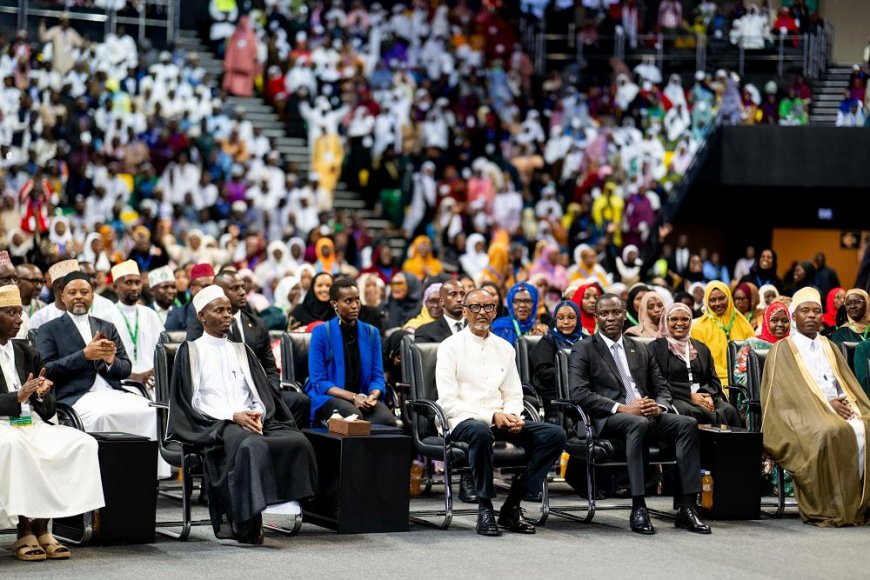
Kagame Reflects on Shared Resilience with Rwandan Muslims
President Paul Kagame has highlighted the “unique history” of the Muslim community in Rwanda, describing their past experiences of persecution as a bond that connects all Rwandans who have faced injustice.
Addressing thousands at the BK Arena on Wednesday, March 25, 2026, the President explained that the historical loss of peace once experienced by Muslims was a direct result of the leadership failures that plagued the country for decades.
The meeting, which brought together members of the Rwanda Muslim Community (RMC) for an Eid al-Fitr social gathering, served as an opportunity to trace the nation's journey from a divided past to a current era of social change and national development.
“Muslims have a particular history, and they also have a history shared with others in this country of ours. But what is most evident is what we all have in common,” President Kagame told the audience.
He noted that while the Muslim community faced specific hardships, their story is not isolated from the wider Rwandan narrative of struggle. He emphasised that this shared pain helped strengthen a common identity among Rwandans.
“The persecution and loss of peace that Muslims faced were specific to them, but many others were also persecuted in ways that connect us all,” President Kagame said.
Kagame observed that these shared grievances eventually led to a total shift in the country's political landscape, creating the necessity for a leadership that prioritises the rights and safety of every citizen regardless of faith.
This historical context, he said, was the catalyst for “changes in leadership and politics that our country should have had but lacked for many years.”
The President reminded the community that Rwanda is now on a path of positive change: “changing lives, changing how things are done so that Rwanda can develop. Every Rwandan has a role to play and no one should be persecuted.”
He drew parallels between the historical treatment of Muslims and the persecution of others based on ethnicity or region, emphasising that such divisions must never be allowed to take root again.
“We don’t need to be begged to fight that; we must fight it so it changes for good,” he stated, referring to the government’s responsibility to protect all citizens from discrimination.
He urged the community to remain vigilant and ensure that the inclusion, stability, and peace that Rwanda is experiencing benefit even future generations.