 English
 Kinyarwanda

Exclusive interview - Why families matter in reintegration of inmates in Rwanda

More than 32 years after the Genocide against the Tutsi in Rwanda, the country has made remarkable progress in rehabilitating and reintegrating inmates, particularly those convicted of genocide crimes. Over the years, the government and its partners have introduced important initiatives both in correctional facilities and community to prepare inmates and former inmates for that difficult journey.
However, one critical gap has remained. Most rehabilitation programmes focus primarily on preparing inmates, while families receive little structured support before their loved ones return home. In many cases, relatives are involved only shortly before release, leaving little opportunity to process emotions, discuss expectations or prepare for the challenges of living together again.
Recently, the government has worked with its partners to introduce the Family-Based Pathways to Inmate Reintegration (FBPR), an approach that identifies the support each inmate or family may need, whether psychosocial care, health services, livelihoods support or community assistance.
FBPR approach was developed by Interpeace in partnership with the Centre for Sustainable Peace and Democratic Development (SeeD), with support from the European Delegation to Rwanda, and is the first initiative of its kind to be implemented in Rwanda.
In this interview, Alexandros Lordos, Assistant Professor of Clinical Psychology at University of Cyprus who led the team of experts who developed this approach, explains what it is and what it seeks to address. He also explores Rwanda’s journey to rehabilitation and reintegration of inmates.
Peace Today: What is the Family-Based Pathways to Inmate Reintegration (FBPR) approach? Please, briefly explain its origins.
Prof. Rev. Alexandros: Our Family-Based Pathways to Inmate Reintegration has its origins in Multifamily Healing Spaces programme that we developed here in Rwanda together with Interpeace about four years ago. The way it works is that we prepare the families and inmates at first, so that inmates start to think about their responsibility and acoountability and how they an be productive members of their community again after release. The families think also of what they can do best in order to safely receive their members back to them.
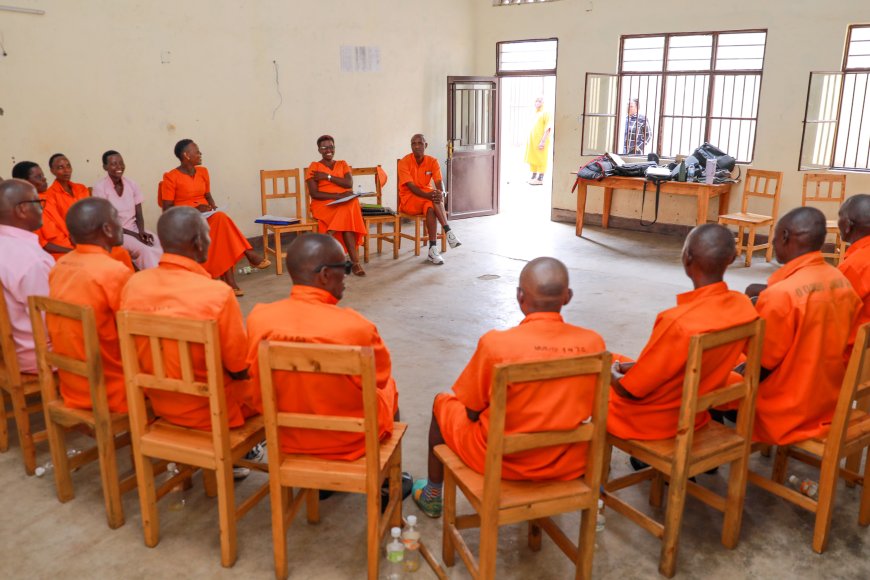
The way it works is that separate meetings are conducted with inmates at the correctional centre and their family. When we say family, it could be their spouses, children, cousins, uncles, parents and the wider community that will eventually receive the person.
When the preparation is completed, we bring the family together, we call that a family convergence stage, and we do that in a few months prior to release, helping the family to have conversations. May be there was a misunderstanding, or pain in the relationship, a family may have been carrying a lot of burden or stigma due to the incarceration of their member or even financial burden. So, all of those issues are discussed and commitments are made for how the family will work together after release. That phase completes with a family plan for the first days after reintegration and the programme continues in the community immediately after release with check-ins after seven days and then 30 days after release to ensure that the plan is being correctly followed and if any problems have occurred, they are delt with quickly.
Peace Today: How is FBPR implemented in practice?
Prof. Rev. Alexandros: The process of family-based reintegration theoretically can begin even on one day after someone has been incarcerated. You can start the foundations for a health and safe return. But, practically speaking because of resource limitations, it is intended to be used, prioritizing inmates who are about maximum one year away their release; six months to one year before their release.
Peace Today: There are different initiatives or approaches to inmates’ rehabilitation and reintegration. What makes FBPR different from them?
Prof. Rev. Alexandros: This programme does not replace them, it complements them. You cannot do everything with one programme because the needs of people returning from incarceration are so many. Other programmes, for instance focus much more civic education, this not what we do. Here we try to find which relatives are still alive, which relatives are willing to receive them; so, we are focusing on a different problem.
This programme was born because we identified the specific gap here on this topic in Rwanda. Even though so many programmes exist, there was no programme specifically focusing on how an inmate will go back to their family. Its’ so important for family reintegration to succeed because when it fails, there is risk that everything else will fail. If someone goes back home and there are conflict and shouting, then they will not have the peace of mind for restorative justice or sustainable livelihood and that’s why we can have a high level of relapse to crimes. So, we thought that this was a missing gap and we designed this programme to address that gap.
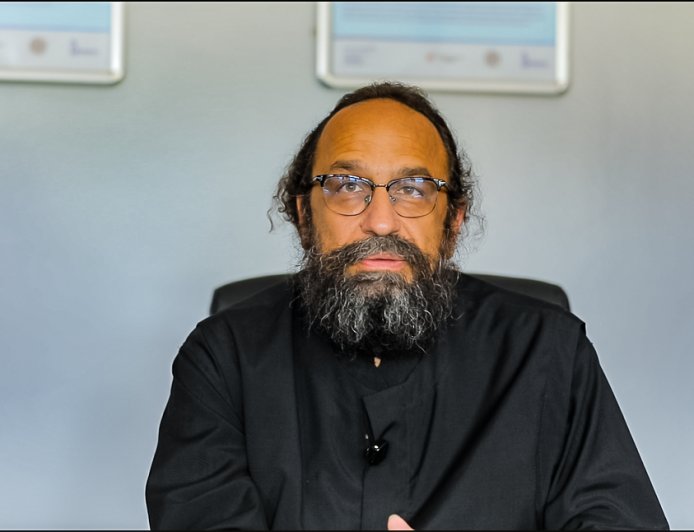
Rev. Prof. Alexandros Lordos of the University of Cyprus has supported Rwanda's inmate rehabilitation and reintegration efforts by working with Interpeace and Rwandan experts to develop tools, approaches and training materials. Photo: The Peace Today
Peace Today: Which categories of inmates are targeted by FBPR?
Prof. Rev. Alexandros: I should clarify that the Family-Based Pathways to Reintegration includes three different pathways, which makes it specifically relevant for Rwanda.
One pathway is for inmates that are servicing a sentence for general common crimes; adults that are serving sentence for general common crimes and this is increasingly a problem.
Another pathway is focusing on youth, juveniles that have committed crimes. They need to be reintegrated into their families.
And the third pathway that is unique to Rwanda, is the reintegration of genocide perpetrators. This has been done with a lot of sensitivity. It was done with a lot of consultation with many Rwandan experts who have been working on rehabilitation and reintegration of genocide perpetrators.
Important objectives that are in this pathway and are not in the general crimes’ pathway include for instance overcoming genocide denial and learning to return to the community in the way that doesn’t continue the transmission of intergenerational harm to their descendants and more generally accepting a role in new Rwanda, which is no longer characterized by ethnic divisions of the past.
Peace Today: What factors will be critical to ensuring the successful implementation and long-term sustainability of FBPR in Rwanda?
Prof. Rev. Alexandros: Now we are at the stage where local stakeholders, NGOs, institutions and government departments have become aware of FBPR and its approach. The next step is to see how this will be practically implemented in the context of Rwanda because it does require strong coordination between departments and organisations. On part of the programme is implemented in correctional centres, where Rwanda Correctional Service (RCS) and other institutions such as Rwanda Biomedical Centre (RBC) and non-governmental organisations like Dignity in Detention (DIDE) and Prison Fellowship Rwanda (PFR) can definitely with the implementation of a part of the programme that is implemented in correctional centre.
Another part is implemented in the community and happens at the same time as the part implemented in correctional centre. So, local authorities, RBC, faith-based organisations, NGOs such as Haguruka and other organisations that are more community-based need to be working together at the same time as the work is taking place in correctional centre and coordinate in their efforts. So, it needs a very strong coordination and it will require resources. My recommendation would be to start slowly with a pilot in a few correctional facilities so that the experience is gained in how to do it safely. I would like to emphasise that this is every sensitive pogramme. It’s important to always adhere to the principle of “do no harm”, without the risk of retraumatizing anyone in family and in the community. So,
Peace Today: You have worked extensively on Rwanda's rehabilitation and reintegration efforts through partners such as Interpeace. How would you assess Rwanda's journey in supporting the rehabilitation and reintegration of former inmates, particularly those convicted of genocide-related crimes?
Prof. Rev. Alexandros: Rehabilitation and reintegration of inmates is challenging everywhere in the world and no country has fully solved this problem. It has to begin by making a correctional centre itself a place where retraining and healing are taking place. My assessment of where Rwanda is on this journey is that it has done a lot of work to improve the quality of retraining that is taking place in correctional centres and also its recent programme to set up halfway houses (Social Reintegration Centre) is a very important innovation that is bringing it to the forefront of how these issues are addressed globally.
If there is one area where more progress can be made is clarifying who has responsibility for an inmate after they have returned to the community and who is following up with them and how that multidimension reintegration process that involves family livelihoods, reconciliation in the community, family reconciliation, civic engagement is properly monitored and supervised so that the risk of recidivism can be reduced.
Peace Today: What lessons from Rwanda's experience could inform rehabilitation and reintegration efforts in other post-conflict societies?
Prof. Rev. Alexandros: I think that one way that Rwanda stands out is that it has a commitment to reconciliation. It follows a rehabilitation model that is not only restorative but also reconciliatory. So much efforts are put in encouraging to experience remorse and request for forgiveness from the victims and also victims have the courage and generosity to offer their forgiveness freely, without being pressured to do so. This is one of the strength of Rwanda because reintegration here is seen as a community problem not an individual problem. It’s not just about one stopping being criminal anymore, it about that wounds that was caused on a broader community, when someone turned against it to be healed by that person becoming a member of that community again. I think that community-based attitude is key.
Criminological research in major global universities such as University of Cambridge, which as one of the best criminology departments worldwide, have been placing increasing emphasis on community cohesion and community resilience as a way to prevent crimes and a way of recovery from criminal behaviours. I think Rwanda has a lot to teach the world through its community-based approach.