 English
 Kinyarwanda
Kagame Commends Macron’s ‘Courage’ as Genocide against Tutsi Memorial Unveiled in Paris
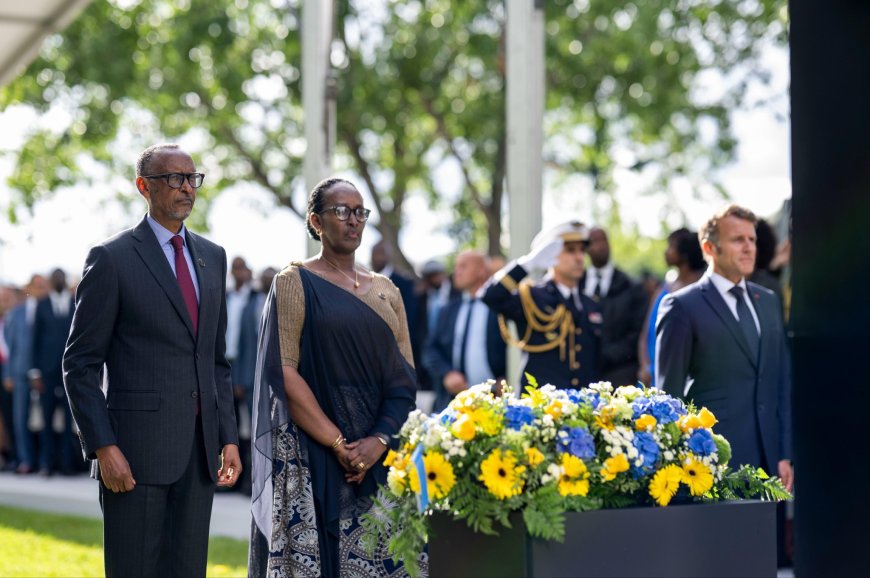
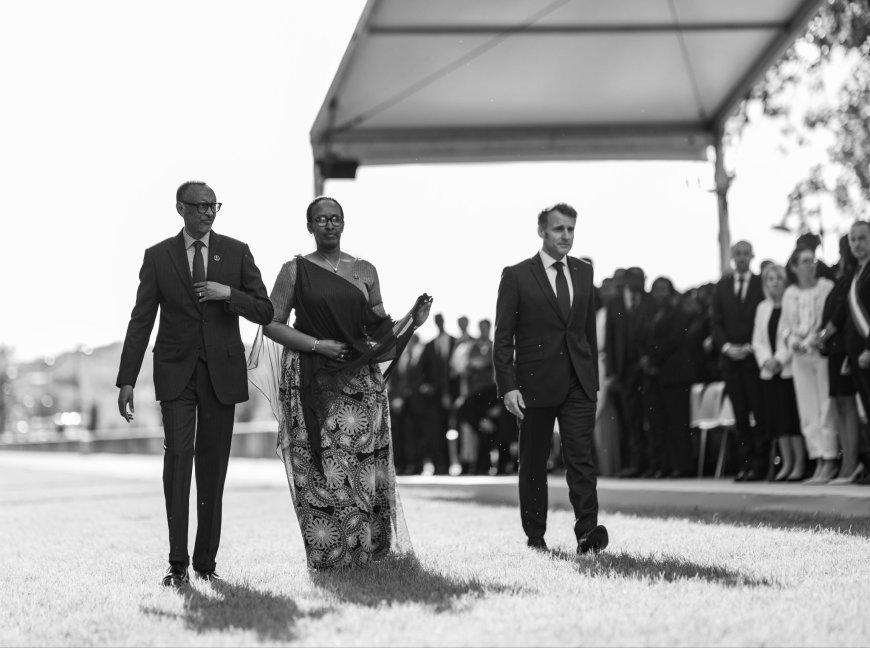
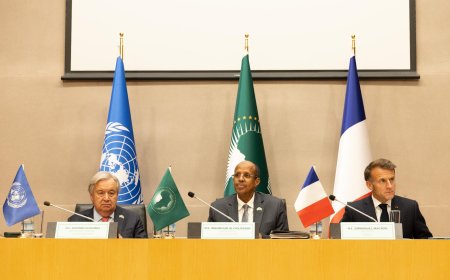
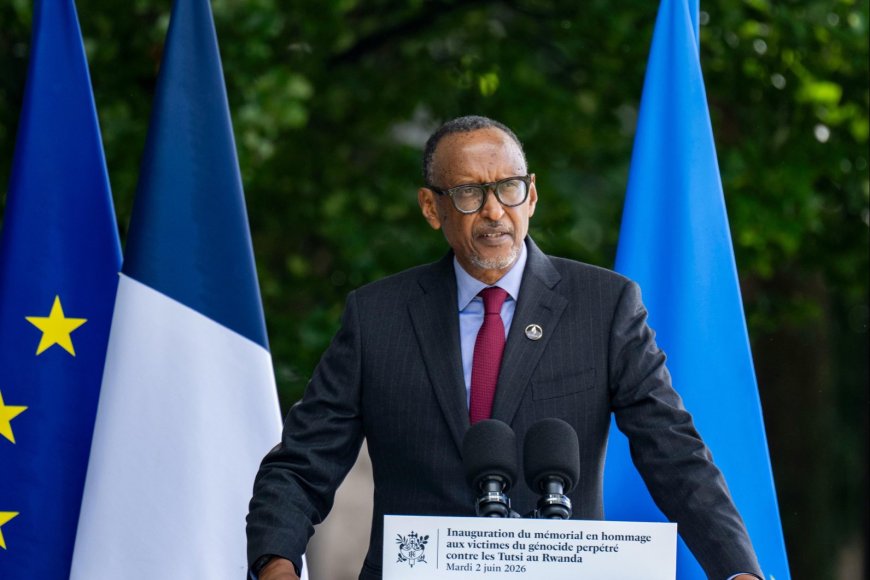
Rwandan President Paul Kagame has inaugurated a landmark monument dedicated to the Genocide against the Tutsi along the banks of the Seine River, on June 2, praising French President Emmanuel Macron for showing the “courage and humanity” required to confront France's historical role in the 1994 tragedy.
The new monument, named “L’Archive,” stands in a place of honor on the Esplanade Habib Bourguiba in Paris's Quai d’Orsay district.
Designed by Portuguese artist Grada Kilomba, the structure features two large black brass steles mounted on contrasting white and black lava stones. It symbolizes an archive of voices, memories, and hopes for both the survivors and the more than one million victims killed in 100 days.
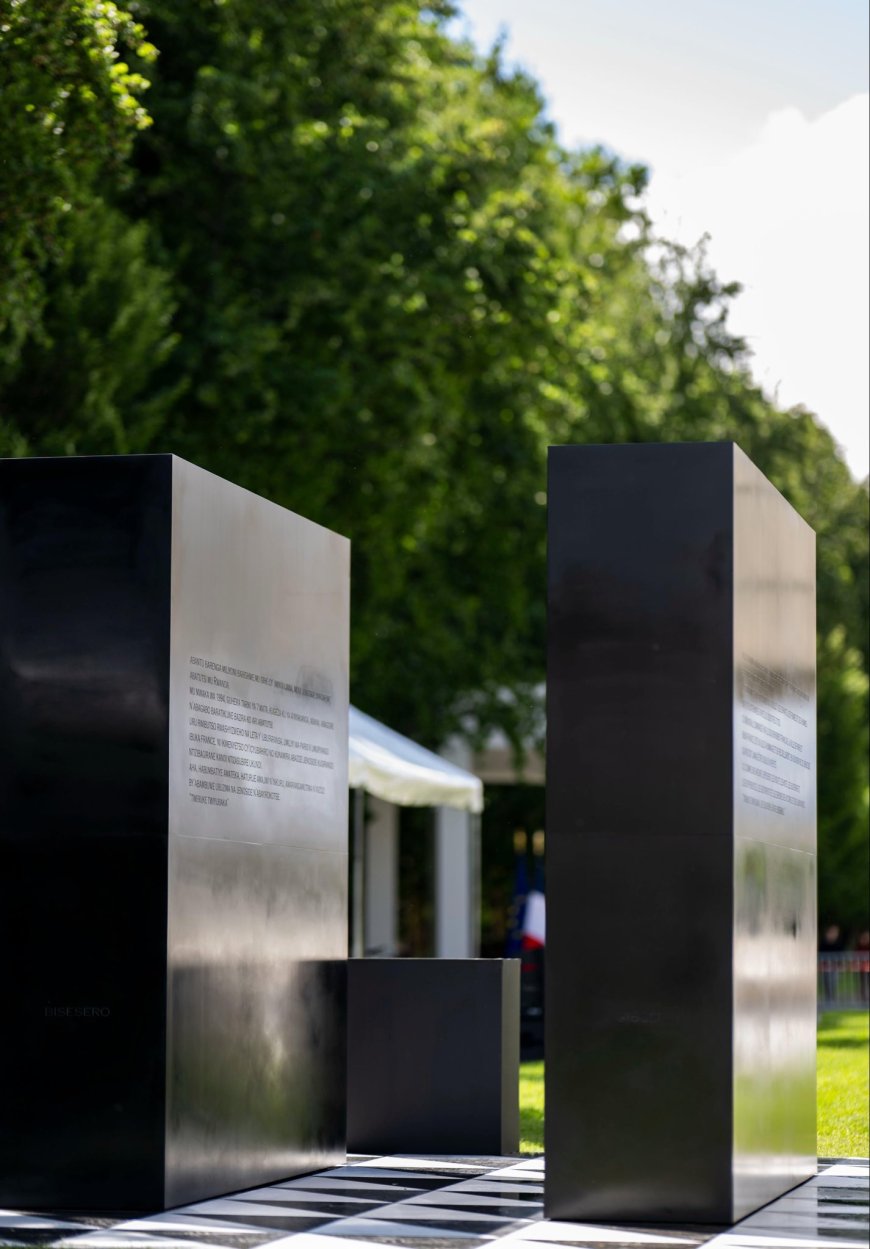
Addressing an international audience of diplomats, officials, and survivors, President Kagame emphasized that the site permanently cements historical facts.
“The memorial before us is powerful because it sets the truth in stone and protects it from the heartlessness of time by instructing the living,” Kagame said. “However, to witness the inauguration of such a memorial in a place of honour in the city of Paris is anything but routine.”
The unveiling marks a major milestone in the shifting, often tense diplomatic ties between Kigali and Paris.
Kagame noted that while the genocide was foreseeable, France was in a unique position to observe and act but failed to do so for a long time.
“It took too long for France to come to terms with its role, causing additional pain and at some points we still have not found consensus,” Kagame stated.
He added, however, that “none has gone as far as France in setting the record straight and accepting its part in the tragedy.”
Kagame highly commended Macron for his historic 2021 visit to Kigali, which followed independent reports concluding France’s responsibilities for failing to stop the killing.
“Five years ago, you took a risk and came to Kigali following the release of two independent reports, one commissioned by your government, the other by Rwanda, but arriving at similar conclusions,” Kagame said, addressing Macron.
“You acknowledged that France could have stopped the genocide but did not. In response, I describe the words as something more valuable than an apology, namely the truth.”
The Rwandan leader also credited former French President Nicolas Sarkozy, who in 2010 conceded “serious mistakes” by France, for first opening the door to bilateral reconciliation.
Kagame extended gratitude to French journalists, activists, and researchers who fought to expose the truth, as well as French judicial efforts to prosecute genocide perpetrators living in the country.
Reflecting on Rwanda's internal healing, Kagame noted that true accountability began at home, freeing the country to rebuild without relying on external illusions.
“One certitude is that the main responsibility for the genocide is located within our own society as Rwandans,” Kagame said. “Others contributed, but you cannot blame them more than we do ourselves.”