 English
 Kinyarwanda

What You Need to Know About Genocide Against Tutsi Memorial Unveiled in Paris

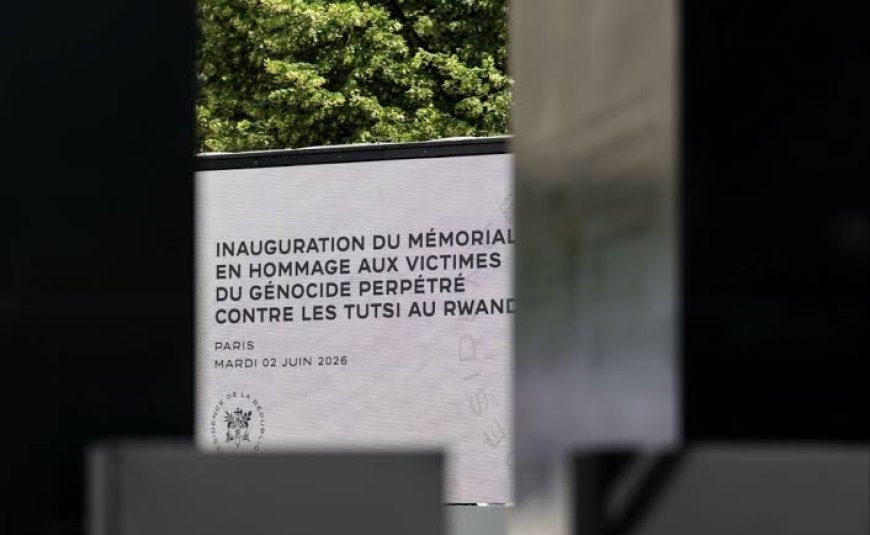
Presidents Paul Kagame and Emmanuel Macron jointly unveiled a permanent memorial dedicated to the victims of the 1994 Genocide against the Tutsi on Tuesday, June 2, along the banks of the Seine River.
The historic ceremony, attended by government officials, survivors, and the Rwandan diaspora, marks a shift in the diplomatic and historical relationship between France and Rwanda.
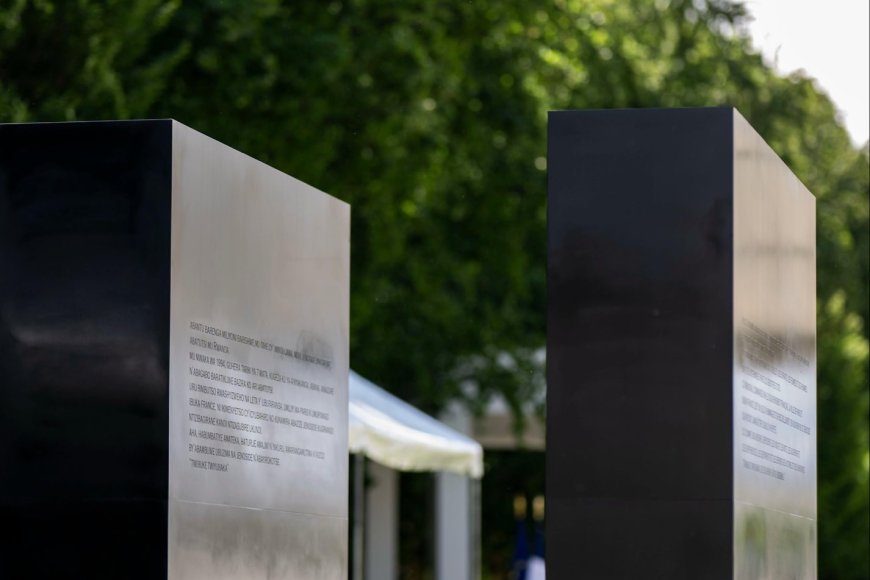
The permanent monument, named “L'Archive,” stands on the prominent Habib-Bourguiba Esplanade near the Eiffel Tower.
This central location ensures the memory of the more than one million men, women, and children killed during the 100-day tragedy remains highly visible to millions of international and local residents.
The project is the result of years of intense advocacy by survivor organizations, most notably Ibuka France. It was officially commissioned through a public competition launched jointly by the French State and the City of Paris, receiving full backing from French cultural authorities.
Renowned Portuguese artist Grada Kilomba designed the physical structure. The final artwork features two massive black brass monoliths mounted on a dark lava-stone platform.
Kilomba originally conceived a figurative monument. However, after traveling to Rwanda to meet directly with survivors and descendants of the victims, she chose a minimalist, abstract design to properly convey the vast scale of the tragedy while strictly preserving the dignity of those affected.
The design is rich in deliberate symbolism. The underlying lava-stone platform is intended to bring a physical fragment of Rwandan soil into the very heart of the French capital.
The physical space left between the two monoliths represents the profound absence of those killed, creating a quiet zone for public dialogue and generational remembrance.
Decorated directly onto the memorial steles are dedicated messages honoring the voices, lived experiences, and future hopes of the victims and survivors.
To maximize accessibility, the inscriptions are written in four distinct languages: French, English, Kinyarwanda, and Swahili.
The monument also features the engraved names of four key memorial sites located inside Rwanda: Nyamata, Murambi, Gisozi, and Bisesero.
By naming these UNESCO World Heritage Listed sites, the monument creates a symbolic bridge connecting Paris directly to the actual locations where genocide history is actively documented and preserved.
To provide deep educational context, a digital QR code will soon be added to the structure. This will allow visitors to access text, audio, and visual histories explaining the details of the Genocide against the Tutsi and the making of the memorial.
Marcel Kabanda, the President of Ibuka France, hailed the monument's completion as an essential milestone for public memory and future education against hatred and division.
Kabanda highlighted that the memorial has been officially entered into the French National Heritage Register (Registre du Patrimoine National Français), securing permanent state protection.
The highly symbolic inauguration coincides with Rwanda’s ongoing 32nd commemoration of the 1994 Genocide against the Tutsi.
The event underscores a major breakthrough in Franco-Rwandan relations following decades of political tension regarding France's historical role.
In 2021, a formal French historical commission concluded that France bore “serious and overwhelming responsibilities” in the political and military events that directly preceded the genocide.
President Macron later traveled to Kigali that same year to publicly acknowledge those responsibilities on behalf of the French nation.