
UN Calls for Concrete Action to Combat Hate Speech and Misinformation, amid Kwibuka32

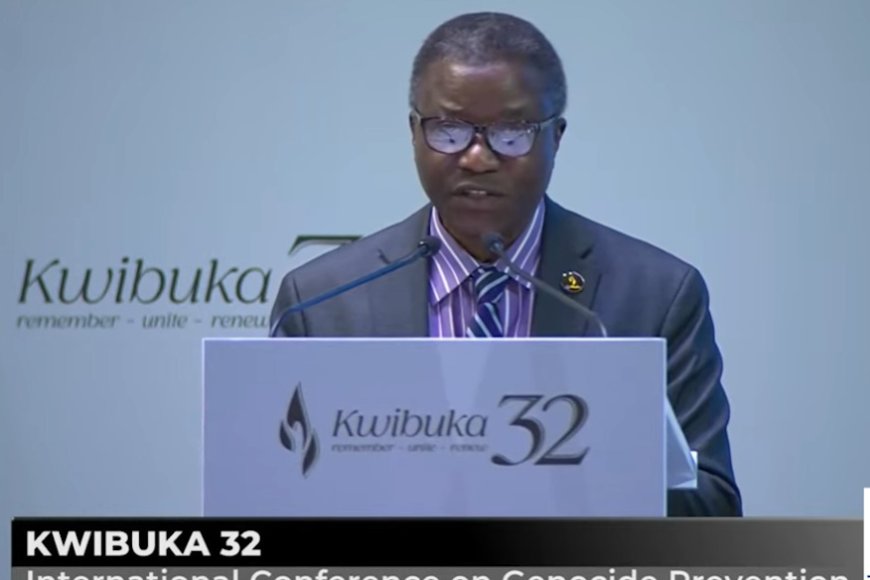
UN Secretary-General’s Special Adviser on the Prevention of Genocide, Chaloka Beyani, speaking at the International Conference on Genocide Prevention on 8 April in Kigali.

UN Calls for Concrete Action to Combat Hate Speech and Misinformation, amid Kwibuka32

Apr 8, 2026 - 15:18
 0

The United Nations Secretary-General’s Special Adviser on the Prevention of Genocide, Chaloka Beyani, has called on the international community to take concrete and coordinated measures to combat hate speech and misinformation, particularly as they are amplified by modern information technologies.


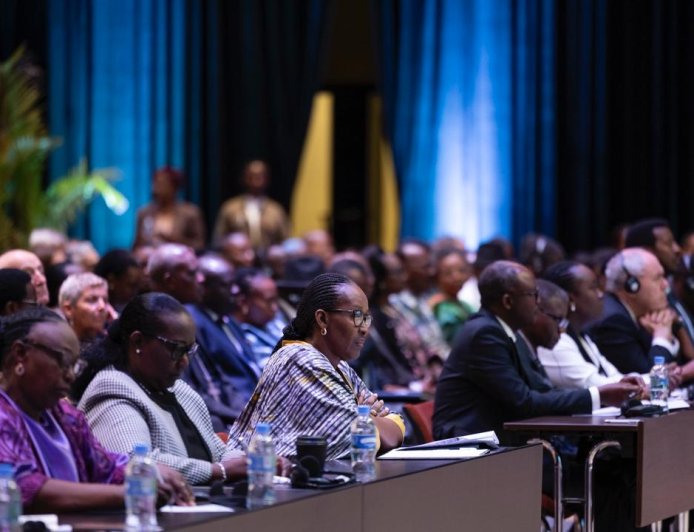
Beyani made the remarks on April 8 in Kigali during the International Conference on Genocide Prevention, held as part of Kwibuka 32. The high-level gathering brought together researchers, academics, think tanks, diplomats, survivors, and friends of Rwanda to reflect on past failures and renew a shared commitment to preventing genocide and countering dangerous narratives.

WATCH his statement here:

His warning comes at a time of escalating global instability, with conflicts spanning the Middle East, the Sahel, Sudan, and the Great Lakes region. Beyani cautioned that the international community continues to fall short of its obligations to prevent genocide and other atrocity crimes.

“Looking at the dire situation of conflicts around the world, from Sudan to the Middle East, and the volatile Great Lakes region, we are still falling short in upholding our responsibilities,” he said. “We must reject hatred, inflammatory rhetoric, and incitement to violence, hostility, discrimination, and genocide.”

Drawing on Rwanda’s history, Beyani recalled how the Genocide against the Tutsi was preceded by sustained hate speech and the systematic dehumanization of the Tutsi population, warning that such patterns remain visible in different parts of the world today.

He expressed concern that, while incitement to violence is prohibited under international law, hate speech itself is not explicitly criminalized, leaving gaps that can be exploited to spread division and extremist ideologies.

“Whereas incitement is prohibited under international law, hate speech is not. It is subjected to restriction of freedom of expression, but that does not mean it acceptable,” he stressed. We must put in place concrete measures to address and counter hate speech because in its worst form, it is an indicator and a trigger of the genocide and other atrocities,” he emphasised.
Beyani also urged UN member states to fully implement existing international frameworks on genocide prevention and to intensify efforts to bring to justice individuals responsible for the Genocide against the Tutsi who remain at large, as well as those who deny or distort it.

“Denial of the genocide is the repudiation of judicial decisions and therefore undermines the rule of law, demeaning the victims, and worst of all sowing the seeds of recurrence of similar crimes.”

He warned that impunity continues to fuel cycles of violence, particularly on the African continent, noting a broader global trend marked by rising xenophobia and intolerance.

The issue of hate speech, especially on social media and digital platforms, featured prominently in conference discussions. Participants raised concerns about its role in inciting violence, including in eastern Democratic Republic of the Congo, where anti-Tutsi rhetoric has been linked to ongoing insecurity.

Beyani called on states to strengthen accountability by operationalising regional and international justice mechanisms, including the African Court of Justice and the East African Court of Justice.

“All countries must establish strong institutional and legal frameworks for the prevention and punishment of genocide and other atrocity crimes,” he said. “No country or region is immune to those crimes.”

As Rwanda marks 32 years since the 1994 Genocide against the Tutsi, the message from Kigali was clear: preventing future atrocities will require vigilance, accountability, and a decisive stand against the forces of hate, both online and offline.

 

UN Calls for Concrete Action to Combat Hate Speech and Misinformation, amid Kwibuka32

Apr 8, 2026 - 15:18
Apr 8, 2026 - 16:35
 0
UN Calls for Concrete Action to Combat Hate Speech and Misinformation, amid Kwibuka32
UN Secretary-General’s Special Adviser on the Prevention of Genocide, Chaloka Beyani, speaking at the International Conference on Genocide Prevention on 8 April in Kigali.

The United Nations Secretary-General’s Special Adviser on the Prevention of Genocide, Chaloka Beyani, has called on the international community to take concrete and coordinated measures to combat hate speech and misinformation, particularly as they are amplified by modern information technologies.


Beyani made the remarks on April 8 in Kigali during the International Conference on Genocide Prevention, held as part of Kwibuka 32. The high-level gathering brought together researchers, academics, think tanks, diplomats, survivors, and friends of Rwanda to reflect on past failures and renew a shared commitment to preventing genocide and countering dangerous narratives.

WATCH his statement here:

His warning comes at a time of escalating global instability, with conflicts spanning the Middle East, the Sahel, Sudan, and the Great Lakes region. Beyani cautioned that the international community continues to fall short of its obligations to prevent genocide and other atrocity crimes.

“Looking at the dire situation of conflicts around the world, from Sudan to the Middle East, and the volatile Great Lakes region, we are still falling short in upholding our responsibilities,” he said. “We must reject hatred, inflammatory rhetoric, and incitement to violence, hostility, discrimination, and genocide.”

Drawing on Rwanda’s history, Beyani recalled how the Genocide against the Tutsi was preceded by sustained hate speech and the systematic dehumanization of the Tutsi population, warning that such patterns remain visible in different parts of the world today.

He expressed concern that, while incitement to violence is prohibited under international law, hate speech itself is not explicitly criminalized, leaving gaps that can be exploited to spread division and extremist ideologies.

“Whereas incitement is prohibited under international law, hate speech is not. It is subjected to restriction of freedom of expression, but that does not mean it acceptable,” he stressed. We must put in place concrete measures to address and counter hate speech because in its worst form, it is an indicator and a trigger of the genocide and other atrocities,” he emphasised.

Beyani also urged UN member states to fully implement existing international frameworks on genocide prevention and to intensify efforts to bring to justice individuals responsible for the Genocide against the Tutsi who remain at large, as well as those who deny or distort it.

“Denial of the genocide is the repudiation of judicial decisions and therefore undermines the rule of law, demeaning the victims, and worst of all sowing the seeds of recurrence of similar crimes.”

He warned that impunity continues to fuel cycles of violence, particularly on the African continent, noting a broader global trend marked by rising xenophobia and intolerance.

The issue of hate speech, especially on social media and digital platforms, featured prominently in conference discussions. Participants raised concerns about its role in inciting violence, including in eastern Democratic Republic of the Congo, where anti-Tutsi rhetoric has been linked to ongoing insecurity.

Beyani called on states to strengthen accountability by operationalising regional and international justice mechanisms, including the African Court of Justice and the East African Court of Justice.

“All countries must establish strong institutional and legal frameworks for the prevention and punishment of genocide and other atrocity crimes,” he said. “No country or region is immune to those crimes.”

As Rwanda marks 32 years since the 1994 Genocide against the Tutsi, the message from Kigali was clear: preventing future atrocities will require vigilance, accountability, and a decisive stand against the forces of hate, both online and offline.