 English
 Kinyarwanda

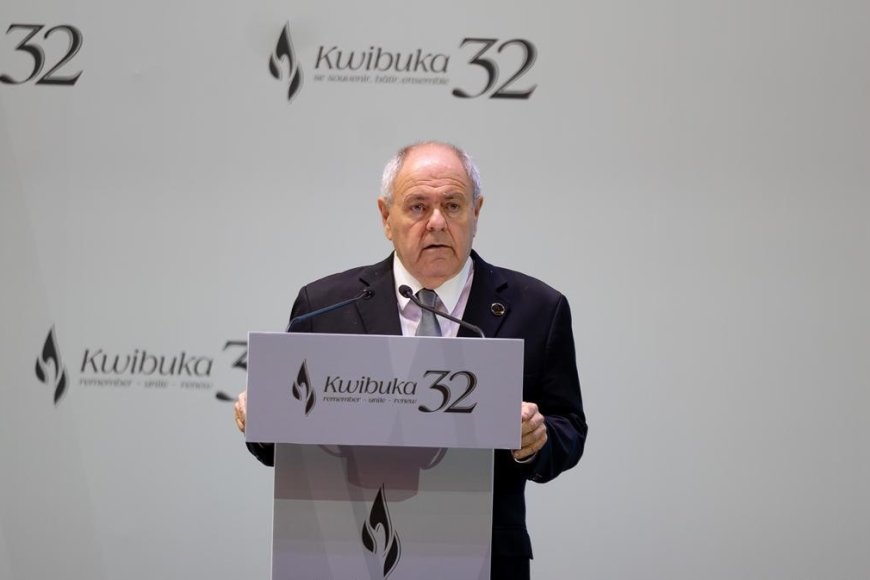
‘Genocide begins with ideas’: Yad Vashem Chairman urges global courage at Kigali conference
Dani Dayan, the Chairman of Yad Vashem, the World Holocaust Remembrance Center-Israel, has warned that “genocide does not begin with killing. It begins with ideas, deadly ideas, with words, words that strip people of their humanity, with narratives that turn neighbours into enemies and differences into danger.”
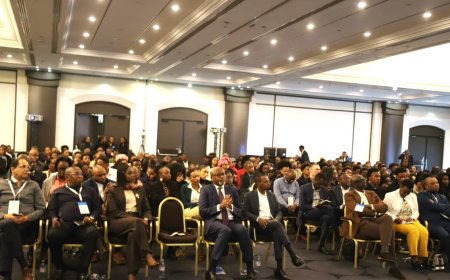
Delivering his remarks at the International Conference on Genocide Prevention, held during the 32nd commemoration of the 1994 Genocide against the Tutsi at the Intare Arena on Wednesday, April 8, Dayan presented to the survivors and international dignitaries that, the world’s failure to act in Rwanda mirrored its catastrophic silence in 1938 for Israel.
Watch his full statement here:
The Israeli official, representing the world’s foremost Holocaust remembrance center, joined the gathering to underscore that education and historical integrity are the only shields against the genocide ideology that turns neighbors into enemies.
“I come from Jerusalem, a city where memory is not only preserved in books and archives, but lives in stone, in language, in daily life,” Dayan told the assembly. “I come first and foremost to stand with you, to remember with you, to walk with you.”
The tragedy of Rwanda, Dayan noted, was defined as the acts of the killing and the silence of the world.
He observed that mass violence is prepared long before it is executed, rooted in narratives that take away individuals’ humanity.
Reflecting on the 100 days of killing that claimed more than one million lives in Rwanda, he described the enduring trauma as a “phantom pain.”
“When a limb is lost, the body continues to feel its presence. The amputated leg still hurts. So is with genocide. The loss remains. The pain remains” He explained
“It becomes part of who a people is,” he said. “The Jewish people in Israel live with this. Rwanda lives with this.”
Dayan stressed that while the wounds do not fully heal, they create a “universal responsibility” to others.
He also praised Rwanda for its rapid recovery and stability. He clarified that this success is rooted in the nation’s unique approach to its history.
“Rwanda today offers a powerful example to the world of what a society can strive for when memory is used not to perpetuate division but to build responsibility and a shared future,” he said.
He pointed to the commitment of the Rwandan people to rebuild and reject the language of division as a “remarkable choice” and a powerful example to the world.
The speech also addressed the global landscape, noting that the “imperative of never again” has yet to be fully translated into action.
Hatred, incitement, dehumanisation of others still exists. They take different forms, but their essence remains the same, he warned.
He called for multi-actions to pay tribute to the victims.
“Remembering is not enough, he said. “Prevention requires vigilance, education, and the moral courage of states and leaders.” Urging for the moral courage of states and leaders to act before hatred becomes violence.
Dayan, concluding his remarks, he called for a transition from passive memory to active responsibility.
“Let us remember them. And let our remembrance be expressed not only in words, but also in the courage to ensure that no people, anywhere, at any time, will ever again stand alone in the face of hatred.”