 English
 Kinyarwanda

‘Bad leadership’ fueled genocide, Senate President Declares at Rebero

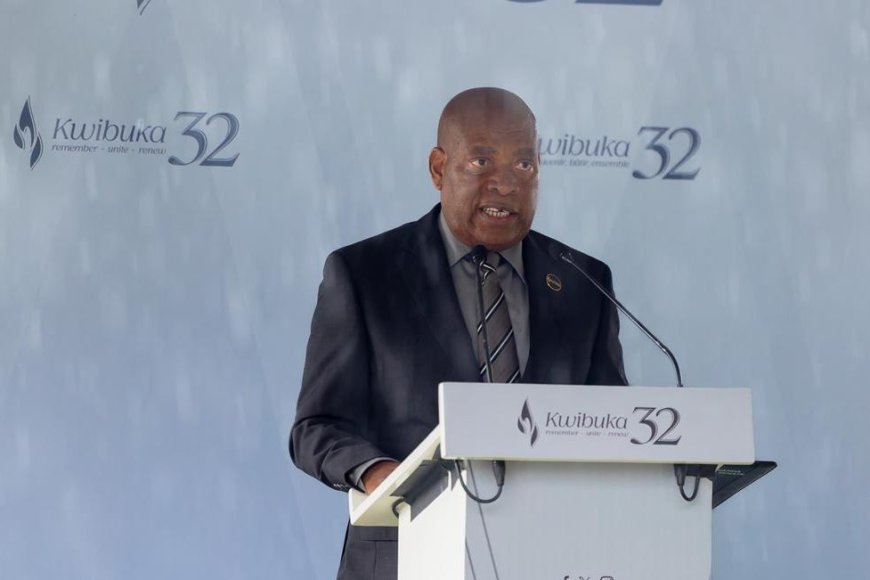
“The Genocide against the Tutsi was, therefore, the result of a succession of bad leadership,” Senate President Dr. Kalinda François Xavier declared at the Rebero Genocide Memorial in Kicukiro District, Kigali City.
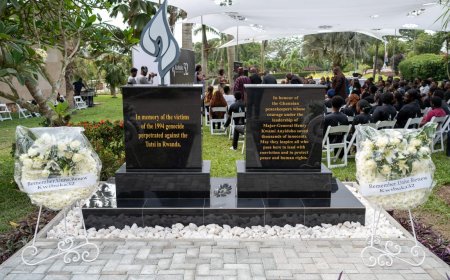
Speaking on Monday, April 13 to mark the conclusion of the National Week of Mourning, Dr. Kalinda addressed survivors, officials, guests gathered to honor politicians murdered for their courageous opposition to the 1994 Genocide against the Tutsi.
The commemoration, which also honoured thousands of Tutsi victims laid to rest at Rebero, serves as an annual tribute to those leaders who rejected the “dictatorial regime” of the 1990s and its policies of ethnic divisionism.
Dr. Kalinda emphasized that the politicians buried at the site were targeted specifically because they chose to prioritize justice and national unity over the state-sponsored plot to kill the Tutsi population.
Since 2006, this memorial has preserved the history of those who sacrificed their lives to stop the sowing of hatred.
By gathering at the site, the government and families aim to restore the dignity of these fallen leaders, whose “noble legacy” provides a historical blueprint for the country’s current path of peace and resilience.
“We have come to this Rebero hill to offer our support to the survivors, especially those whose families are laid to rest at this Memorial,” Dr. Kalinda said.
He noted that the occasion is a time to reflect on the reality that leadership carries a fundamental responsibility to protect all citizens.
The Senate President provided a detailed historical context, tracing the roots of the tragedy back to colonial influences that first fractured Rwandan unity.
He explained that the First and Second Republics later institutionalized this exclusion, making discrimination an official government policy.
“The Genocide against the Tutsi in Rwanda could not have happened without a long-term plan to prepare it,” Dr. Kalinda stated. “That plan was devised by politicians, refined, and even tested at different times across the country.”
He further detailed how political parties spent years teaching the population with genocide ideology. This systematic “evil plot” was integrated into national governance, leading directly to the execution of the genocide.
Dr. Kalinda argued that identifying the political roots of the genocide is the most effective way to confront denial and ensure that such atrocities “never happen again in Rwanda or anywhere else.”
Despite the dark history, the Senate President pointed to the last 32 years as evidence of a successful turnaround.
He described the current shift toward good governance and equal opportunity as a deliberate choice made by the Rwandan people to leave no one behind.
“The progress we have achieved from this path over the last 32 years is pleasing and provides great hope for our country,” he told the assembly.
To maintain this momentum, Dr. Kalinda called for a unified front against the remaining traces of genocide ideology. He outlined a strategy focused on preserving evidence, educating the youth across all school levels, and exposing the lies of those who attempt to trivialize the history.
The Senate President called for legal accountability. He insisted that the nation must remain vigilant, “ensuring that those who manifest genocide ideology are brought before the justice system.”
The end of the National Week of Mourning marks only the beginning of a broader 100-day period of remembrance, as communities in Rwanda and abroad continue to host activities focused on victim tribute and genocide education.