
African and South Korean Ministers Discuss Minerals, Tech, Trade, and Peace

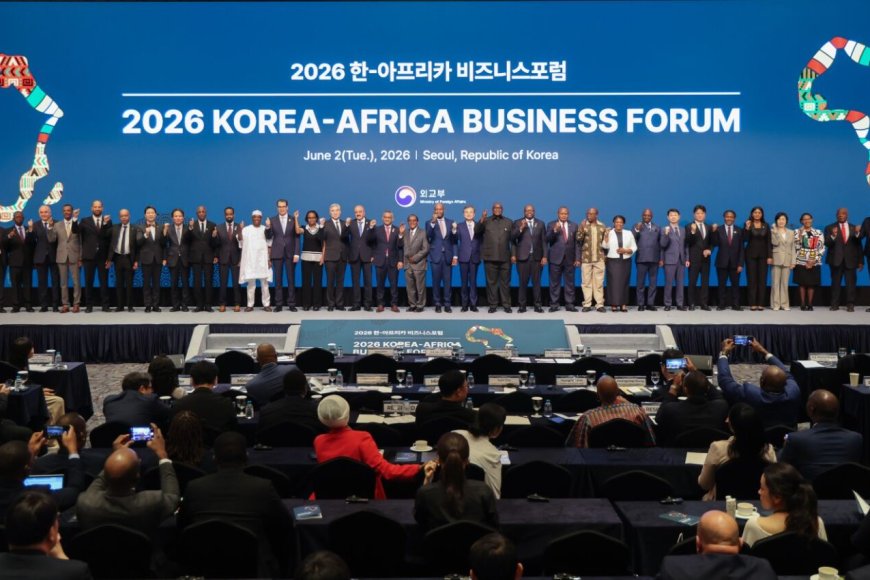
Following the high-level ministerial meeting from Africa and South Korea on Monday, June 1, delegates agreed to deepen cooperation in trade, technology, infrastructure, food security, health, climate action, peace and security. Photo: Courtesy

African and South Korean Ministers Discuss Minerals, Tech, Trade, and Peace

Jun 3, 2026 - 14:39
 0

African and South Korean foreign ministers met in Seoul on Monday, June 1, agreed to work together more closely on trade, technology, and security. This meeting happened as both sides look to strengthen their ties during a time of global uncertainty The ministers released a joint statement after their talks.


Representatives from 50 African countries and major groups like the African Union (AU) and the African Development Bank (AfDB) attended the event. These leaders want to build a partnership that brings practical benefits to both regions.

Economic Partnership and Trade

The summit placed a heavy emphasis on driving economic cooperation. Officials from both sides pledged to unlock market access and solidify regulatory foundations by leveraging key economic pacts, including Bilateral Investment Treaties, Double Taxation Avoidance Agreements, and Comprehensive Economic Partnership Agreements.

A major highlight was the shared commitment to Africa's continental integration via the AfCFTA.

“Korea remains committed to supporting Africa’s consolidation efforts through the Korea-AfCFTA Cooperation Fund, capacity-building for customs authorities, support for the establishment of a One-stop Origin Management System (OOMS), and the sharing of expertise gained from its extensive experience of Free Trade Agreements,” reads the statement.

Infrastructure Development

Recognizing that sustainable growth relies on resilient foundational utilities, both parties emphasized the critical need for dependable roads, railways, ports, aviation hubs, and water infrastructure.

To bridge existing gaps, government-to-government collaborations will be intensified. This includes signing new memorandums of understanding (MOUs) for road development, alongside scaling up financial backing via concessional loans, grants, and infrastructure-related training programs

Technology and Education

The ministers committed to driving Africa’s digital transformation forward through targeted technology transfers, specialized skills training, and closer cooperation in information and communications technology (ICT).

A foundation of this initiative involves adopting and supporting advanced digital platforms modeled on South Korea's existing infrastructure, such as the UNI-PASS customs e-clearance platform, the KONEPS online e-procurement portal, and the KOSIS statistical information service.

Additionally, acknowledging the rapid rise of next-generation technologies, both sides agreed to strengthen their partnership in artificial intelligence (AI) and broader digitalization.

“We further emphasize the role of emerging technologies, particularly artificial intelligence, in accelerating Africa’s development,” the ministers said.

The ministers agreed to expand technical and vocational education and training centres, strengthen research partnerships, and increase opportunities through the Global Korea Scholarship programme.

Agricultural Growth & Food Security

With agriculture employing over 60 percent of Africa’s active workforce, the summit underscored a critical commitment to boosting food production and continental self-sufficiency.

To drive this mission, both sides pledged to deepen their ongoing agricultural partnerships.

Joint efforts will continue through established frameworks, including the K-Ricebelt project, the Korea Partnership for Innovation in Agriculture (KOPIA), and the Korea-Africa Food and Agriculture Cooperation Initiative (KAFACI).

The joint statement also called for advanced collaboration in modern farming technologies, fertilizer production, and smart irrigation systems.

By leveraging technical expertise and knowledge exchange, the partnership aims to substantially upgrade long-term agricultural productivity and resilience.

Critical Minerals and Industry

The ministers identified minerals as a key area for cooperation. These minerals are necessary for making electric cars and phone batteries.

The goal is to create steady supply chains that help both sides. These projects should create local jobs in Africa and follow international rules for human rights and the environment.

The ministers plan to hold more talks- Korea-Africa Critical Minerals Dialogue specifically about these minerals in the future.

Climate Action and Health

Both sides prioritized climate action, committing to joint initiatives in renewable energy, water management, and forest and land restoration.

The ministers explicitly recognized climate change as an escalating public health crisis, noting its direct links to rising disease outbreaks, food insecurity, and water stress.

To counter these threats, they pledged to bolster regional health security and universal health coverage. This strategy will be driven through collaborative projects with national health systems and the Africa Centres for Disease Control and Prevention (Africa CDC).

Peace and Security

The ministers backed African-led peace initiatives, with South Korea maintaining its financial support for the AU Peace Fund. 

Both sides agreed to scale up cooperation in defense, military education, and security capacity-building, while highlighting the vital role of women and youth in establishing continental peace.

Bilateral ties will also expand across education, culture, tourism, and academia.

To immediately advance these economic goals, the Korea-Africa Business Forum convened on Tuesday, June 2, bringing together leaders to tackle trade, industrial collaboration, and supply-chain resilience.

Looking Ahead

To sustain this momentum, South Korea proposed hosting a second Korea-Africa Summit in 2029, with future senior officials' meetings set to discuss further details.

African and South Korean Ministers Discuss Minerals, Tech, Trade, and Peace

Jun 3, 2026 - 14:39
Jun 4, 2026 - 00:38
 0
African and South Korean Ministers Discuss Minerals, Tech, Trade, and Peace
Following the high-level ministerial meeting from Africa and South Korea on Monday, June 1, delegates agreed to deepen cooperation in trade, technology, infrastructure, food security, health, climate action, peace and security. Photo: Courtesy

African and South Korean foreign ministers met in Seoul on Monday, June 1, agreed to work together more closely on trade, technology, and security. This meeting happened as both sides look to strengthen their ties during a time of global uncertainty The ministers released a joint statement after their talks.


Representatives from 50 African countries and major groups like the African Union (AU) and the African Development Bank (AfDB) attended the event. These leaders want to build a partnership that brings practical benefits to both regions.

Economic Partnership and Trade

The summit placed a heavy emphasis on driving economic cooperation. Officials from both sides pledged to unlock market access and solidify regulatory foundations by leveraging key economic pacts, including Bilateral Investment Treaties, Double Taxation Avoidance Agreements, and Comprehensive Economic Partnership Agreements.

A major highlight was the shared commitment to Africa's continental integration via the AfCFTA.

“Korea remains committed to supporting Africa’s consolidation efforts through the Korea-AfCFTA Cooperation Fund, capacity-building for customs authorities, support for the establishment of a One-stop Origin Management System (OOMS), and the sharing of expertise gained from its extensive experience of Free Trade Agreements,” reads the statement.

Infrastructure Development

Recognizing that sustainable growth relies on resilient foundational utilities, both parties emphasized the critical need for dependable roads, railways, ports, aviation hubs, and water infrastructure.

To bridge existing gaps, government-to-government collaborations will be intensified. This includes signing new memorandums of understanding (MOUs) for road development, alongside scaling up financial backing via concessional loans, grants, and infrastructure-related training programs

Technology and Education

The ministers committed to driving Africa’s digital transformation forward through targeted technology transfers, specialized skills training, and closer cooperation in information and communications technology (ICT).

A foundation of this initiative involves adopting and supporting advanced digital platforms modeled on South Korea's existing infrastructure, such as the UNI-PASS customs e-clearance platform, the KONEPS online e-procurement portal, and the KOSIS statistical information service.

Additionally, acknowledging the rapid rise of next-generation technologies, both sides agreed to strengthen their partnership in artificial intelligence (AI) and broader digitalization.

“We further emphasize the role of emerging technologies, particularly artificial intelligence, in accelerating Africa’s development,” the ministers said.

The ministers agreed to expand technical and vocational education and training centres, strengthen research partnerships, and increase opportunities through the Global Korea Scholarship programme.

Agricultural Growth & Food Security

With agriculture employing over 60 percent of Africa’s active workforce, the summit underscored a critical commitment to boosting food production and continental self-sufficiency.

To drive this mission, both sides pledged to deepen their ongoing agricultural partnerships.

Joint efforts will continue through established frameworks, including the K-Ricebelt project, the Korea Partnership for Innovation in Agriculture (KOPIA), and the Korea-Africa Food and Agriculture Cooperation Initiative (KAFACI).

The joint statement also called for advanced collaboration in modern farming technologies, fertilizer production, and smart irrigation systems.

By leveraging technical expertise and knowledge exchange, the partnership aims to substantially upgrade long-term agricultural productivity and resilience.

Critical Minerals and Industry

The ministers identified minerals as a key area for cooperation. These minerals are necessary for making electric cars and phone batteries.

The goal is to create steady supply chains that help both sides. These projects should create local jobs in Africa and follow international rules for human rights and the environment.

The ministers plan to hold more talks- Korea-Africa Critical Minerals Dialogue specifically about these minerals in the future.

Climate Action and Health

Both sides prioritized climate action, committing to joint initiatives in renewable energy, water management, and forest and land restoration.

The ministers explicitly recognized climate change as an escalating public health crisis, noting its direct links to rising disease outbreaks, food insecurity, and water stress.

To counter these threats, they pledged to bolster regional health security and universal health coverage. This strategy will be driven through collaborative projects with national health systems and the Africa Centres for Disease Control and Prevention (Africa CDC).

Peace and Security

The ministers backed African-led peace initiatives, with South Korea maintaining its financial support for the AU Peace Fund. 

Both sides agreed to scale up cooperation in defense, military education, and security capacity-building, while highlighting the vital role of women and youth in establishing continental peace.

Bilateral ties will also expand across education, culture, tourism, and academia.

To immediately advance these economic goals, the Korea-Africa Business Forum convened on Tuesday, June 2, bringing together leaders to tackle trade, industrial collaboration, and supply-chain resilience.

Looking Ahead

To sustain this momentum, South Korea proposed hosting a second Korea-Africa Summit in 2029, with future senior officials' meetings set to discuss further details.