 English
 Kinyarwanda
Sudan's War Fragments with 150 Armed Groups Involved - New Analysis Warns
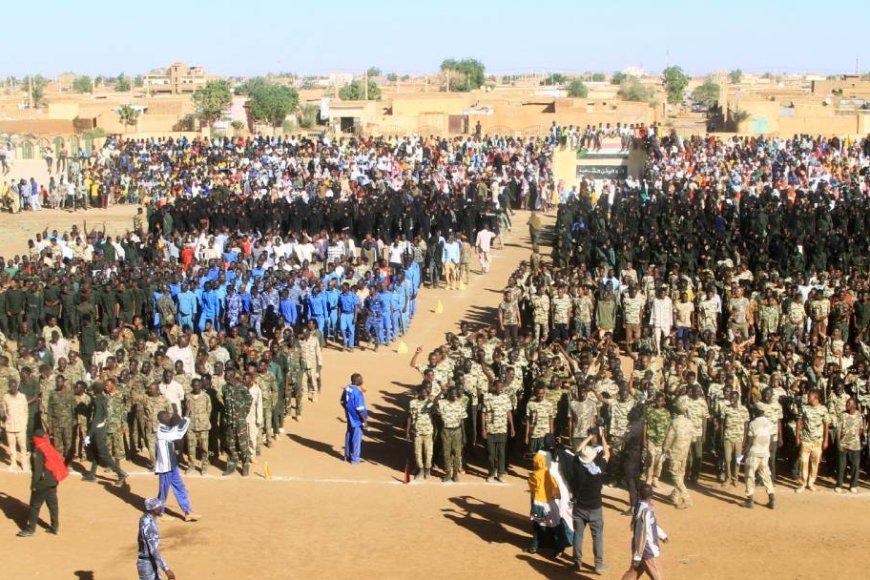
Sudan's devastating conflict is often described as a battle between the Sudanese Armed Forces (SAF) and the Rapid Support Forces (RSF). But beneath that simplified narrative lies a far more dangerous reality: a fragmented battlefield crowded by estimated 150armed groups, each with its own loyalties, interests and ambitions.
A new analysis by the Africa Center for Strategic Studies argues that the war has evolved into a complex web of militias, tribal forces, Islamist brigades, community defense groups, criminal networks and foreign mercenaries. The report warns that this fragmentation is not only prolonging the fighting but also making any future peace agreement far more difficult to achieve.
"The SAF and the RSF operate as shifting coalitions of armed groups rather than unified organizational structures," the report says, adding that this reality will shape both "the course of the war" and the challenges of rebuilding Sudan once the fighting ends.
The analysis traces the roots of today's crisis to decades of state reliance on proxy militias. Successive governments armed local groups to fight political opponents, a strategy that gradually weakened Sudan's formal security institutions while empowering armed factions with growing political and economic influence.
That legacy is now playing out on a national scale.
While the SAF remains Sudan's official military under General Abdel Fattah al-Burhan, it increasingly depends on powerful allied militias, including the Sudanese Popular Resistance Force, the Sudan Shield Forces, Islamist brigades and former Darfur rebel movements. Several of these groups have switched sides during the conflict, highlighting the fluid nature of military alliances.
The RSF, led by General Mohamed Hamdan Dagalo, better known as Hemedti, also relies on a broad coalition. Built from the notorious Janjaweed militias that operated in Darfur, the force continues to draw much of its strength from Arab tribal groups while expanding its ranks through alliances with breakaway rebel factions, regional militias and foreign mercenaries from neighboring countries and beyond.
According to the report, both sides increasingly strike transactional alliances that frequently collapse as local commanders pursue their own interests.
This has fueled widespread competition over Sudan's natural resources and trade routes. Armed groups are increasingly financing themselves through gold smuggling, livestock theft, looting and control of strategic transport corridors, creating what the report describes as "local drivers of the conflict" that continue even beyond military objectives.
The growing number of independent armed actors has also intensified violence against civilians.
Communities across Sudan continue to face looting, forced displacement, ethnically motivated attacks, extortion and arbitrary detention, while rival factions compete for territorial control. At the same time, clashes are becoming more common even among groups fighting under the same military banner, exposing the fragile nature of both coalitions.
Yet amid the violence, the report points to another Sudan that often receives far less international attention.
Across the country, civilian organizations continue to provide essential services and advocate for democratic governance. These include the Civil Democratic Alliance (Somoud), professional associations, neighborhood resistance committees and Emergency Response Rooms—grassroots volunteer networks that have delivered food, healthcare, education and psychosocial support to millions of Sudanese throughout the conflict.
Many of these groups see themselves as carrying forward the aspirations of Sudan's 2019 pro-democracy revolution and continue to push for a civilian-led political transition despite operating under extraordinary pressure.
The report concludes that Sudan's increasingly fragmented security landscape presents one of the greatest obstacles to peace.
"The increasing fragmentation of the two military coalitions underscores the challenges underlying negotiating a ceasefire and transitioning to a stable state," it says.
With dozens of armed factions pursuing their own political and economic agendas, any future peace process will likely require more than an agreement between the SAF and the RSF. Rebuilding Sudan, the analysis suggests, will depend on addressing the country's fractured security landscape while empowering the civilian movements that continue to envision a democratic future.