 English
 Kinyarwanda
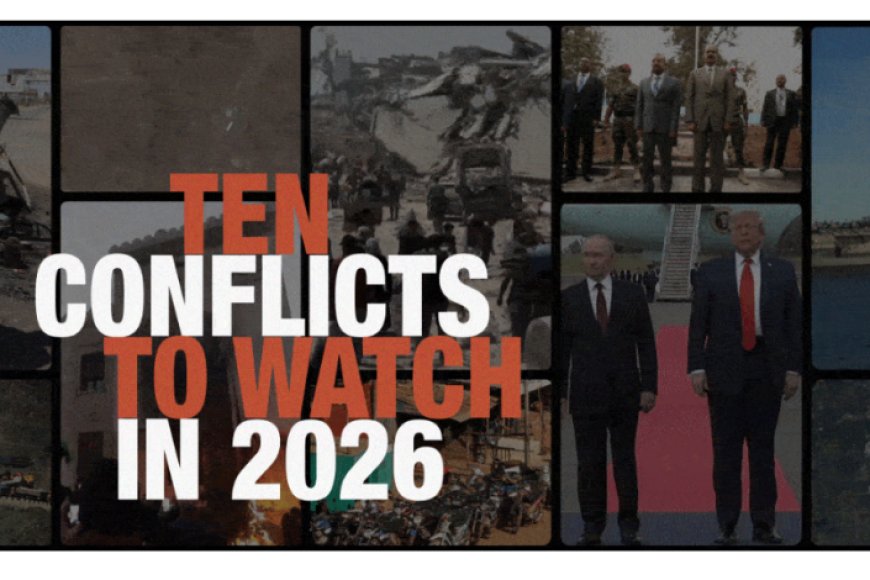
Top 10 Conflicts to Watch in 2026
As global conflict intensifies, the International Crisis Group (ICG) has identified ten conflict hotspots likely to shape international security in 2026, warning that miscalculation, stalled diplomacy and great-power rivalry could push several crises into open war.
Venezuela
The U.S. has dramatically escalated pressure on President Nicolás Maduro, deploying naval forces, seizing oil shipments and threatening further action under the banner of counter-narcotics. While a full invasion remains unlikely, Washington appears determined to extract a “win,” possibly through strikes, tighter blockades or a coercive oil deal. ICG warns that forced regime change risks chaos, armed fragmentation and new refugee flows, while negotiated transition would require power-sharing that hardliners on both sides resist.
Sudan
Sudan’s civil war remains the world’s worst humanitarian crisis. After atrocities in Darfur, the country is effectively split between the army and the Rapid Support Forces (RSF), backed by rival foreign patrons. Mediation led by the U.S., Saudi Arabia and Egypt is stalled amid Emirati-Saudi tensions and army resistance to compromise. ICG argues that only a truce, including pressure on outside arms suppliers, can halt mass civilian suffering and open a path toward reunification.
Ethiopia–Eritrea
Tensions between Ethiopia and Eritrea are rising amid rearmament, proxy conflicts and disputes over Ethiopia’s lack of sea access. Fractures in Tigray and violence in Amhara and Oromia add volatility. With Sudan already at war, ICG warns that another Ethiopia-Eritrea conflict could ignite a regional conflagration. Preventive diplomacy by African powers, backed by global actors, is urgently needed to avert escalation.
Mali and Burkina Faso
Jihadist forces linked to al-Qaeda are tightening their grip across the Sahel, blockading cities, disrupting trade routes and exploiting popular discontent with military rulers. Russian-backed offensives have failed to reverse insurgent gains while worsening civilian harm. In Mali, militants are pressuring Bamako without seeking to seize it outright, betting that instability could topple the regime. ICG says dialogue with insurgents and regional re-engagement may be the last remaining options.
Ukraine
Russia continues grinding advances while Ukraine remains on the defensive, as U.S. military and financial support wanes under President Trump. Shuttle diplomacy has produced draft deals favouring Moscow, which Kyiv and European allies resist. ICG warns that a forced settlement on Russia’s terms would destabilise Europe, but a prolonged stalemate — the most likely 2026 scenario — will exact mounting human and economic costs on all sides.
Syria
President Ahmed al-Sharaa has gained international legitimacy, helped by U.S. sanctions relief and diplomatic engagement. But sectarian violence against Alawite and Druze communities, Israeli strikes and unresolved tensions with Kurdish-led forces threaten fragile gains. ICG cautions that failure to curb abuses, integrate armed factions and reach accommodation in the north-east could unravel Syria’s rehabilitation and invite renewed foreign intervention.
Israel–Palestine
A fragile Gaza ceasefire has halted major fighting but left devastation, mass displacement and unresolved governance and security arrangements. Reconstruction is stalled, Hamas remains entrenched and Israel retains control over most territory. Meanwhile, settlement expansion and repression in the West Bank accelerate. ICG warns that without sustained U.S. pressure and a credible political horizon, Gaza risks permanent limbo and Palestinian self-determination further erosion.
Israel and the U.S. vs. Iran and the Houthis
After Israeli and U.S. strikes on Iran’s nuclear facilities, a tense lull prevails. Iran’s enrichment is paused but its fissile stockpile remains unaccounted for, while Israel signals readiness to strike again. The Houthis remain capable of disrupting shipping and attacking Israel. ICG argues that only renewed diplomacy — including inspections and partial sanctions relief — can prevent another, potentially wider war.
Myanmar
China’s decisive backing has stabilised Myanmar’s junta after years of civil war, while sham elections entrench military rule. Rebel forces remain active, and public resistance is widespread despite battlefield setbacks. Normalisation by regional states may follow, but ICG notes the conflict is far from over, with serious implications for Rohingya refugees and regional stability.
Afghanistan–Pakistan
Cross-border strikes between Pakistan and Taliban-ruled Afghanistan highlight spiralling tensions over militant violence, especially by the Pakistani Taliban (TTP). A ceasefire holds, but diplomacy is frozen, trade halted and deportations ongoing. ICG warns that another major attack could trigger renewed fighting between two heavily armed states, compounding instability already heightened by Pakistan’s clashes with India.