
When Drought Fuels Conflict: Experts’ Push to Bridge Climate and Peace

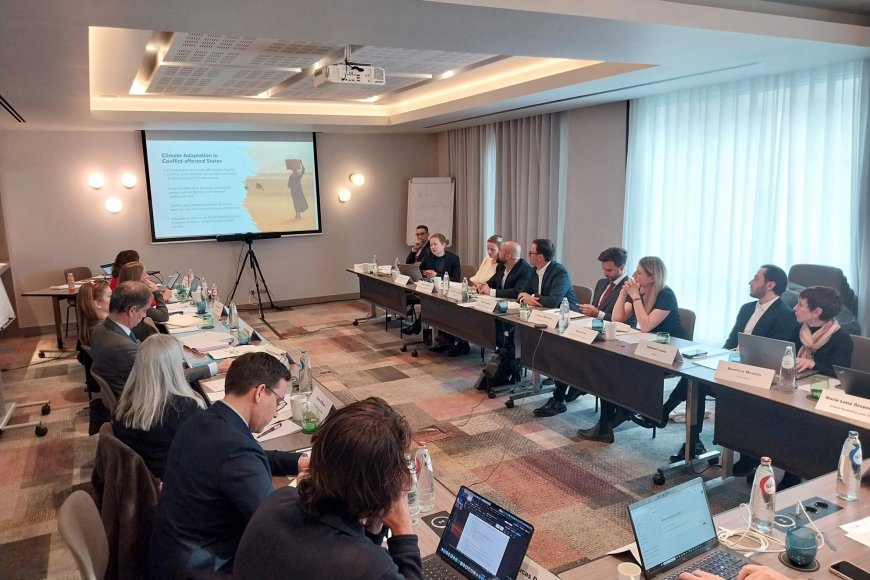
Photo: EU Global Threats Programme.

When Drought Fuels Conflict: Experts’ Push to Bridge Climate and Peace

Feb 26, 2026 - 14:21
 0

Drought is not just drought. It can mean displacement. Displacement can fuel tensions. Tensions, in fragile states, can tip into violence. Yet policy responses still often treat climate change as an environmental issue and conflict as a political one.


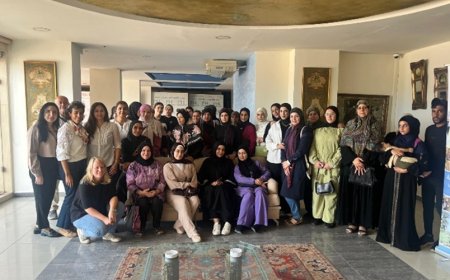
That disconnect was at the heart of a conference convened on 18 February by the Centre for Humanitarian Dialogue, the Berghof Foundation, and the International Institute for Sustainable Development. Around the table were practitioners and policymakers from European Union (EU) institutions and national governments, brought together to confront an uncomfortable truth: climate adaptation and peacebuilding are still largely operating in parallel worlds.

The gathering marked the launch of the Action on Policy Coherence for Adaptation and Resilience, an initiative designed to close that gap and push the EU toward a more joined-up response to fragile settings where climate shocks and insecurity collide.

Officials from the EU’s foreign policy arm acknowledged that, until recently, climate and security were viewed mainly through an environmental lens. But that view has shifted.

The climate crisis, participants stressed, is now widely understood as a “threat multiplier”, exacerbating food insecurity, deepening inequality, and amplifying existing grievances. In fragile contexts, those pressures can accelerate conflict dynamics.

The EU formally recognised this link in its 2023 Joint Communication on the Climate-Security Nexus. But turning that recognition into practical coordination remains difficult.

The Silos Problem

Climate adaptation plans rarely integrate conflict and security risks in a systematic way. Peacebuilding strategies, meanwhile, often lack the structured planning frameworks that guide climate adaptation processes. Ministries operate in silos. National and local authorities frequently struggle to coordinate.

One participant described the situation as “two communities speaking different languages about the same crisis.”

There was also a recurring concern that locally driven solutions, often the most innovative and grounded, rarely make it into national policy frameworks. The challenge is not only to pilot good ideas, but to scale them.

To address this, the initiative aims to build a network of so-called “champions”: policymakers and practitioners who can move between sectors, bridge bureaucratic divides, and translate strategy into implementation.

Iraq as a Test Case

The next phase of the project will run until 2028 and focus on selected fragile settings. Iraq emerged as a potential implementation case.

As Iraq updates its Nationally Determined Contribution under the Paris Agreement and develops its National Adaptation Plan, participants saw an opening. The question is whether peace and adaptation strategies can be aligned from the outset, rather than retrofitted after tensions escalate.

Iraq’s water scarcity, environmental degradation, and complex political landscape make it emblematic of the climate–security nexus in practice. If policy coherence can work there,

One practical outcome of the initiative will be the creation of a dedicated “Help Desk” to support EU delegations and in-country partners navigating the overlap between climate risk and conflict prevention.

The aim is not to produce more reports, participants insisted, but to offer operational guidance, helping officials ask better questions when designing programmes. Such questions can hel to determine whether an intervention strengthens resilience, or unintentionally deepens fragility.

The broader ambition ties into the EU’s Global Threats agenda, which increasingly treats climate change not as a standalone environmental challenge but as part of a web of interconnected risks.

The message from Brussels was clear: in fragile states, climate policy is security policy. And peacebuilding that ignores climate stress is incomplete.

Whether this new alignment effort can overcome entrenched institutional habits remains to be seen. But for those in the room, the urgency was not abstract.

In fragile settings, failed rains and failed politics often arrive together. And when they do, the cost is measured not in policy papers, but in lives disrupted or lost.
 

When Drought Fuels Conflict: Experts’ Push to Bridge Climate and Peace

Feb 26, 2026 - 14:21
Feb 26, 2026 - 14:27
 0
When Drought Fuels Conflict: Experts’ Push to Bridge Climate and Peace
Photo: EU Global Threats Programme.

Drought is not just drought. It can mean displacement. Displacement can fuel tensions. Tensions, in fragile states, can tip into violence. Yet policy responses still often treat climate change as an environmental issue and conflict as a political one.


That disconnect was at the heart of a conference convened on 18 February by the Centre for Humanitarian Dialogue, the Berghof Foundation, and the International Institute for Sustainable Development. Around the table were practitioners and policymakers from European Union (EU) institutions and national governments, brought together to confront an uncomfortable truth: climate adaptation and peacebuilding are still largely operating in parallel worlds.

The gathering marked the launch of the Action on Policy Coherence for Adaptation and Resilience, an initiative designed to close that gap and push the EU toward a more joined-up response to fragile settings where climate shocks and insecurity collide.

Officials from the EU’s foreign policy arm acknowledged that, until recently, climate and security were viewed mainly through an environmental lens. But that view has shifted.

The climate crisis, participants stressed, is now widely understood as a “threat multiplier”, exacerbating food insecurity, deepening inequality, and amplifying existing grievances. In fragile contexts, those pressures can accelerate conflict dynamics.

The EU formally recognised this link in its 2023 Joint Communication on the Climate-Security Nexus. But turning that recognition into practical coordination remains difficult.

The Silos Problem

Climate adaptation plans rarely integrate conflict and security risks in a systematic way. Peacebuilding strategies, meanwhile, often lack the structured planning frameworks that guide climate adaptation processes. Ministries operate in silos. National and local authorities frequently struggle to coordinate.

One participant described the situation as “two communities speaking different languages about the same crisis.”

There was also a recurring concern that locally driven solutions, often the most innovative and grounded, rarely make it into national policy frameworks. The challenge is not only to pilot good ideas, but to scale them.

To address this, the initiative aims to build a network of so-called “champions”: policymakers and practitioners who can move between sectors, bridge bureaucratic divides, and translate strategy into implementation.

Iraq as a Test Case

The next phase of the project will run until 2028 and focus on selected fragile settings. Iraq emerged as a potential implementation case.

As Iraq updates its Nationally Determined Contribution under the Paris Agreement and develops its National Adaptation Plan, participants saw an opening. The question is whether peace and adaptation strategies can be aligned from the outset, rather than retrofitted after tensions escalate.

Iraq’s water scarcity, environmental degradation, and complex political landscape make it emblematic of the climate–security nexus in practice. If policy coherence can work there,

One practical outcome of the initiative will be the creation of a dedicated “Help Desk” to support EU delegations and in-country partners navigating the overlap between climate risk and conflict prevention.

The aim is not to produce more reports, participants insisted, but to offer operational guidance, helping officials ask better questions when designing programmes. Such questions can hel to determine whether an intervention strengthens resilience, or unintentionally deepens fragility.

The broader ambition ties into the EU’s Global Threats agenda, which increasingly treats climate change not as a standalone environmental challenge but as part of a web of interconnected risks.

The message from Brussels was clear: in fragile states, climate policy is security policy. And peacebuilding that ignores climate stress is incomplete.

Whether this new alignment effort can overcome entrenched institutional habits remains to be seen. But for those in the room, the urgency was not abstract.

In fragile settings, failed rains and failed politics often arrive together. And when they do, the cost is measured not in policy papers, but in lives disrupted or lost.