 English
 Kinyarwanda

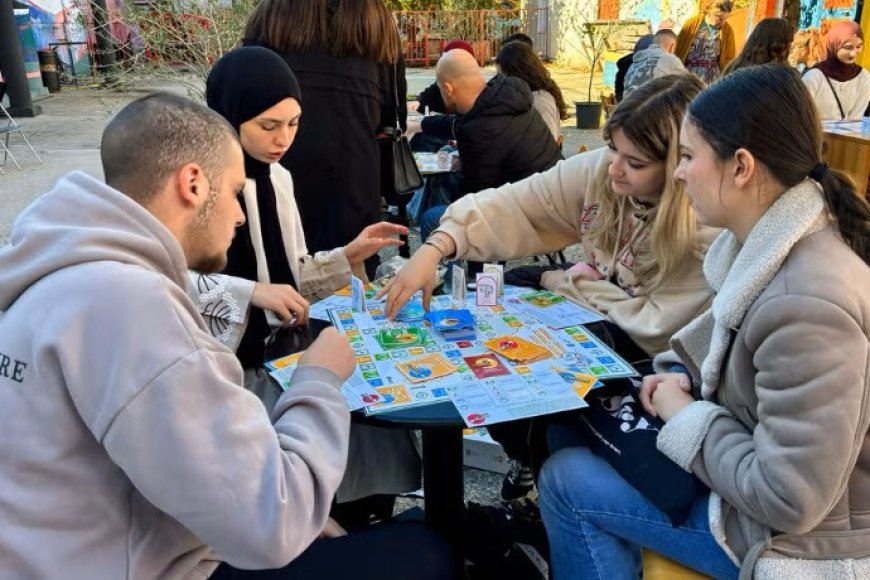
How board game helps Bosnia’s youth rebuild trust after war

Thirty years after the war in Bosnia and Herzegovina ended, many young people continue to grow up surrounded by the divisions left behind by conflict. In some communities, Bosniak, Croat and Serb students still attend separate schools or learn different interpretations of a shared history. The country has enjoyed peace for decades, but building lasting trust across communities remains an unfinished journey. Now, a simple board game is helping a new generation explore what peace means, and how it can be built together.
Called “Odyssey of Peace,” is a new educational board game developed within the Game-Based Learning Lab in 2025, created under the project “Youth for Inclusion, Equality and Trust / Moving Us Closer”, implemented in Bosnia and Herzegovina by UNFPA in partnership with local governments, supported by the United Nations Secretary-General’s Peacebuilding Fund and funded by the Government of Italy.
The game was developed to encourage young people to strengthen dialogue, inclusion and social cohesion. Instead of competing against one another, students learn that cooperation is the key to overcoming challenges.
How to play Odyssey of Peace?
A simple guide: Roll the die, move around the board, and collect resources, coins, and People of Peace cards. Answer questions, build your three cities, avoid the War spaces, and be the first player to earn three People of Peace cards to win.
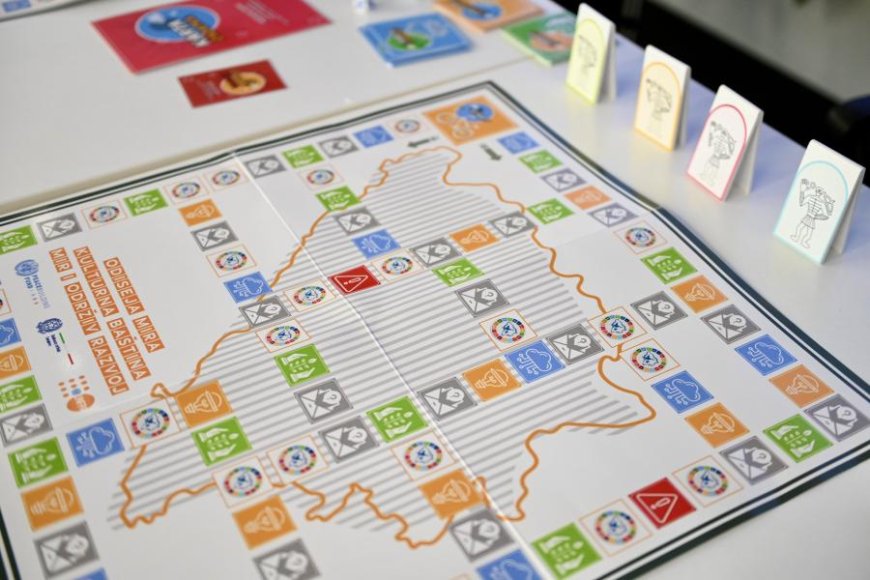
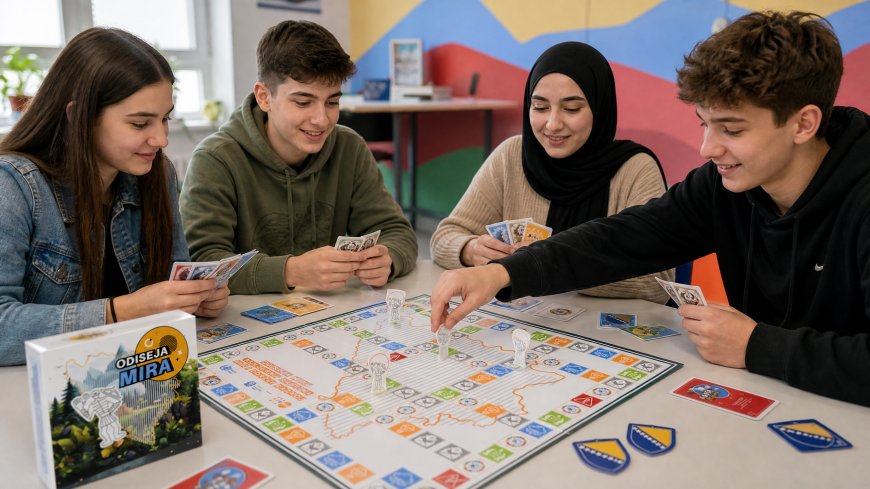
Odyssey of Peace game layout and components. Photo: United Nations in Bosnia and Herzegovina.
How Odyssey of Peace draws a line on inclusion, equality, and trust?
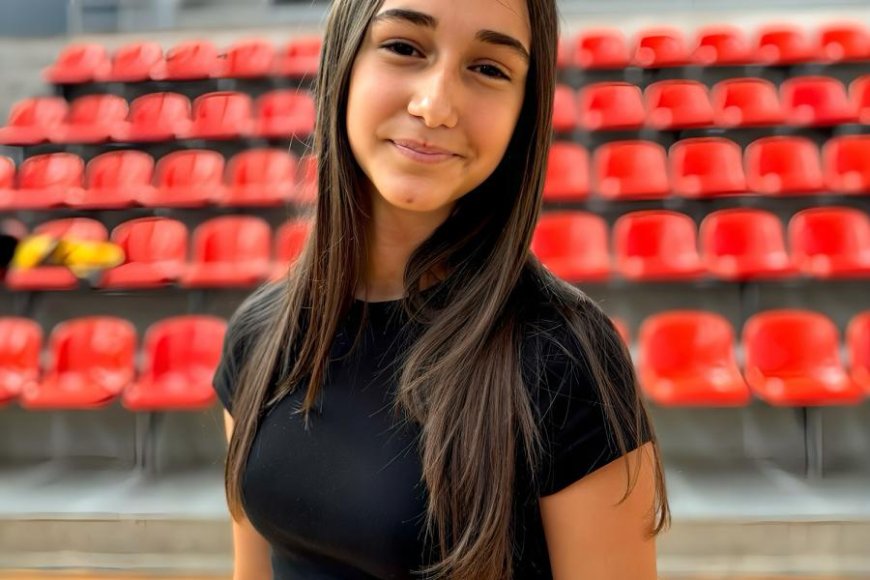
At a school tournament in Foča, eastern Bosnia and Herzegovina, student Iva Kovačević celebrated a victory that was not measured by points or prizes.
“The point was not to win, it was to learn — together,” she said.
She noted that the essence of Odyssey of Peace is not about defeating an opponent but about finding solutions together.
The game was shaped by more than 1,500 students and teachers from nearly 60 schools across Bosnia and Herzegovina, including communities once separated by the front lines of war. Through classroom discussions and play, young people helped design a tool aimed at encouraging empathy, intercultural understanding and trust.
“This is not a game where we compete to see who is better,” said Dalija Malak, a student from Tuzla. “It teaches us how to be better to each other.”
In the game, players become leaders responsible for developing their own communities. They gain “crests” by promoting ideas such as inclusive development, creativity and environmental protection.
For Lena Milović, a 17-year-old student from Trebinje, the game carries important lessons.
“The game contains many beautiful messages that connect us,” she said.
The experience has moved beyond a classroom activity. In Tuzla Canton, Odyssey of Peace has become part of the education system, with all 124 schools using it as a learning tool to promote peace and social connection among students.
One of the game’s most powerful lessons comes through its “war fields”. When a player lands on one, the entire game stops — regardless of how much progress has been made.
“The outbreak of war is a shared failure,” explained Darko Samardžić, a 16-year-old student from East Sarajevo.
The only way to continue is by using the “Armies of Peace” — empathy, dialogue, respect for diversity and care for the environment.
The message is simple: peace cannot be achieved by one person or one community alone.
The game also encourages students to help one another. A player from one background may need support from another player to avoid a “war field”, reflecting the reality that communities are connected and their futures depend on cooperation.
“Through this game, I realized that peace starts with ourselves,” said Ana Ćurak, a 16-year-old student from Vitez. “But it is impossible to maintain it without working together with others.”
According to Ivana Kešić, one of the game’s designers, Odyssey of Peace supports young people to develop skills that go beyond the classroom.
“It enables social and emotional learning, encourages critical thinking and empowers young people for peacemaking,” she said.
For communities still carrying the wounds of war, the voices of young people offer a vision of a different future.
In Bosnia and Herzegovina’s Bosnian Podrinje canton, 13-year-old Arifa Mehić expressed what many young people hope for.
“Young people want a future free from divisions, fear and hatred,” she said.
Tags:
- Odyssey of Peace
- peacebuilding
- youth empowerment
- inclusion
- equality
- trust building
- intercultural dialogue
- Bosnia and Herzegovina
- social cohesion
- peace education
- Odyssey of Peace
- peacebuilding
- youth empowerment
- inclusion
- equality
- trust building
- intercultural dialogue
- Bosnia and Herzegovina
- social cohesion
- peace education