 English
 Kinyarwanda

Ubuntu’s Effectiveness in African Conflict Resolution

In November 2022, the government of Ethiopia and the Tigray People’s Liberation Front (TPLF) formalised the Pretoria Peace Agreement, effectively concluding a protracted and devastating two-year civil war, an infrequent yet significant instance of diplomatic resolution within the African context.
This case exemplifies a recurrent pattern across post-conflict African societies, wherein formal peace accords are enacted, state institutions reconstructed, and judicial mechanisms established; nonetheless, enduring legacies of mistrust, societal fragmentation, and intergroup resentment frequently outlast the cessation of hostilities.
One reason this issue persists lies in the type of peace frameworks that are often applied. Many peacebuilding models used in Africa are rooted in Western traditions that emphasise individual rights, legal procedures, and institutional reforms. These approaches have value, but they often struggle to address the deeper moral and relational damage caused by conflict. In societies where identity, responsibility, and dignity are deeply communal, peace cannot be sustained by rules and courts alone. This is where Ubuntu, an African ethical tradition centered on shared humanity and interdependence, offers a compelling alternative.
When peace becomes procedural
Western-inspired peacebuilding frameworks tend to view peace as a technical problem: rebuilding institutions, enforcing laws, and ensuring accountability. Justice is often understood in legal terms, who violated which rule, and what punishment should follow.
For many African communities, however, violence is not experienced only as a legal violation. It is a rupture in relationships between neighbors, families, clans, and generations. When conflict tears apart the moral fabric of a community, restoring order without restoring relationships can leave peace shallow and unstable. This helps explain why in places such as Rwanda, South Sudan, and Liberia, elections and peace accords built institutions, but unresolved grievances and mistrust endured, showing that peace structures without repaired moral bonds remain fragile.
Ubuntu: peace as a shared moral achievement
Ubuntu is often summarised by the phrase “I am because we are.” At its core, it holds that a person becomes fully human through relationships with others. Dignity is not only an individual attribute; it is something affirmed and sustained by the community. From this perspective, wrongdoing harms not just a victim and a perpetrator, but the entire social body. Justice, therefore, is not only about punishment. It is about restoring relationships, rebuilding trust, and reintegrating those who have caused harm back into the moral community—without denying accountability.
Peace, in an Ubuntu framework, is not merely the absence of violence. It is the presence of restored relationships. Ubuntu is not an abstract philosophy. Its principles have shaped real peacebuilding processes across Africa.
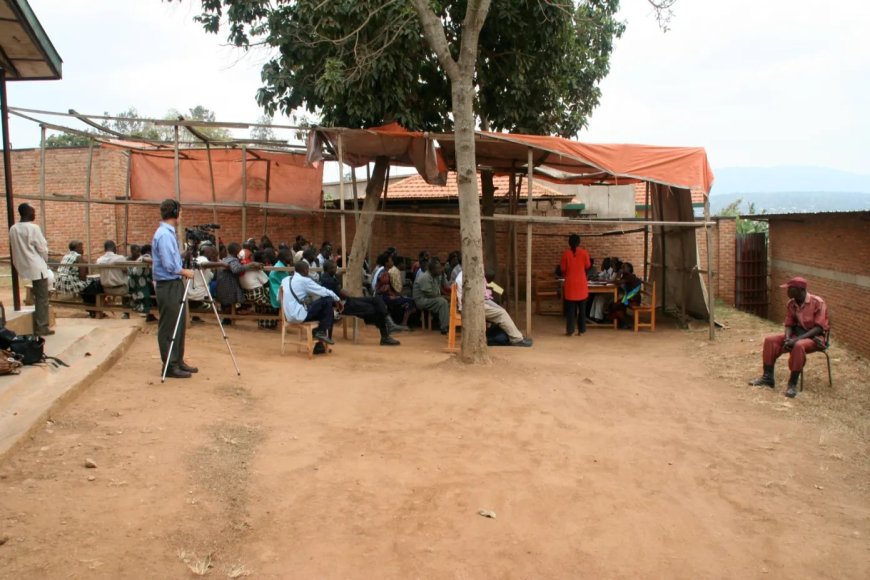
From 1999 through the early 2000s, Rwanda’s community-based Gacaca courts combined accountability with local participation in the aftermath of the 1994 genocide, reflecting an attempt to rebuild social trust at the grassroots level, where neighbors had to learn to live together again after unimaginable violence
In South Africa, the Truth and Reconciliation Commission, established in 1995 and active mainly from 1996 to 1998, prioritised truth-telling and public acknowledgment of harm over widespread retributive punishment. Victims were given a voice, perpetrators were required to confront the human impact of their actions, and society was invited to rebuild itself through moral recognition rather than collective denial. The process was imperfect, but it helped prevent a cycle of revenge and created space for coexistence after apartheid.
In northern Uganda, communities recovering from decades of conflict have relied on traditional reconciliation rituals such as Mato Oput, which emphasise confession, symbolic restitution, and communal healing. Justice here is not about isolating the offender, but about repairing the broken social bond so that community life can continue.
What unites these examples is a shared understanding: Peace cannot be imposed from above. It must be rebuilt from within communities, ordinary people at the center of peace. One of Ubuntu’s greatest strengths is that it places ordinary people, not just political elites or international experts, at the center of peacebuilding. Elders, women’s groups, youth, and local mediators are recognized as moral agents with legitimate authority. Ubuntu-informed peacebuilding enables more effective peace processes in Africa by grounding peacemaking in human dignity, relational context, and non-polarizing narratives that reorient people away from conflict escalation toward reconciliation and social repair.
Challenges and limits
Ubuntu is not a magic solution. Romanticising tradition can obscure power inequalities, silence marginalised voices, or excuse abuses. Some customary practices may conflict with universal human rights standards, particularly regarding gender or minority protections. There is also the challenge of scale. Relational, community-based approaches can be difficult to integrate into modern state institutions built around bureaucracy and legal uniformity. These tensions are real, but they are not reasons to dismiss Ubuntu. Instead, they point to the need for hybrid peace frameworks that combine relational ethics with formal institutions. Courts, laws, and rights remain essential, but they become more effective when embedded within moral practices of dialogue, recognition, and reconciliation.
Ubuntu invites us to rethink how we measure peace. Instead of focusing only on elections held or laws passed, it asks deeper questions: Are relationships being repaired? Is trust being rebuilt? Do people feel recognised as members of a shared moral community? In many African contexts, these questions matter as much as constitutional reforms or legal verdicts.
Peace is not a destination reached once institutions are in place. It is an ongoing ethical practice, sustained through everyday acts of recognition, responsibility, and care.
By grounding peace in shared humanity rather than abstract procedures alone, Ubuntu offers a powerful lens for building peace that lasts. It does not reject global norms, but reinterprets them through relational values that resonate with lived experience.
By Castor Mfugale through Peace News Network. Castor Mfugale is a lecturer of Ethics at the Catholic University of Mbeya (CUoM), withextensive research on peacebuilding in its multiple facets, including conflict resolution, governance, and youth engagement.