 English
 Kinyarwanda

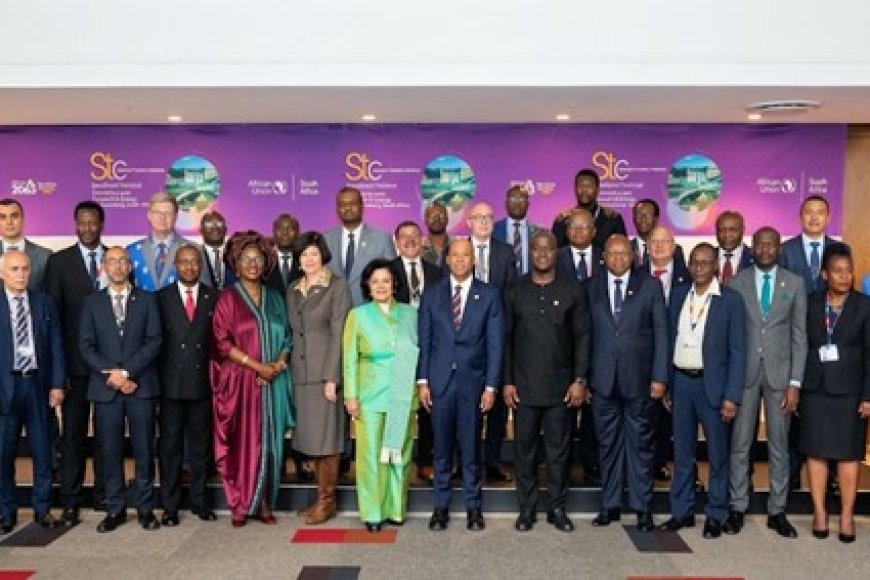
AU Demands Shift from Strategy to Execution to Fix Africa’s Infrastructure Crisis

African Union (AU) ministers and experts concluded Fifth Ordinary Session of the Specialised Technical Committee on Transport and Energy (STC-T&E) summit in Johannesburg-South Africa, aimed at accelerating infrastructure integration and address critical challenges in Africa's transport and energy sectors.
The four-day session held from April 27–30, focused on a reality: infrastructure deficits are reducing Africa’s Gross Domestic Product (GDP) growth by 2 per cent annually productivity losses as high as 40 per cent.
And also, the High transport costs, now up to 175 per cent higher than other regions, and a massive energy gap—leaving 600 million people without electricity and nearly 1 billion lack clean cooking solutions.
In a direct address to delegates, AU Commissioner for Infrastructure and Energy, Ms Lorato Mataboge, highlighted that the continent’s debt levels have hit 64 per cent of GDP. However, she argued the issue is not a lack of assets.
The Commissioner highlighted that Africa's fundamental challenge "is not resource scarcity, but structural dependence," noting the continent holds 125 billion barrels of oil, 18 trillion cubic meters of natural gas, and 40 per cent of the world’s renewable energy potential.
Mataboge urged ministers to use the STC as a weapon for change.
"This STC is not merely a convening platform. It is the continent's principal ministerial decision-making organ... In a world of increasing fragmentation, this STC represents Africa's collective instrument for coherence, alignment, and decisive action," she said as cited in a statement issued by AU.
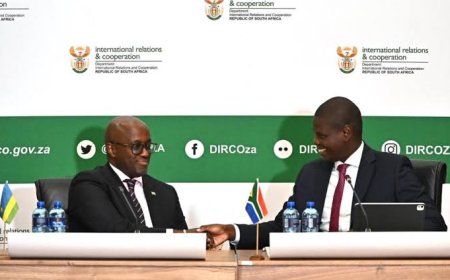
South African Minister of Electricity and Energy, H.E. Dr. Kgosientsho Ramokgopa, framed the crisis as a matter of "economic sovereignty."
The minister Ramokgopa, called for moving beyond raw material extraction to local beneficiation, aligning infrastructure development with industrialisation, and shifting the focus from frameworks to measurable outcomes such as megawatts added, corridors operationalised, and jobs created.
In his opening remarks as outgoing Chair of the STC, as cited in statement, Mr Messele Getu, representing H.E. Dr. Alemu Sime Feyisa, Minister of Transport and Logistics of Ethiopia, highlighted progress under the Single African Air Transport Market (SAATM), the African Integrated Railway Network master plan, and the Africa Energy Strategy.
Acknowledging external pressures from global energy market volatility, Dr. Alemu emphasised that such challenges present an opportunity for Africa to accelerate investments in local refining, strategic reserves, and resilient logistics systems.
He called for strengthened coordination between transport and energy planning, positioning integrated corridors as strategic enablers of economic resilience under the AfCFTA.
According to the statement, delegates at the ministerial session underscored a critical shift from policy design to decisive implementation at scale.
They reaffirmed that transport and energy infrastructure is the backbone of Africa’s industrialization and the AfCFTA, while addressing structural constraints such as the massive financing gap, external supply chain reliance, and energy access deficits, reads statement.
The summit reviewed progress on flagship projects including the Grand Inga Hydropower Project, the Single African Air Transport Market (SAATM), and the African Single Electricity Market (AfSEM).
Advances in e-mobility and new governance
The summit has also delivered several landmark policy breakthroughs, most notably the approval of the African E-Mobility Framework and the Pan-African Action Plan for Active Mobility.
Ministers also threw their weight behind new continental studies aimed at modernizing trade hubs through green ports, railway expansion, and port digitalization.
In a major step for continental governance, the session validated the recent entry into force of two critical legal frameworks: the Revised African Maritime Transport Charter, active since August 2025, and the African Road Safety Charter, which took effect in March 2026.
To oversee these initiatives, the committee elected a new Bureau to lead the infrastructure agenda for the next two years.
Gabon, representing Central Africa, will chair the body, supported by Togo as 1st Vice Chair and South Africa as 3rd Vice Chair. Ethiopia was named Rapporteur for Eastern Africa, while the selection for the Northern Africa Vice Chair position was deferred.