 English
 Kinyarwanda

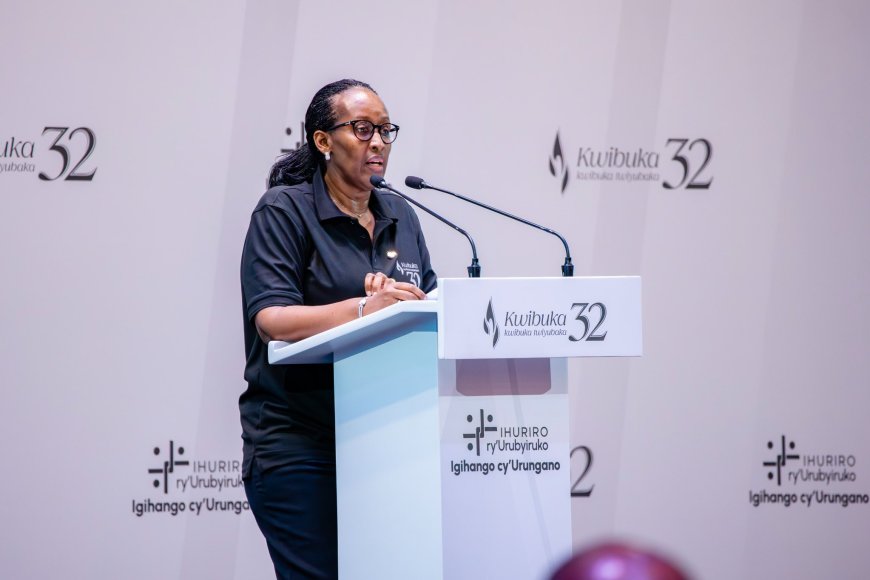
First Lady Warns Youth Against Genocide Ideology At National Forum

First Lady Jeannette Kagame warned that genocide ideology is still being passed down through generations, calling on Rwandan youth to decisively reject divisive beliefs and safeguard national unity.
Speaking on May 30 at the Intare Conference Arena, Mrs. Kagame addressed the 13th edition of Igihango cy’Urungano. This annual youth forum commemorates young victims of the 1994 Genocide against the Tutsi, promotes national unity, and seeks to inspire the new generation to safeguard Rwanda's unity and progress.
Before the forum, the First Lady opened the Ntarama Genocide Memorial Gallery in Bugesera District. The forum was themed, “Youth, let us fight genocide ideology and promote unity and resilience.”
“As we remember, today is not only about reflecting on the painful history we endured. It is also an opportunity to renew our commitment to protecting our unity and continuing to build the Rwanda we aspire to have,” the First Lady said.
“Changing the harmful mindsets that were taught for many years and became deeply rooted requires time and effort. Genocide ideology was passed from one generation to another, which is why it can still be found among some young people today,” she stated.
Mrs. Kagame acknowledged that some households still harbor genocide ideology, exposing young people to divisive narratives at home.
“However, love for our families should never prevent us from putting Rwanda first, because Rwanda is the cradle that carries us all.”
She further challenged the youth to look toward the future and learn from the catastrophic errors of the past.
“We have seen where that led us as a country and the consequences we continue to face today. Many of you ask how we ended up here. I encourage you to also ask yourselves how we move forward,” she added.
To counter destructive mindsets, Mrs. Kagame urged youth to learn Rwanda’s history through memorials, survivor testimonies, and historical accounts.
“Today, you are the guardians who will shape the Rwanda of today and tomorrow,” she said.
Jean-Damascène Bizimana, Minister of National Unity and Civic Engagement, also addressed the forum, stating that the Genocide against the Tutsi was preceded by decades of systematic, hate-based politics.
Bizimana stated that from 1957, hate-based politics portrayed Tutsis as foreigners, excluding them from education and jobs during the First and Second Republics.
This environment escalated through political shifts in the 1980s, state media incitement, militia training, and weapon distribution, creating the conditions for the 1994 Genocide against the Tutsi.
“This history is important because it helps young people understand how poor leadership led Rwanda into division and discrimination that paved the way for the Genocide. It also helps them distinguish between destructive leadership and leadership that ended the Genocide, built unity, and prioritises Ndi Umunyarwanda,” he said.
“This awareness will help youth protect what has been achieved and continue building on it.”