 English
 Kinyarwanda

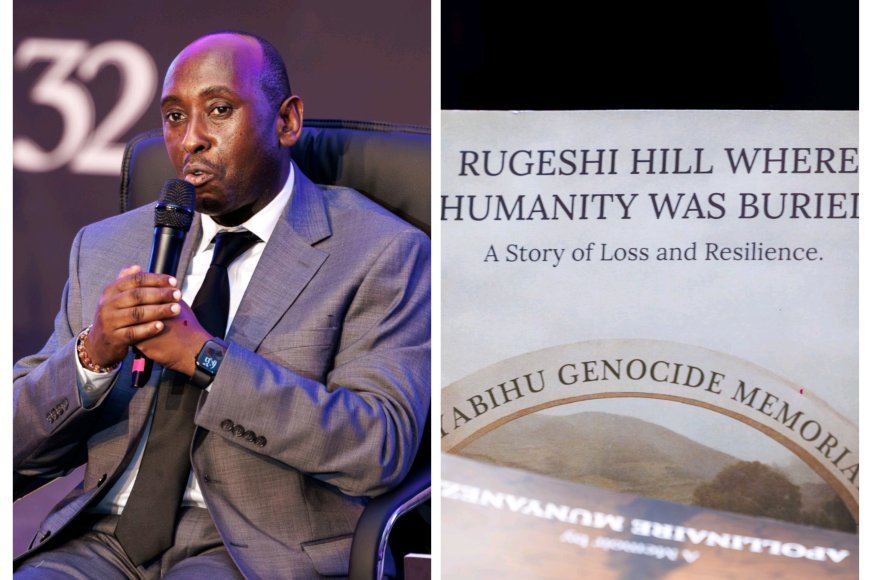
From 600 Tutsis to 8: Survivor’s memoir resurrects truth of Rugeshi Hill

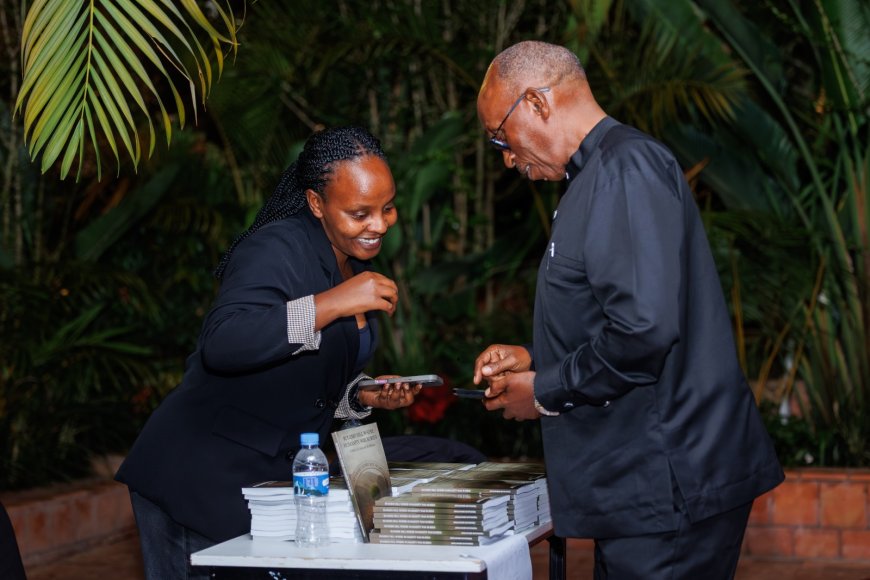
Out of 600 Tutsis who lived on Rugeshi Hill in Nyabihu District, only eight survived the 1994 Genocide against the Tutsi. To preserve this history from erasure or distortion, Appolinaire Munyaneza documented his experiences in a memoir titled “Rugeshi: Where Humanity Was Buried, A Story of Loss and Resilience,” launched at the Kigali Genocide Memorial on April 16.
The book documents the tragic history of his birthplace in Nyabihu District (At Rugeshi Hill) and his journey of survival.
The memoir also serves as a definitive record of his family’s tragedy and the endurance of those few who survived.
Speaking at the launch, Munyaneza emphasised that the primary motivation for the book was to ensure an accurate historical record.
“I wanted my family's story to be remembered,” he said. “I wanted to tell it in my own words, so that no one else can alter it in the future.”
The memoir chronicles the systematic persecution of innocent people based on their birth and identity, with multiple chapters detailing the atrocities endured by victims. It also underscores the resilience of survivors and their efforts to rebuild their lives alongside fellow Rwandans in the aftermath of the genocide.

Munyaneza addressed the youth during the event, urging them to prioritise education and critical thinking to safeguard the country’s future.
He warned that a lack of information makes individuals vulnerable to manipulation.
“We say the youth are the Rwanda of today and tomorrow, as the elders step back and pass on the responsibilities,” Munyaneza stated.
“My advice to them is to avoid ignorance by learning and reading. They must know the truth and where to find it so that the winds blowing from different sides do not lead them into evil without them knowing how to explain it. It is very easy to lie to someone who lacks information,” he added.
He further cautioned the younger generation against any forms of divisionism.
“Youth, let us avoid discrimination and anything that would divide us or hinder the unity and collective work of the people,” he added.
Patrick Rwagatare, a psychologist who spoke at the launch, echoed these sentiments, highlighting the dangers of modern digital platforms.
He noted that social media can become a source of “poison” for young people if not balanced with deep reading and historical understanding.
“The rise of social media can be harmful to the young people, as they circulate distorted or misleading content.” Rwagatare said. “It can also discourage a culture of reading books. If you do not read, it becomes difficult to challenge those who distort history. The solution is to engage with books, especially those documenting the Genocide.”
The book’s prologue suggests that even decades after the event, new accounts are essential to filling the gaps left by the total extermination of entire families, which often left no witnesses to testify.
Munyaneza noted that these gaps are frequently exploited by those seeking to deny the Genocide.
“Any writing about Genocide brings unique and valuable insights,” the author wrote in his prologue. “Even after what might be considered a long time and the publication of numerous accounts, there is always information that remains unknown to many.”
Munyaneza explained that some truths remain hidden because firsthand witnesses are often unwilling or unable to share their stories.
He described the memoir as a “humble contribution” to preserving the memory of the victims and providing clues to relatives who may still be searching for answers about the fate of their loved ones.
By sharing his experience as a survivor, Munyaneza aims to shed light on the atrocities of the past to ensure such history never repeats itself.
A central theme of the book is the descent into the loss of human decency on Rugeshi Hill, and the subsequent journey of survivors as they endured, survived, and eventually reintegrated into society.