
Global Warfare Hits Highest Level Since World War II

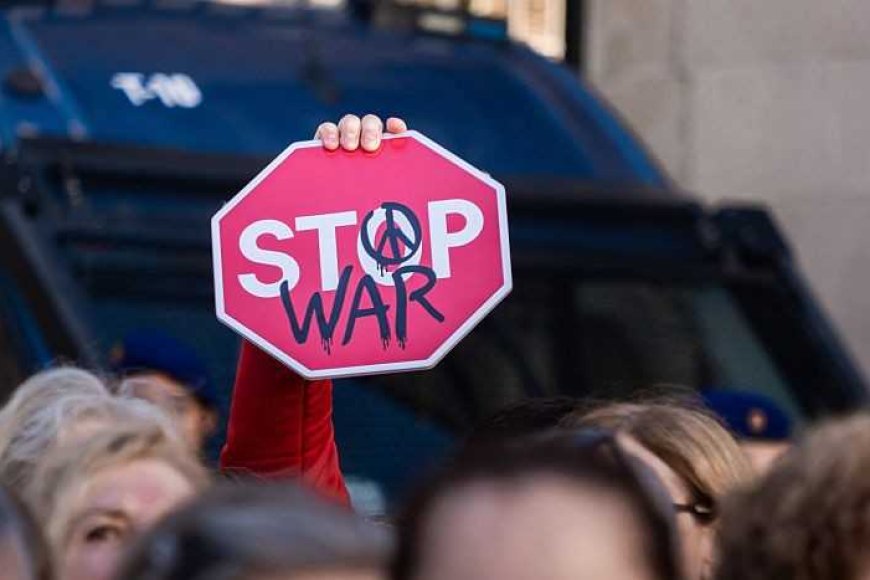
A demonstrator demands an end to the war in Palestine during a protest in Spain. Illustration: Getty Images

Global Warfare Hits Highest Level Since World War II

Jun 10, 2026 - 17:52
 0

Direct warfare between nations has surged to its highest level since World War II, driving global battle deaths to an overwhelming 245,000 in 2025, according to a definitive security report released on Monday, June 8.


The newly published report, Conflict Trends: A Global Overview, 1946–2025, by the Peace Research Institute Oslo (PRIO), documented eight major interstate conflicts last year.

This figure is double the amount recorded in 2024, marking an unprecedented breakdown in international security not seen since 1946.

“The return of interstate conflict at this scale is deeply worrying,” warned Siri Aas Rustad, Research Director at PRIO and lead author of the report.

“For decades, civil wars dominated global conflict. Now we are witnessing a dangerous resurgence of direct confrontations between states, driven by geopolitical rivalry, border disputes and regional escalation, particularly in the Middle East.”

Using authoritative data from the Uppsala Conflict Data Program, the report outlines a reality: 2025 stands as the third deadliest year since the end of the Cold War in 1989. Total battle-related fatalities jumped from 188,000 in 2024 to 245,000 in 2025, fueled heavily by Russia’s invasion of Ukraine, the war in Gaza, and escalating violence in Sudan.

In total, researchers tracked 65 state-based conflicts across 35 countries last year.

The data reveals that the world has now endured over a decade of persistently high levels of violence, with every single year since 2013 eclipsing nearly every post-Cold War year that preceded it.

The geography of violence has also grown more concentrated and complex. While dozens of wars rage, they are packed into fewer nations, often forcing countries to navigate multiple, overlapping battlefronts simultaneously.

The Myanmar and Israel each endured five separate conflicts in 2025, while Afghanistan, Cameroon, Mali, Nigeria, and Pakistan all fought on multiple fronts.

Specific geopolitical breaking points driving the interstate spike include Russia’s war against Ukraine, renewed violence between India and Pakistan, escalating tensions between Afghanistan and Pakistan, clashes between Thailand and Cambodia, and multiple confrontations linked to the expanding regional conflict involving Israel, Iran, Yemen, and the United States.

“Conflicts today are increasingly interconnected,” Rustad said. “They involve more actors, overlapping fronts and greater regional spillover. That makes them far harder to resolve and significantly increases the risks of wider regional wars.”

This environment has created mounting obstacles for diplomacy, peacebuilding, and humanitarian aid operations worldwide.

The report documents a horrifying surge in deliberate civilian targeting.

Over 76,000 people were slaughtered in one-sided violence in 2025, marking the highest toll since the Rwandan Genocide in 1994.

The vast majority of these atrocities occurred in Sudan, specifically during the October 2025 siege and massacre of El-Fasher City in North Darfur, where tens of thousands of civilians were killed.

According to the report, geographically, Africa and the Middle East remain the primary epicenters of global instability.

Africa sustained the highest overall number of both state-based and non-state conflicts, while the Middle East recorded its highest number of state-based conflicts in history, read a report.

Simultaneously, Asia reached its highest level of state-based warfare since the mid-1990s.

Analysts stress that these metrics prove the decay of international peace is no longer isolated to specific borders, but represents a systemic collapse of global safety.

“The data points to a world moving in the wrong direction: more wars, more internationalized conflicts and far higher human costs,” Rustad noted.
Global Warfare Hits Highest Level Since World War II

Jun 10, 2026 - 17:52
 0
Global Warfare Hits Highest Level Since World War II
A demonstrator demands an end to the war in Palestine during a protest in Spain. Illustration: Getty Images

Direct warfare between nations has surged to its highest level since World War II, driving global battle deaths to an overwhelming 245,000 in 2025, according to a definitive security report released on Monday, June 8.


The newly published report, Conflict Trends: A Global Overview, 1946–2025, by the Peace Research Institute Oslo (PRIO), documented eight major interstate conflicts last year.

This figure is double the amount recorded in 2024, marking an unprecedented breakdown in international security not seen since 1946.

“The return of interstate conflict at this scale is deeply worrying,” warned Siri Aas Rustad, Research Director at PRIO and lead author of the report.

“For decades, civil wars dominated global conflict. Now we are witnessing a dangerous resurgence of direct confrontations between states, driven by geopolitical rivalry, border disputes and regional escalation, particularly in the Middle East.”

Using authoritative data from the Uppsala Conflict Data Program, the report outlines a reality: 2025 stands as the third deadliest year since the end of the Cold War in 1989. Total battle-related fatalities jumped from 188,000 in 2024 to 245,000 in 2025, fueled heavily by Russia’s invasion of Ukraine, the war in Gaza, and escalating violence in Sudan.

In total, researchers tracked 65 state-based conflicts across 35 countries last year.

The data reveals that the world has now endured over a decade of persistently high levels of violence, with every single year since 2013 eclipsing nearly every post-Cold War year that preceded it.

The geography of violence has also grown more concentrated and complex. While dozens of wars rage, they are packed into fewer nations, often forcing countries to navigate multiple, overlapping battlefronts simultaneously.

The Myanmar and Israel each endured five separate conflicts in 2025, while Afghanistan, Cameroon, Mali, Nigeria, and Pakistan all fought on multiple fronts.

Specific geopolitical breaking points driving the interstate spike include Russia’s war against Ukraine, renewed violence between India and Pakistan, escalating tensions between Afghanistan and Pakistan, clashes between Thailand and Cambodia, and multiple confrontations linked to the expanding regional conflict involving Israel, Iran, Yemen, and the United States.

“Conflicts today are increasingly interconnected,” Rustad said. “They involve more actors, overlapping fronts and greater regional spillover. That makes them far harder to resolve and significantly increases the risks of wider regional wars.”

This environment has created mounting obstacles for diplomacy, peacebuilding, and humanitarian aid operations worldwide.

The report documents a horrifying surge in deliberate civilian targeting.

Over 76,000 people were slaughtered in one-sided violence in 2025, marking the highest toll since the Rwandan Genocide in 1994.

The vast majority of these atrocities occurred in Sudan, specifically during the October 2025 siege and massacre of El-Fasher City in North Darfur, where tens of thousands of civilians were killed.

According to the report, geographically, Africa and the Middle East remain the primary epicenters of global instability.

Africa sustained the highest overall number of both state-based and non-state conflicts, while the Middle East recorded its highest number of state-based conflicts in history, read a report.

Simultaneously, Asia reached its highest level of state-based warfare since the mid-1990s.

Analysts stress that these metrics prove the decay of international peace is no longer isolated to specific borders, but represents a systemic collapse of global safety.

“The data points to a world moving in the wrong direction: more wars, more internationalized conflicts and far higher human costs,” Rustad noted.