
Human Rights Watch Accuses Israel of Using White Phosphorus Over Residential Areas in Lebanon

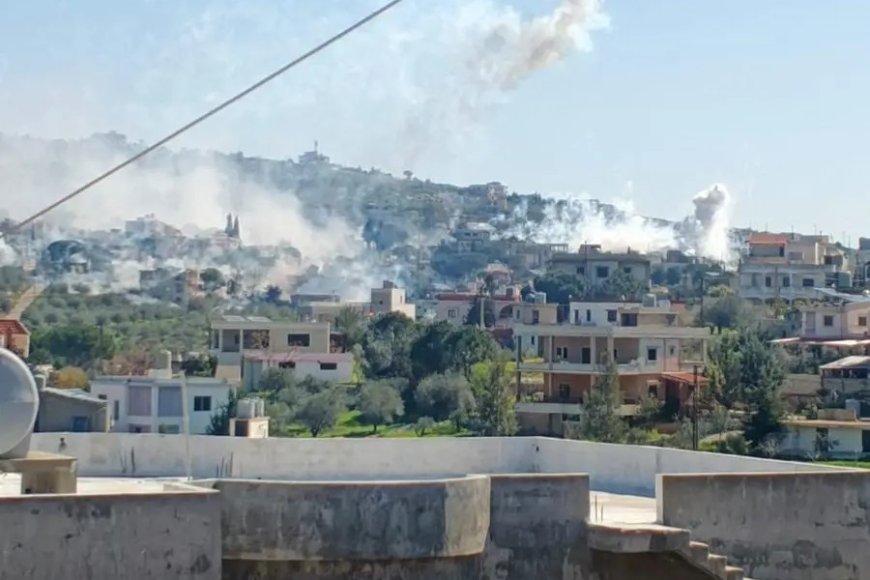
Photo: Unknown/obtained through Human Rights Watch website.

Human Rights Watch Accuses Israel of Using White Phosphorus Over Residential Areas in Lebanon

Mar 9, 2026 - 23:14
 0

Human Rights Watch has accused the Israeli military of unlawfully using white phosphorus munitions over residential areas in southern Lebanon, warning that the weapon poses severe risks to civilians.


In a statement released Monday, 9 March, the rights organisation said it had verified and geolocated images showing artillery-fired white phosphorus munitions detonating in the air above homes in the town of Yohmor on March 3, 2026.

According to the group, at least eight images show airburst munitions dispersing burning material over a residential neighborhood, with emergency workers later responding to fires that broke out in homes and a car.

“The Israeli military’s unlawful use of white phosphorus over residential areas is extremely alarming and will have dire consequences for civilians,” said Ramzi Kaiss. He warned that the weapon’s incendiary effects can cause death or severe injuries that may lead to lifelong suffering.

White phosphorus is a chemical substance used in artillery shells, bombs, and rockets that ignites when exposed to oxygen. The burning material can set homes, farmland, and other civilian structures on fire. Under international humanitarian law, the use of airburst white phosphorus in populated areas is considered indiscriminate because it spreads burning fragments over a wide area, making it difficult to avoid harm to civilians.

Human Rights Watch said it verified a photograph posted on social media on the morning of March 3 showing at least two white phosphorus artillery shells detonating in the air above a residential neighborhood in Yohmor. The organization identified the distinctive smoke pattern produced by the explosion as consistent with an M825-series 155mm artillery projectile, which disperses white phosphorus.

Earlier that morning, at around 5:27 a.m., Avichay Adraee issued a warning on social media instructing residents of Yohmor and dozens of other villages to evacuate their homes and move at least one kilometer away from their communities. The warning was repeated later the same day. Human Rights Watch said it could not independently verify whether civilians were present in the area during the strike or whether anyone was injured.

Photos posted later on March 3 by a local civil defense team showed responders extinguishing fires on rooftops and inside a vehicle in the town. The images, which the group attributed to white phosphorus strikes, were geolocated by Human Rights Watch within a radius of about 160 meters from where the airburst munitions were observed.

The organisation said its analysis suggests the fires were likely caused by burning fragments of white phosphorus dispersed by the munitions.

The latest allegations come amid a sharp escalation in hostilities between Israel and the Lebanese armed group Hezbollah, which intensified on March 2. Lebanon’s health ministry reports that at least 217 people have been killed in the country as of March 6, while hundreds of thousands have been displaced.

Human Rights Watch also raised concerns about sweeping evacuation orders issued by the Israeli military for residents south of the Litani River and for people living in the southern suburbs of Beirut. The group said the broad nature of these orders could risk forcing civilians to flee their homes unnecessarily, raising fears of forced displacement during the conflict.

The organization urged Israel to halt the use of airburst white phosphorus in populated areas and called on governments supplying weapons to Israel—including the United States, United Kingdom, and Germany—to suspend military assistance and arms sales if such weapons continue to be used.

Human Rights Watch also called on Lebanon to investigate possible international crimes and urged the country to join the International Criminal Court by acceding to the Rome Statute.

The group added that the reported use of white phosphorus highlights gaps in international law governing incendiary weapons. Existing rules under Protocol III of the Convention on Conventional Weapons Protocol III place limits on certain incendiary weapons but do not fully regulate multipurpose munitions such as white phosphorus.

“Israel should immediately halt this practice,” Kaiss said, urging countries providing weapons to Israel to push for an end to the use of white phosphorus in residential areas.


 

Human Rights Watch Accuses Israel of Using White Phosphorus Over Residential Areas in Lebanon

Mar 9, 2026 - 23:14
 0
Human Rights Watch Accuses Israel of Using White Phosphorus Over Residential Areas in Lebanon
Photo: Unknown/obtained through Human Rights Watch website.

Human Rights Watch has accused the Israeli military of unlawfully using white phosphorus munitions over residential areas in southern Lebanon, warning that the weapon poses severe risks to civilians.


In a statement released Monday, 9 March, the rights organisation said it had verified and geolocated images showing artillery-fired white phosphorus munitions detonating in the air above homes in the town of Yohmor on March 3, 2026.

According to the group, at least eight images show airburst munitions dispersing burning material over a residential neighborhood, with emergency workers later responding to fires that broke out in homes and a car.

“The Israeli military’s unlawful use of white phosphorus over residential areas is extremely alarming and will have dire consequences for civilians,” said Ramzi Kaiss. He warned that the weapon’s incendiary effects can cause death or severe injuries that may lead to lifelong suffering.

White phosphorus is a chemical substance used in artillery shells, bombs, and rockets that ignites when exposed to oxygen. The burning material can set homes, farmland, and other civilian structures on fire. Under international humanitarian law, the use of airburst white phosphorus in populated areas is considered indiscriminate because it spreads burning fragments over a wide area, making it difficult to avoid harm to civilians.

Human Rights Watch said it verified a photograph posted on social media on the morning of March 3 showing at least two white phosphorus artillery shells detonating in the air above a residential neighborhood in Yohmor. The organization identified the distinctive smoke pattern produced by the explosion as consistent with an M825-series 155mm artillery projectile, which disperses white phosphorus.

Earlier that morning, at around 5:27 a.m., Avichay Adraee issued a warning on social media instructing residents of Yohmor and dozens of other villages to evacuate their homes and move at least one kilometer away from their communities. The warning was repeated later the same day. Human Rights Watch said it could not independently verify whether civilians were present in the area during the strike or whether anyone was injured.

Photos posted later on March 3 by a local civil defense team showed responders extinguishing fires on rooftops and inside a vehicle in the town. The images, which the group attributed to white phosphorus strikes, were geolocated by Human Rights Watch within a radius of about 160 meters from where the airburst munitions were observed.

The organisation said its analysis suggests the fires were likely caused by burning fragments of white phosphorus dispersed by the munitions.

The latest allegations come amid a sharp escalation in hostilities between Israel and the Lebanese armed group Hezbollah, which intensified on March 2. Lebanon’s health ministry reports that at least 217 people have been killed in the country as of March 6, while hundreds of thousands have been displaced.

Human Rights Watch also raised concerns about sweeping evacuation orders issued by the Israeli military for residents south of the Litani River and for people living in the southern suburbs of Beirut. The group said the broad nature of these orders could risk forcing civilians to flee their homes unnecessarily, raising fears of forced displacement during the conflict.

The organization urged Israel to halt the use of airburst white phosphorus in populated areas and called on governments supplying weapons to Israel—including the United States, United Kingdom, and Germany—to suspend military assistance and arms sales if such weapons continue to be used.

Human Rights Watch also called on Lebanon to investigate possible international crimes and urged the country to join the International Criminal Court by acceding to the Rome Statute.

The group added that the reported use of white phosphorus highlights gaps in international law governing incendiary weapons. Existing rules under Protocol III of the Convention on Conventional Weapons Protocol III place limits on certain incendiary weapons but do not fully regulate multipurpose munitions such as white phosphorus.

“Israel should immediately halt this practice,” Kaiss said, urging countries providing weapons to Israel to push for an end to the use of white phosphorus in residential areas.