
Israel Strikes Lebanon as US-Iran Peace Deal Nears Final Hours

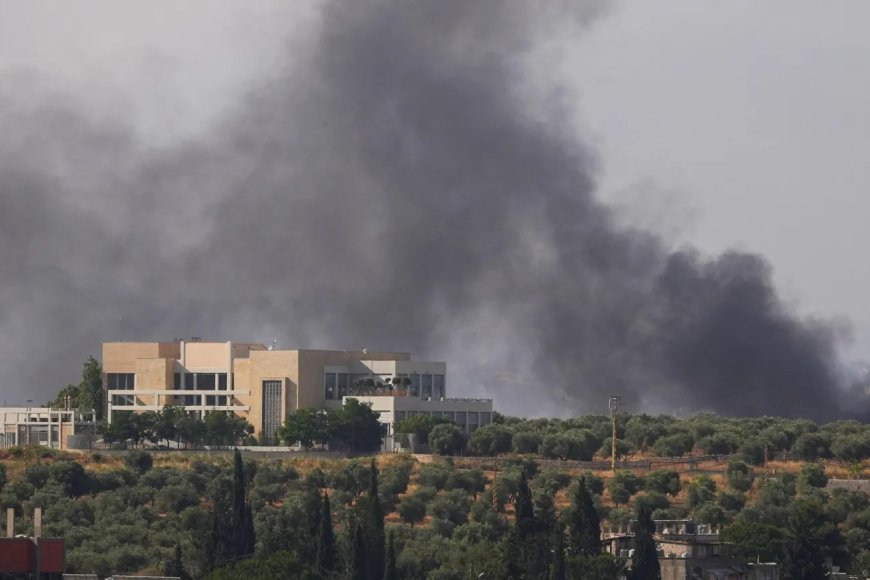
Smoke rise over southern Lebanon on Saturday following an Israeli airstrike. Photo: Reuters

Israel Strikes Lebanon as US-Iran Peace Deal Nears Final Hours

Jun 14, 2026 - 10:46
 0

The Israeli military has launched airstrikes in southern Lebanon on June 13, killing at least one person, just as international mediators announced that a historic US-Iran peace agreement is hours away from finalization.


The strikes hit the town of Marrakeh in Lebanon’s Tyre district, according to the Lebanese National News Agency, after Israel ordered residents to evacuate approximately 20 locations.

Israel's prime minister previously warned that his military would strike Hezbollah if the group continued attacking northern Israel.

Despite the escalating violence on the ground, diplomatic breakthrough efforts are moving rapidly.

Pakistan's Prime Minister Shehbaz Sharif, whose country is mediating the talks alongside Qatar, stated on X (Yesterday) that "we are closer to a peace deal than ever before".

Sharif noted that the finalization of the Memorandum of Understanding (MOU) is "likely expected in the next 24 hours" and added that Pakistan "is preparing for the electronic signing of the peace deal... followed by technical level talks next week".

Iranian Foreign Minister Seyed Abbas Araghchi confirmed that a deal to end fighting with the US is close, asserting it would also encompass an end to the conflict between Israel and Hezbollah.

"As soon as the final stages of our negotiations are completed, this agreement will be signed and announced," Araghchi told state television. "This could happen in the coming days. I am very hopeful," he said.

However, previous US intelligence reports suggested Lebanon might be excluded from the agreement.

US officials confirmed details of the MOU, emphasizing that economic benefits for Iran are strictly performance-based rather than built on trust.

US officials ruled out upfront cash or the immediate unfreezing of assets. Instead, a staged reintegration into the global economy will occur incrementally if Tehran stops funding regional proxy groups like Hezbollah.

The deal mandates an immediate reopening of the critical Strait of Hormuz—a vital corridor handling 20 percent of global oil and liquefied natural gas—alongside the lifting of the US naval blockade on Iranian shipping.

Regarding the waterway, Araghchi remarked that its administration would "no longer be the same as before", following disputes over Iran's demands for transit fees.

A subsequent 60-day negotiation period will focus on verifying the destruction and removal of Iran’s enriched uranium on site, though broader technical talks on Iran's nuclear program will start later.

Internal friction remains within Tehran. Araghchi acknowledged there are "supporters and opponents" of the terms inside Iran's top security body, the Supreme National Security Council, which has yet to reach a collective decision.

"For now, we must wait. If approved, the agreement will be signed remotely," Araghchi stated. Israel remains entirely uninvolved in the ongoing talks.

The current war erupted on February 28 following joint US and Israeli strikes across Iran, which triggered Iranian counter-attacks and the closure of the Strait of Hormuz. While an April ceasefire temporarily cooled the conflict, the US and Iran exchanged two rounds of tit-for-tat strikes this week.

The diplomatic path cleared on Thursday when US President Donald Trump announced he cancelled "scheduled attacks" because negotiators had "just made a great settlement".

Trump later dismissed a 14-point draft published in Iranian media, stating it had "nothing to do with the terms that were agreed to" and "bears no relation to the truth". However, international mediators finalized the official MOU just hours later.
Israel Strikes Lebanon as US-Iran Peace Deal Nears Final Hours

Jun 14, 2026 - 10:46
 0
Israel Strikes Lebanon as US-Iran Peace Deal Nears Final Hours
Smoke rise over southern Lebanon on Saturday following an Israeli airstrike. Photo: Reuters

The Israeli military has launched airstrikes in southern Lebanon on June 13, killing at least one person, just as international mediators announced that a historic US-Iran peace agreement is hours away from finalization.


The strikes hit the town of Marrakeh in Lebanon’s Tyre district, according to the Lebanese National News Agency, after Israel ordered residents to evacuate approximately 20 locations.

Israel's prime minister previously warned that his military would strike Hezbollah if the group continued attacking northern Israel.

Despite the escalating violence on the ground, diplomatic breakthrough efforts are moving rapidly.

Pakistan's Prime Minister Shehbaz Sharif, whose country is mediating the talks alongside Qatar, stated on X (Yesterday) that "we are closer to a peace deal than ever before".

Sharif noted that the finalization of the Memorandum of Understanding (MOU) is "likely expected in the next 24 hours" and added that Pakistan "is preparing for the electronic signing of the peace deal... followed by technical level talks next week".

Iranian Foreign Minister Seyed Abbas Araghchi confirmed that a deal to end fighting with the US is close, asserting it would also encompass an end to the conflict between Israel and Hezbollah.

"As soon as the final stages of our negotiations are completed, this agreement will be signed and announced," Araghchi told state television. "This could happen in the coming days. I am very hopeful," he said.

However, previous US intelligence reports suggested Lebanon might be excluded from the agreement.

US officials confirmed details of the MOU, emphasizing that economic benefits for Iran are strictly performance-based rather than built on trust.

US officials ruled out upfront cash or the immediate unfreezing of assets. Instead, a staged reintegration into the global economy will occur incrementally if Tehran stops funding regional proxy groups like Hezbollah.

The deal mandates an immediate reopening of the critical Strait of Hormuz—a vital corridor handling 20 percent of global oil and liquefied natural gas—alongside the lifting of the US naval blockade on Iranian shipping.

Regarding the waterway, Araghchi remarked that its administration would "no longer be the same as before", following disputes over Iran's demands for transit fees.

A subsequent 60-day negotiation period will focus on verifying the destruction and removal of Iran’s enriched uranium on site, though broader technical talks on Iran's nuclear program will start later.

Internal friction remains within Tehran. Araghchi acknowledged there are "supporters and opponents" of the terms inside Iran's top security body, the Supreme National Security Council, which has yet to reach a collective decision.

"For now, we must wait. If approved, the agreement will be signed remotely," Araghchi stated. Israel remains entirely uninvolved in the ongoing talks.

The current war erupted on February 28 following joint US and Israeli strikes across Iran, which triggered Iranian counter-attacks and the closure of the Strait of Hormuz. While an April ceasefire temporarily cooled the conflict, the US and Iran exchanged two rounds of tit-for-tat strikes this week.

The diplomatic path cleared on Thursday when US President Donald Trump announced he cancelled "scheduled attacks" because negotiators had "just made a great settlement".

Trump later dismissed a 14-point draft published in Iranian media, stating it had "nothing to do with the terms that were agreed to" and "bears no relation to the truth". However, international mediators finalized the official MOU just hours later.