 English
 Kinyarwanda
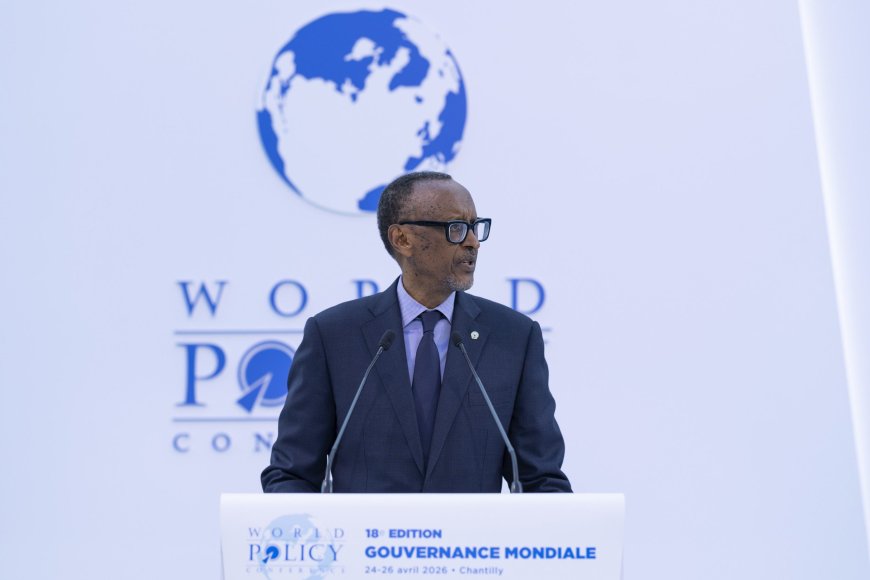
Kagame Urges End to ‘Colonial Mindset’ in Global Governance
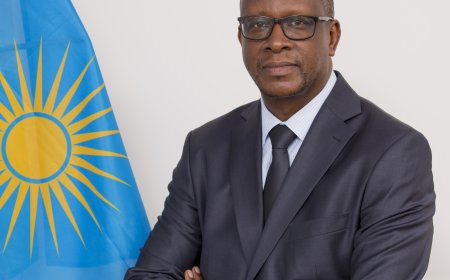
President Paul Kagame has called for a fundamental shift in global governance, arguing that a "false belief of superiority" among Western powers continues to hinder international progress.
Speaking at the 18th International Policy Forum held in Chantilly from April 24–26, Kagame stated that while official colonialism and slavery have ended, the underlying attitudes of the past still dictate how the world is run.
He urged for a transition toward a system where all nations work together as equals.
"The West is mistaken, in my view," Kagame stated. "They trick themselves into believing they know everything, possess everything, and can decide everything—implying that those outside the West don't matter.
They draw a line and that's it. But even within those countries, there are issues that need attention. That is why there will always be difficulties within the European Union or other parts of the West, including the United States."
The President highlighted how centuries of Western dominance—established through political, economic, and military power—allowed a few nations to act as a global "police force." This influence, he noted, began with the arbitrary drawing of international borders that ignored local structures.
To illustrate the economic impact of this era, Kagame cited historical data showing India’s share of the global economy fell from 23% in the 18th century to less than 4% by the 20th century.
He also pointed to the 1885 Berlin Conference, which divided Africa among European powers, leaving a "legacy of chaos" that many countries still struggle with today.
Kagame observed that developing nations often remain in the shadow of the West because they continue to follow rules set by others rather than building their own governance systems.
Reflecting on Rwanda’s journey of rebuilding after the 1994 Genocide against the Tutsi—which he linked to colonial divisiveness—he emphasized the need for self-reliance.
"In trying to build from nothing, as happened in my country which was destroyed... we looked within ourselves and found the strength to rebuild, even though it required us to partner with others and receive support," he said.
He urged the African continent to leverage its own assets rather than looking for external validation.
"The continent needs to do the same. The continent should look at what it has—because it has almost everything: people, natural resources, a culture rooted in deep knowledge, and achievements that people should be proud of. But instead of doing that, we tend to look elsewhere," Kagame added.
The President criticized the current "rules-based international order," questioning the legitimacy of rules that the creators themselves often fail to follow.
He called for a more inclusive global platform where developing countries play a tangible role in decision-making.
"This mindset needs to be updated. Its origins should be questioned by all of us, including Westerners. There should be increased cooperation and mutual tolerance, without the assumption that one side decides what is right or wrong," he noted.