
NEW REPORT - Terrorism deaths fall worldwide, but Western fatalities surged 280%

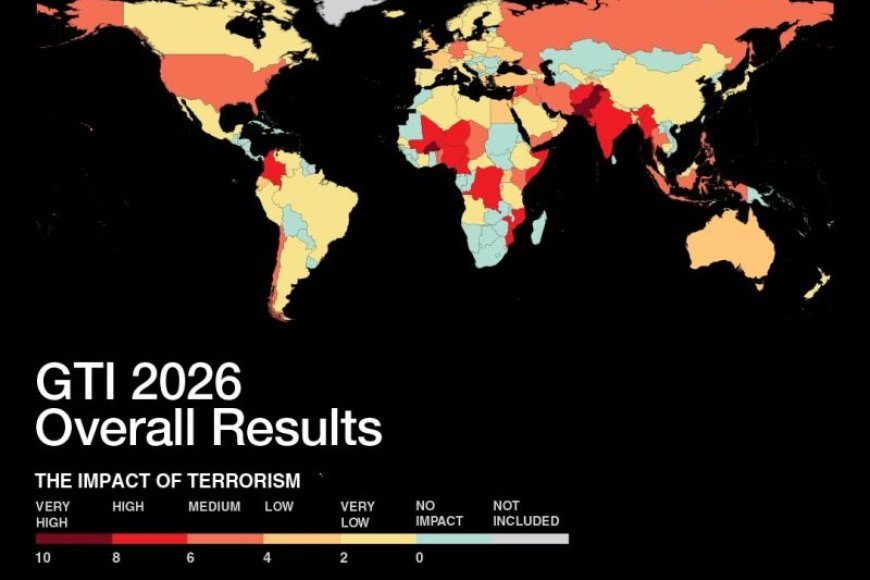
A map by Institute for Economics and Peace

NEW REPORT - Terrorism deaths fall worldwide, but Western fatalities surged 280%

Mar 19, 2026 - 10:33
 0

Global deaths from terrorism have fallen to their lowest level in more than a decade, according to the newly released Global Terrorism Index 2026. Yet beneath the encouraging headline figures lies a far more fragile reality, one marked by rising violence in Western countries, deepening geopolitical tensions, and fears that recent progress could quickly unravel.


The report, published by the Institute for Economics and Peace, shows that terrorism-related deaths dropped by 28 per cent in 2025 to 5,582, while the number of incidents fell by 22 per cent to 2,944—the lowest levels recorded since 2007.

But the decline has not been evenly felt. In a stark reversal of recent trends, Western countries saw terrorism fatalities surge by 280 per cent, reaching 57 deaths in 2025. Analysts attribute this rise largely to a mix of antisemitism, Islamophobia and politically motivated violence, reflecting a shift in the nature of threats facing developed nations.

Sub-Saharan Africa continues to bear the heaviest burden of terrorism globally, with six of the ten most affected countries located in the region. This concentration reinforces its position as the current epicentre of terrorist activity, even as global totals decline.

The report warns that these gains may prove temporary. A convergence of global pressures, including escalating tensions involving Iran, instability in South Asia, and weakening economic conditions in parts of the West, could reshape the trajectory of terrorism in the coming years.

Seven of the 19 countries that recorded a deterioration in their terrorism scores were Western nations. The drivers behind this shift are complex and deeply embedded: rapid youth radicalisation, intensifying political polarisation, and the growing speed at which extremist ideologies spread online. The Index highlights that radicalisation timelines are shrinking, making it easier for individuals, particularly young people, to move quickly from exposure to action.

This trend is reflected in the rise of lone-wolf attacks. Since 2021, youth-related terrorism investigations have tripled, and lone actors were responsible for 93 per cent of all fatal attacks in Western countries over that period.

The geopolitical backdrop is also shifting. The ongoing conflict dynamics linked to Iran are emerging as a central concern. Experts warn that if instability deepens, Iran could follow a path seen in previous conflict zones, where weakened state structures create fertile ground for extremist groups.

“The underlying conditions that drive terrorism are worsening despite improvements seen in 2025,” said Steve Killelea, Founder and Executive Chairperson of the Institute for Economics and Peace. “Unless Iran can be stabilised quickly, it risks becoming a failed state and another breeding ground for terrorist militias.”

Killelea pointed to historical precedents, noting that conflicts in Iraq and Afghanistan demonstrated how quickly terrorist organisations can exploit security vacuums. The report also highlights growing activity along ungoverned border regions, with the Pakistan-Afghanistan corridor cited as a particularly concerning flashpoint.

For the first time since the Index began, Pakistan ranks as the country most impacted by terrorism, recording 1,139 deaths and 1,045 incidents in 2025, its highest levels in more than a decade. The resurgence underscores how quickly gain against militant groups can be reversed when underlying conditions deteriorate.

Meanwhile, extremist organisations remain resilient. The report identifies Islamic State and its affiliates as the deadliest terrorist network worldwide, responsible for just under 17 per cent of all attacks. While the group’s territorial control has diminished in recent years, its decentralised structure has enabled it to maintain a persistent and adaptive presence.

Another emerging concern is the growing use of drone technology by terrorist groups, signaling a potential shift in tactics that could increase both the reach and lethality of future attacks.

Beyond security dynamics, broader societal trends are also influencing the landscape. The report notes rising political polarisation in several countries, alongside increasing concern over antisemitism. Public opinion around the Gaza conflict has further intensified divisions, contributing to a more volatile environment in which extremist narratives can thrive.

Taken together, these developments point to a world in flux—one where the apparent decline in terrorism may mask deeper structural risks.

“The trends point to one sobering conclusion,” Killelea warned. “A fracturing world order risks erasing the hard-fought gains made against terrorism over the past decade.”
 

NEW REPORT - Terrorism deaths fall worldwide, but Western fatalities surged 280%

Mar 19, 2026 - 10:33
Mar 19, 2026 - 11:52
 0
NEW REPORT - Terrorism deaths fall worldwide, but Western fatalities surged 280%
A map by Institute for Economics and Peace

Global deaths from terrorism have fallen to their lowest level in more than a decade, according to the newly released Global Terrorism Index 2026. Yet beneath the encouraging headline figures lies a far more fragile reality, one marked by rising violence in Western countries, deepening geopolitical tensions, and fears that recent progress could quickly unravel.


The report, published by the Institute for Economics and Peace, shows that terrorism-related deaths dropped by 28 per cent in 2025 to 5,582, while the number of incidents fell by 22 per cent to 2,944—the lowest levels recorded since 2007.

But the decline has not been evenly felt. In a stark reversal of recent trends, Western countries saw terrorism fatalities surge by 280 per cent, reaching 57 deaths in 2025. Analysts attribute this rise largely to a mix of antisemitism, Islamophobia and politically motivated violence, reflecting a shift in the nature of threats facing developed nations.

Sub-Saharan Africa continues to bear the heaviest burden of terrorism globally, with six of the ten most affected countries located in the region. This concentration reinforces its position as the current epicentre of terrorist activity, even as global totals decline.

The report warns that these gains may prove temporary. A convergence of global pressures, including escalating tensions involving Iran, instability in South Asia, and weakening economic conditions in parts of the West, could reshape the trajectory of terrorism in the coming years.

Seven of the 19 countries that recorded a deterioration in their terrorism scores were Western nations. The drivers behind this shift are complex and deeply embedded: rapid youth radicalisation, intensifying political polarisation, and the growing speed at which extremist ideologies spread online. The Index highlights that radicalisation timelines are shrinking, making it easier for individuals, particularly young people, to move quickly from exposure to action.

This trend is reflected in the rise of lone-wolf attacks. Since 2021, youth-related terrorism investigations have tripled, and lone actors were responsible for 93 per cent of all fatal attacks in Western countries over that period.

The geopolitical backdrop is also shifting. The ongoing conflict dynamics linked to Iran are emerging as a central concern. Experts warn that if instability deepens, Iran could follow a path seen in previous conflict zones, where weakened state structures create fertile ground for extremist groups.

“The underlying conditions that drive terrorism are worsening despite improvements seen in 2025,” said Steve Killelea, Founder and Executive Chairperson of the Institute for Economics and Peace. “Unless Iran can be stabilised quickly, it risks becoming a failed state and another breeding ground for terrorist militias.”

Killelea pointed to historical precedents, noting that conflicts in Iraq and Afghanistan demonstrated how quickly terrorist organisations can exploit security vacuums. The report also highlights growing activity along ungoverned border regions, with the Pakistan-Afghanistan corridor cited as a particularly concerning flashpoint.

For the first time since the Index began, Pakistan ranks as the country most impacted by terrorism, recording 1,139 deaths and 1,045 incidents in 2025, its highest levels in more than a decade. The resurgence underscores how quickly gain against militant groups can be reversed when underlying conditions deteriorate.

Meanwhile, extremist organisations remain resilient. The report identifies Islamic State and its affiliates as the deadliest terrorist network worldwide, responsible for just under 17 per cent of all attacks. While the group’s territorial control has diminished in recent years, its decentralised structure has enabled it to maintain a persistent and adaptive presence.

Another emerging concern is the growing use of drone technology by terrorist groups, signaling a potential shift in tactics that could increase both the reach and lethality of future attacks.

Beyond security dynamics, broader societal trends are also influencing the landscape. The report notes rising political polarisation in several countries, alongside increasing concern over antisemitism. Public opinion around the Gaza conflict has further intensified divisions, contributing to a more volatile environment in which extremist narratives can thrive.

Taken together, these developments point to a world in flux—one where the apparent decline in terrorism may mask deeper structural risks.

“The trends point to one sobering conclusion,” Killelea warned. “A fracturing world order risks erasing the hard-fought gains made against terrorism over the past decade.”