 English
 Kinyarwanda

Rwanda Welcomes Over 160 African Asylum Seekers Evacuated from Libya

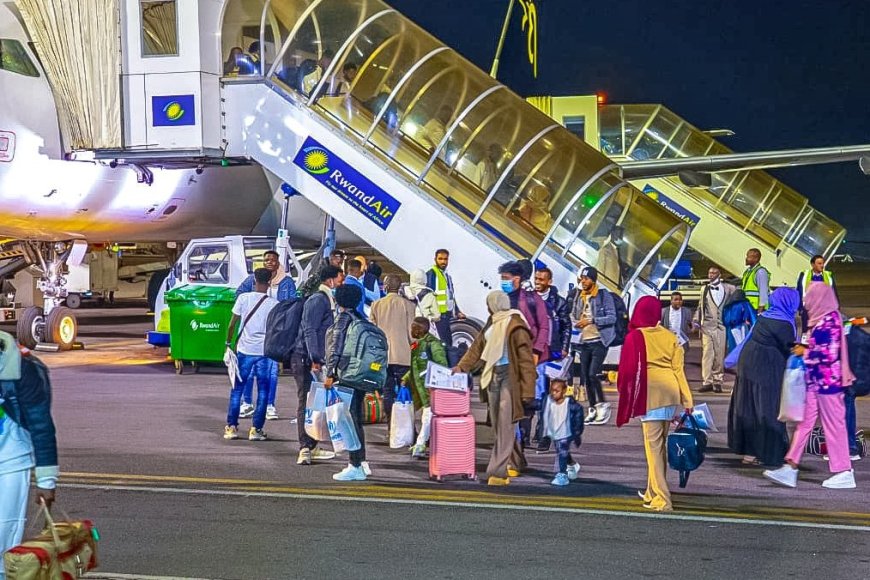
In the early hours of Thursday, February 26, 2026, Rwanda welcomed 164 vulnerable African asylum seekers evacuated from Libya.
The newly arrived group includes 143 people from Sudan, 19 from Eritrea, and one each from Ethiopia and South Sudan. For many, the journey from Libya, often from overcrowded detention centers, has been harrowing, and the reception in Rwanda marks a crucial step toward safety and stability.
Since 2019, the Emergency Transit Mechanism (ETM) at Gashora has served as a lifeline for evacuees, offering accommodation, healthcare, psychosocial support, and life skills training while durable solutions are pursued. Over the past seven years, 2,760 people have been evacuated through the programme, with more than 2,500 successfully resettled in third countries.
The ETM was established in 2019 through a partnership between the Government of Rwanda, the United Nations Refugee Agency (UNHCR), and the African Union. Its goal is to evacuate vulnerable refugees stranded in Libya, many of whom face dire humanitarian conditions, and provide temporary protection while long-term solutions are arranged.
At Gashora, each evacuee receives support tailored to their immediate and long-term needs — from medical care and psychological counseling to assistance with legal documentation — ensuring that dignity and safety remain central to Rwanda’s approach.
Rwanda’s Ongoing Commitment
Rwanda currently hosts over 130,000 refugees and asylum seekers, primarily from neighboring countries, and has earned recognition for promoting inclusion through access to education, healthcare, and employment opportunities.
This latest group of arrivals underscores Rwanda’s sustained engagement in international humanitarian efforts and highlights the importance of coordinated, multilateral action. By providing temporary protection and collaborating with international partners, Rwanda is helping vulnerable individuals rebuild their lives while working toward lasting solutions in third countries.